First-day Copenhagen can feel like a maze. This 2-hour walking intro helps you get your bearings fast, tying together Danish power, harbor life, and iconic city scenes with an English-speaking guide who keeps things lively and answers questions. Two things I like a lot: the headset audio makes the narration easy to follow, and the guide encourages you to ask what you should do next. One watch-out: it’s a steady walking pace, so bring comfortable shoes and expect mostly outdoor time.
At $40.41 for about two hours (often booked around a month ahead), you’re paying for more than sightseeing. You’re buying context—why the buildings matter, how the city grew, and how to plan the rest of your trip without guessing. The route also lands you in smart locations: you start near Rådhuspladsen and finish near Amalienborg, where you can naturally keep exploring on foot.
The final bonus is practical: you get a small city map plus tips on what to see next and how to get there. And yes, you can mix it with your own museum time later since the walk is a focused orientation, not a ticket-stuffed day.
In This Review
- Key Highlights You’ll Feel Right Away
- What You’re Actually Getting for $40.41 in Copenhagen
- Meeting at Rådhuspladsen: How the Walk Starts and Why It Matters
- City Hall Square to Tivoli: Denmark’s Civic Center in Plain Sight
- Christiansborg Slot: Parliament, Courts, and a Palace Built for Power
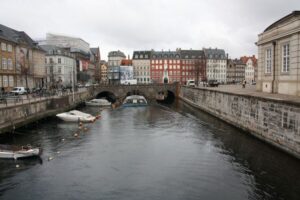
- Christian IV’s Brewhouse and the Renaissance Harbor
- Holmens Kirke and King’s New Square: Burials, Weddings, and Built Prestige
- Nyhavn to Amalienborg: Colorful Canal Life and Royal Residences
- Guides Make or Break It: The Style You Can Expect
- Who This Tour Suits Best (and Who Might Want Another Option)
- Should You Book This Copenhagen Walking Intro?
- FAQ
- How long is the walk in Copenhagen?
- What does the $40.41 price include?
- Is the tour in English?
- How big is the group?
- Do I need to use the headset?
- Is it mostly outside?
- Are there any paid entrances during the walk?
- Where do I meet the guide?
- Is the tour okay for most people?
- What happens if the weather is bad?
- Can I cancel for free?
Key Highlights You’ll Feel Right Away
- Headset audio keeps you hearing the guide clearly without craning your neck
- Small group size (max 10) makes it easier to ask questions and get real answers
- A route that links rule, trade, and everyday streets instead of doing random landmarks
- Free viewing at several major stops while a couple of interiors cost extra if you choose
- An ending near Amalienborg timed so you may catch guard activity on the spot
- A guide that talks like a real person (with humor and quick context), not a lecture
What You’re Actually Getting for $40.41 in Copenhagen
This tour is priced like a solid “first day” tool, not like a full-day sightseeing pass. For roughly two hours, you get a guided route through Copenhagen’s most important civic and royal areas, plus a guide fluent in English who’s clearly comfortable explaining not just facts but how the pieces connect.
I think the best value here is the Q&A energy. The walk isn’t only about where to stand for a photo; it’s about helping you understand what you’re looking at and what to prioritize next. If you only have one day in Copenhagen, this kind of orientation can save you hours of indecision later.
It also helps that the walk includes short stops at major points—city hall, parliament/justice complex, harbor-related sites, and royal squares—so you can see the big structure of the city without paying museum prices up front.
If you want a “read-only” day, with no walking and no questions, this may not be your match. But if you’re the type who likes to learn the story behind the streets, the cost feels fair.
You can also read our reviews of more walking tours in Copenhagen



Meeting at Rådhuspladsen: How the Walk Starts and Why It Matters
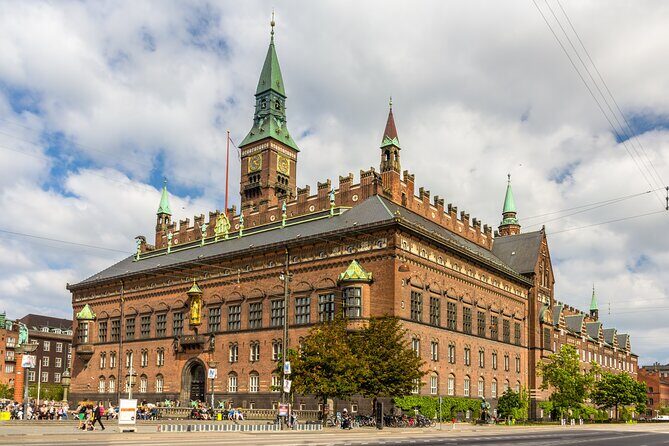
You meet at the Statue of Andersen at Rådhuspladsen (1553 København V). This is a central, easy-to-reach starting area near public transportation, which matters because you’ll be spending the next two hours moving on foot through the oldest core.
The tour uses a mobile ticket, and you’ll receive headset equipment so you can hear the guide all the time (though it’s optional). In practice, that’s huge. Copenhagen streets can get noisy near busy squares, and if you’re walking with a group, it’s easy to lose the thread. The headset keeps the narration coherent from stop to stop.
Most people can join, since it’s a walking intro rather than a hike. But the total time includes time spent getting between points, so don’t plan on museum-length experiences during the same window. Use the day before or after for deeper ticketed visits.
Also note the weather requirement: if conditions are poor, you’ll be offered a different date or a full refund. If your trip is tight, check the forecast right after booking.
City Hall Square to Tivoli: Denmark’s Civic Center in Plain Sight
The walk kicks off at City Hall Square. This area is the emotional center of the city—where Danes gather in huge numbers to celebrate big wins, whether sports or wartime moments. You’re not just seeing an architectural landmark; you’re seeing where public life happens.
From there, the route flows into several classic downtown scenes, including Tivoli Gardens—often described as one of the world’s beautiful amusement parks and unusual because it sits right in the middle of a major city. Even if you don’t go inside, you’ll get a feel for why Tivoli has remained such a Copenhagen symbol: it represents leisure embedded in real urban life.
Next comes the world’s longest pedestrian shopping street (the famous car-free shopping spine in central Copenhagen). This is a smart stop because it links architecture to daily routine. It’s easy to understand why locals like spending time here: it’s walkable, central, and built for lingering rather than rushing.
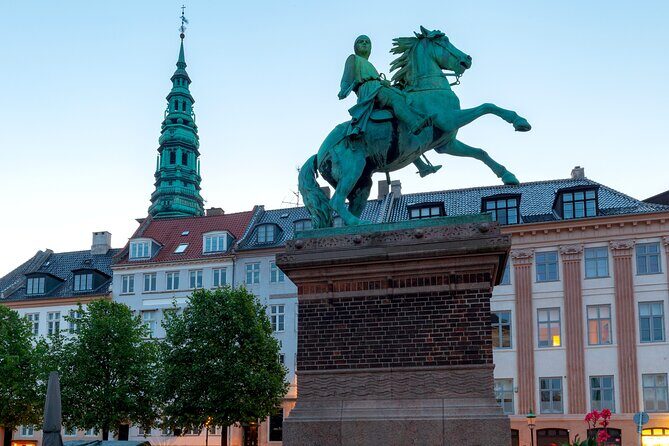
The route also points out the equestrian statue of the bishop who founded Copenhagen in 1189. That detail matters because Copenhagen didn’t begin as a palace-and-harbor postcard. It began as a settlement, and the city’s early power story is still echoed in today’s layout.
How to make this section work for you: keep an eye on street alignments and sightlines. After City Hall Square, you’ll start noticing that Copenhagen’s main points aren’t random—they’re connected by a logical walkable structure.
Possible drawback: this part is mostly outdoors and in busy pedestrian zones. If you’re sensitive to crowds, the central core can feel lively even on calm days.
Christiansborg Slot: Parliament, Courts, and a Palace Built for Power
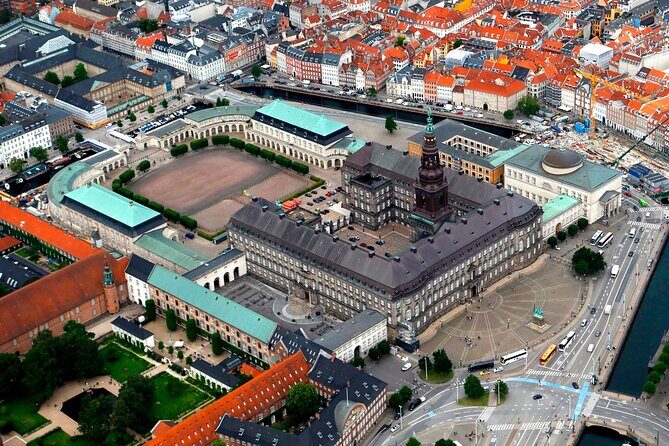
The tour then reaches Christiansborg Slot, a huge complex where Denmark’s parliament, supreme court, and the prime minister’s offices are based. It’s one of those places that can look like “just another impressive building” until someone explains what’s inside—and why it’s placed where it is.
Your guide will also connect Christiansborg back to the founding story of Copenhagen. That’s the value of this stop: it turns geography into narrative. The city becomes easier to map in your head because you understand where political power and civic institutions anchor the city.
This stop is quick—about ten minutes—so you won’t get a deep interior visit as part of the walk. But you’ll leave with enough context to decide later whether you want to enter and explore.
If you care about government and law: this is your anchor stop. It’s one of the clearest places on the route where you can see how Danish civic life is physically organized.
Christian IV’s Brewhouse and the Renaissance Harbor
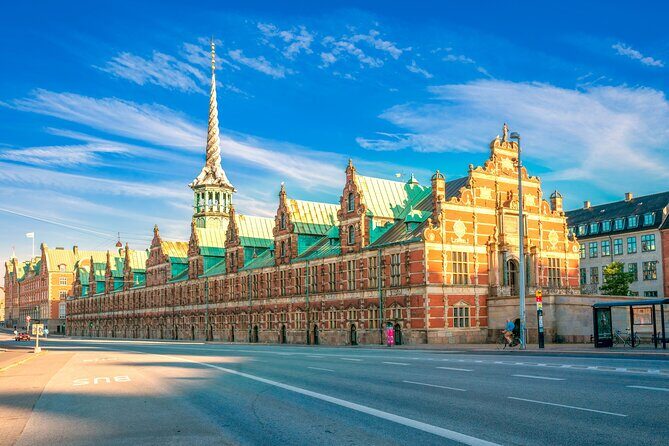
Next is Christian IV’s Brewhouse, a massive brick structure from 1618 in the harbor area. You’ll stop here to understand the harbor’s role as a navy base during the Renaissance.
This is one of the more rewarding sections for people who like “how things worked.” Copenhagen’s identity isn’t only royal buildings and pretty streets. It’s also maritime power and industry—practical infrastructure that supported trade and defense.
You may notice that this stop stands out because it shifts the tone from government to working life. Harbor cities rise and fall based on logistics, and the guide uses the brewhouse to explain the city’s economic engine.
A key practical note: admission for this stop is not included. You’ll be able to see and learn from the exterior/area context, but if you want to go inside, you’ll need to pay separately.
Possible drawback: since the theme is harbor history, if your main goal is pure palace glamour, you might find this less visually dramatic than the royal squares. Still, it helps you understand the city’s foundation.
A few more Copenhagen tours and experiences worth a look






Holmens Kirke and King’s New Square: Burials, Weddings, and Built Prestige

At Holmens Kirke, you’re in the 1500s church era. This is a stop tied to major life events: prime ministers are buried here, and Royals are married here. If the church is open, you’ll enter, and access is free when it’s available.
This is also a good reminder that Copenhagen’s “big stories” aren’t always painted on buildings. They’re kept in religious spaces and ceremonial traditions.
After that, you reach Copenhagen King’s New Square, a Renaissance-built square surrounded by impressive 1700s buildings. This is the kind of place where the architecture makes more sense once you understand the political and royal context from earlier stops. You’re seeing power sitting in stone—then moving on to the human scale of the city.
Your guide ends this portion by explaining how to get back or how to keep exploring by walking toward Nyhavn, Amalienborg Palace, and the area linked with The Little Mermaid (the route mentions these as natural next steps).
Practical tip: if the church is closed at your time slot, don’t stress. The value here is the explanation that you carry with you into the next square.
Nyhavn to Amalienborg: Colorful Canal Life and Royal Residences
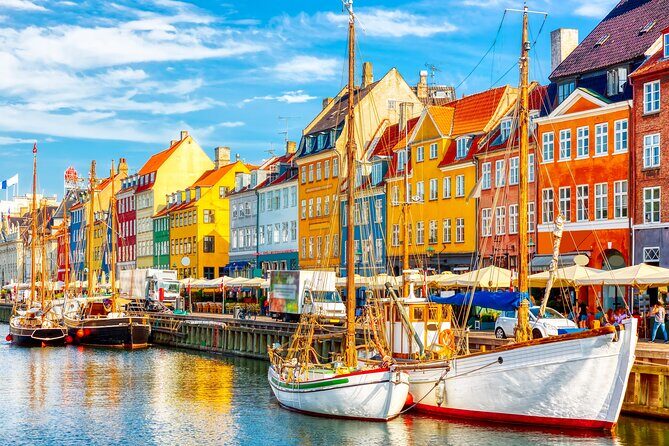
Then comes the highlight everyone recognizes: Nyhavn—the iconic harbor area with colorful houses. The guided framing is helpful here: the canal area was dug out in the 1600s by Swedish prisoners of war. It’s a reminder that even charming places often have complicated origins.
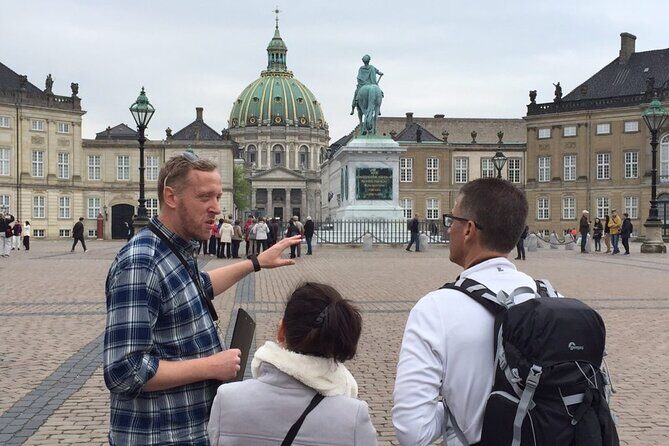
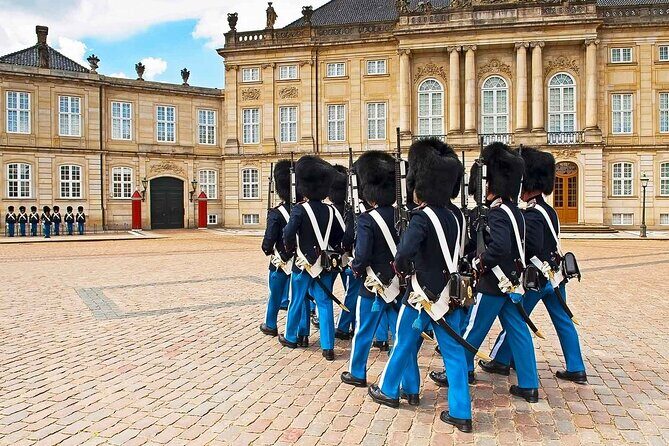
From Nyhavn, you head to Amalienborg Palace, the royal residence where the King and his family live in four large mansions dating to the mid-1700s. This stop is about 15 minutes, and interior access is not included.
Still, even without paying for entry, you’re in the right place to understand modern royal Copenhagen. One of the nicest additions from real-world tour pacing is that the ending can line up with a chance to view guard activity at Amalienborg, depending on timing.
Possible drawback: Amalienborg-area viewing can be affected by crowding and event schedules. If you’re aiming to get photos without stress, arrive with patience and plan to spend a bit of extra time after the walk.
Guides Make or Break It: The Style You Can Expect
Part of why this tour has such a high satisfaction rate is the guide approach. You’ll get English narration with humor and context, plus a strong willingness to answer questions. Names that have led this walk include Jens, Jan, Nick, Rasmus, George, and Thomas—and the common thread is the tone: talk like a local teacher, not a script reader.
If you’re the kind of person who loves asking practical questions like where to eat, what’s worth a ticket, or how to structure a short stay, this format works well. It’s not only about seeing points on a map; it’s about leaving the walk with a plan.
Who This Tour Suits Best (and Who Might Want Another Option)
This is best for:
- First-time visitors who want orientation fast and a logical route through the city core
- People who enjoy history, but only if it’s connected to what they’re standing in front of
- Anyone who likes asking questions and getting concrete next-step ideas
- Short-trip visitors who need a strong start without spending a whole day in museums
You might skip it if:
- You hate walking and prefer a slower, sit-down-heavy plan
- You only want interiors and ticketed sights during the guided time (this walk is built for viewing plus explanation)
- You’ll be arriving in Copenhagen only when the weather is shaky and you can’t flex your schedule
Should You Book This Copenhagen Walking Intro?
I’d book it if you’re trying to make your first days in Copenhagen feel organized and less random. For $40.41, you’re getting headset-supported storytelling, a small-group format (max 10), a route that connects civic power to harbor history and royal life, and a finish near places you’ll likely want to revisit.
Also, it’s a smart timing move: it’s commonly booked about a month ahead, so if your schedule is fixed, don’t wait too long. Bring comfortable shoes, keep your phone charged for navigation afterward, and treat the map and tips as your homework for the rest of your trip.
If you want a Copenhagen trip that feels less like wandering and more like you understand what you’re seeing, this walk is a strong place to start.
FAQ
How long is the walk in Copenhagen?
The tour lasts about 2 hours, and that total time includes time spent traveling between stops.
What does the $40.41 price include?
It includes a guided walk in a small group, a local English-speaking guide, headset so you can hear clearly, and a small city map plus tips on what to see next and how to get there after the walk.
Is the tour in English?
Yes, the tour is offered in English.
How big is the group?
The maximum group size is 10 travelers.
Do I need to use the headset?
No. Headsets are provided so you can hear the guide easily, but use is not mandatory.
Is it mostly outside?
Yes. Most stops are in central areas and outdoors, with a church visit only if it’s open.
Are there any paid entrances during the walk?
Some sights are free to view, while others have admission not included. Christian IV’s Brewhouse and Amalienborg Palace are listed as not included, while other stops are free where available.
Where do I meet the guide?
You meet at the Statue of Andersen at Rådhuspladsen, 1553 København V, Denmark. The end point is Amalienborg Palace at Amalienborg Slotsplads, 1257 København K, Denmark.
Is the tour okay for most people?
Most people can participate, but it is still a walking tour, so comfortable shoes are important.
What happens if the weather is bad?
This experience requires good weather. If it’s canceled due to poor weather, you’ll be offered a different date or a full refund.
Can I cancel for free?
Yes. Free cancellation is available if you cancel at least 24 hours before the experience start time.