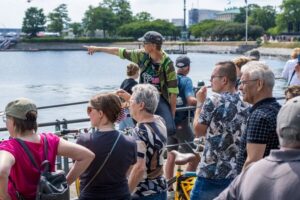
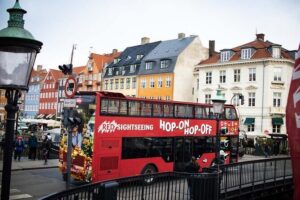
Copenhagen shows up from two angles: on foot and on the water. This walk + canal format links classic sights with a timed arrival at Amalienborg, so you get the best kind of souvenir: good orientation plus a front-row-ish royal moment.
I especially like the way the tour starts at Copenhagen Central Station, a real local meeting place, then builds outward through key neighborhoods. I also love the practical mix of views: Tivoli and Glyptotek’s exteriors for culture, plus ferry views of Opera House, Amalienborg, Nyhavn, and Børsen (with its dragon-spire legend).
The main catch: the ferry can be full or canceled on some days, and then you’ll walk extra. On those days you may also lose the time window for one of the “must-see” stops, so plan for flexibility and comfortable shoes.
In This Review
- Key things you will notice right away
- Starting at Copenhagen Central Station: the easiest “true local” launch
- Tivoli Gardens and Ny Carlsberg Glyptotek: culture hits without ticket lines
- Christiansborg Palace to the Black Diamond: politics, royalty, and modern Copenhagen in one line
- The electric ferry (Havnebus): the best “workout to payoff” ratio in town
- Passing Børsen, seeing the Opera House, and reading Nyhavn like a local
- Little Mermaid to Gefion Fountain: the stories behind the symbols
- Kastellet, Kastelsmøllen, and Churchill Park: fortress life and WWII remembrance
- Marble Church (Frederiks Kirke) and the clean line to Amalienborg
- Amalienborg Palace Museum area to the Changing of the Guards: the reason to come
- Full 12:00 ceremony vs the quieter shift relief
- Price and pace: what $77.39 gets you in 3 hours
- Who this tour suits best (and who should skip it)
- Final verdict: should you book this Walk & Canal + Guards tour?
- FAQ
- Where do I meet for the tour in Copenhagen?
- Where does the tour end?
- Is the canal ferry included, and can I reserve seats?
- What should I expect for walking distance?
- What’s the best tour time for the Changing of the Guards?
- Is admission included at the stops?
Key things you will notice right away
- Small group (max 15): easier pace control and more chance to ask questions.
- Two-part viewing: walking gives context; the electric ferry gives the postcard angles.
- Amalienborg timing: tours are set so you can see either the full 12:00 ceremony or a smaller guard relief.
- Central, easy start: inside Copenhagen Central Station near the round analog clock and a 7-Eleven.
- Plan B exists: if ferry conditions don’t cooperate, you’ll take a scenic walking route instead.
Starting at Copenhagen Central Station: the easiest “true local” launch

I like tours that begin in a place you’d actually use, and this one starts inside Copenhagen Central Station. You meet in the main hall beneath the big round analog clock, next to the 7-Eleven. There are two 7-Elevens, so aim for the one by the clock and you’ll spot your group quickly.
From a value standpoint, this start matters. You’re not wasting your first morning hunting for a pickup spot on the edge of town, and you’re already positioned to connect with the rest of your day after the tour ends.
You can also read our reviews of more walking tours in Copenhagen


Tivoli Gardens and Ny Carlsberg Glyptotek: culture hits without ticket lines
You only get short pauses at Tivoli Gardens and Ny Carlsberg Glyptotek, but that’s the point. These stops are quick “look, notice, and learn what you’re seeing” moments, not long museum detours.
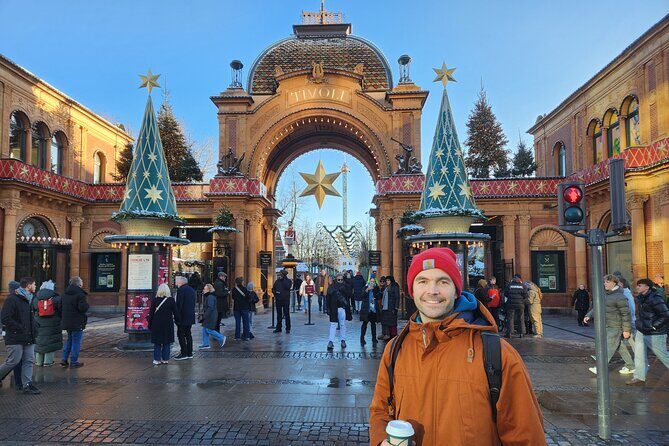
At Tivoli, you’ll be outside the historic grounds and entrance. The story angle here is fun: Tivoli is said to have influenced Walt Disney when he visited in the 1950s, which is a neat reminder that Danish creativity didn’t stay home.
At Glyptoteket, you focus on the outside first, especially the museum’s signature architecture and glass dome. You’ll also get a peek at the winter garden concept under the dome. The practical benefit is clear: you get the building’s wow-factor without committing to museum time during a tight 3-hour format.
Christiansborg Palace to the Black Diamond: politics, royalty, and modern Copenhagen in one line
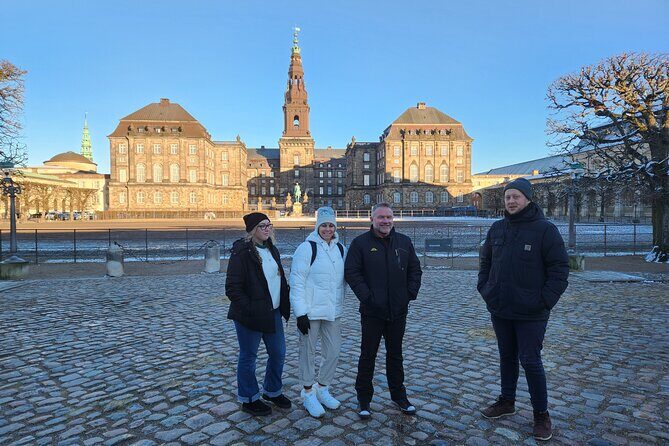
Next comes Christiansborg Palace, Denmark’s power center with a history that stretches back more than 800 years. You’ll be shown how this site sits on the ruins of an earlier castle, and how the palace has been rebuilt after major fires. If you’ve ever wondered why Copenhagen feels so “organized” and civic-minded, this stop explains the roots.
Christiansborg also works as a gear shift. After it, you move toward the waterfront and modern landmarks, which helps you understand why Copenhagen doesn’t separate old royal pageantry from everyday public life.
Then you reach Det Kgl. Bibliotek, the Black Diamond. From the outside, it’s striking—black granite, sharp lines, and a strong relationship to the harbor. The real-life takeaway is that it’s not just an architectural statement. It’s part of daily culture: a library people use, along with concerts and waterfront cafés nearby.
The electric ferry (Havnebus): the best “workout to payoff” ratio in town
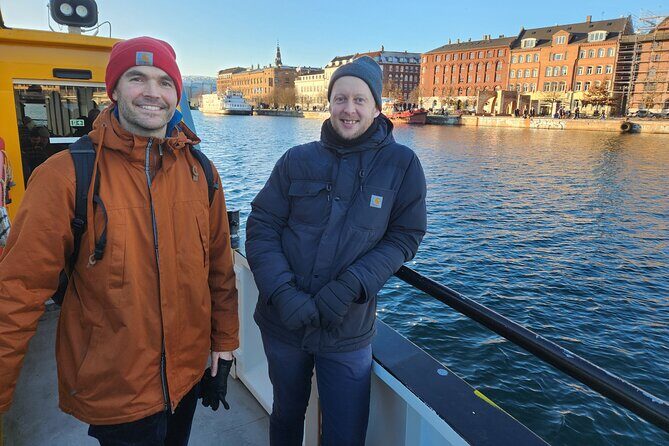
After the Black Diamond, you board the electric harbor ferry for a relaxed canal experience. This is one of the best parts of the tour because you’re using water to cover distances and viewpoints that are hard to replicate on foot.
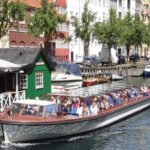
You’ll pass major waterfront landmarks like the Opera House and Amalienborg Palace, and you’ll also glide by the canal scene around colorful houses and houseboats. The vibe tends to be calmer than typical city walking, and you can take photos without constantly adjusting your route.
Here’s the practical detail that affects your day: seats can’t be reserved because it’s part of the public harbor network. That means on weekends the ferry may be full, and sometimes it may not run. When that happens, the tour switches to a scenic walking alternative, and your total walk may increase to about 6–7 km instead of roughly 5.
Passing Børsen, seeing the Opera House, and reading Nyhavn like a local
From the water you’ll cruise by Børsen (the Old Stock Exchange), one of Copenhagen’s most recognizable historic silhouettes. The dragon-spire roof with intertwined dragon tails is the headline detail—and you’ll also hear about the fact that a fire in April 2024 severely damaged the building, with restoration work underway.
Then it’s on to the Royal Danish Opera House, where the viewpoint is the whole show. Designed by Henning Larsen, the building’s modern lines look particularly clean from the harbor. If you like Scandinavian minimalism, you’ll probably feel that same satisfaction from the water angle.
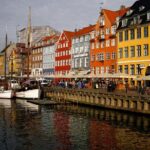
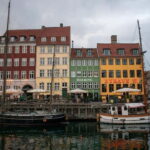
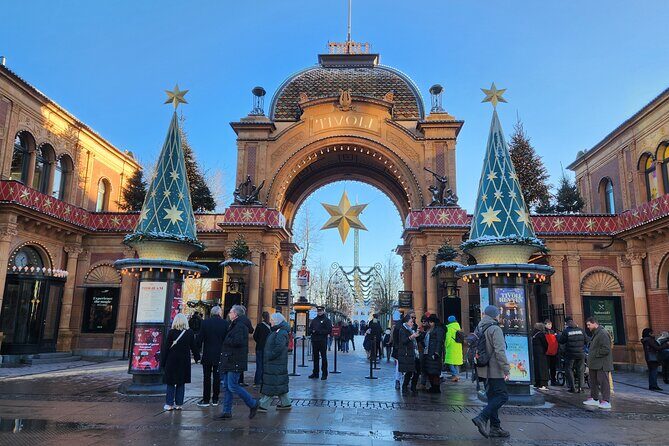
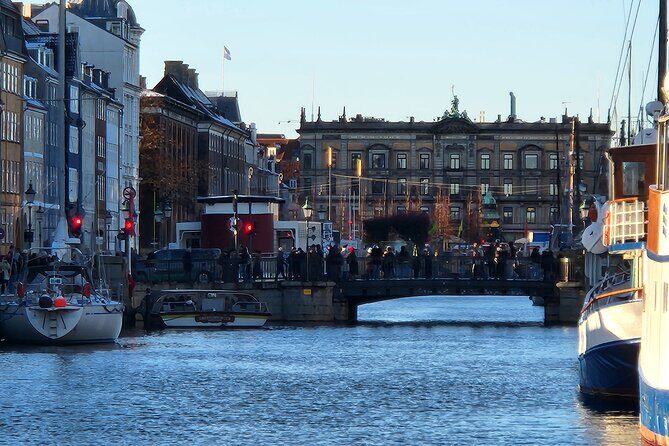
Next up is Nyhavn, one of Copenhagen’s most iconic harbor canals. From the ferry, the painted façades reflect on the water, and the whole place looks like it belongs on a postcard. It’s also a reminder that this city’s “royal and cultural” image isn’t separate from casual daily fun—Nyhavn is where people actually hang out.



Little Mermaid to Gefion Fountain: the stories behind the symbols
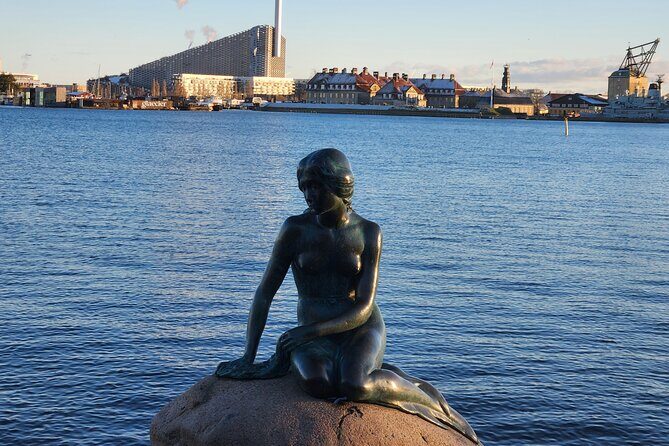
After the ferry part, you visit The Little Mermaid. Even if you’ve seen photos, it lands differently in person because it’s so quiet and modest compared to its worldwide fame. You’ll hear Hans Christian Andersen’s connection to the tale and how the bronze statue became a symbol for Copenhagen and Denmark, quietly watching over the harbor since 1913.
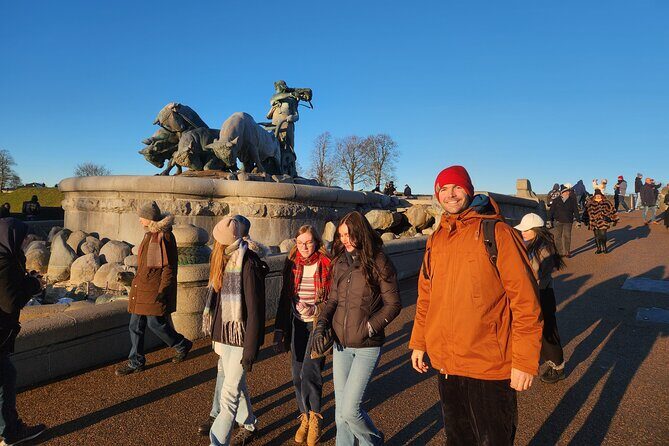
Then you’ll walk to Gefion Fountain, a more dramatic sight for a short stop. This one ties to Nordic myth: the goddess Gefion is said to have plowed the island of Zealand from Sweden using oxen. The figures and cascading water make it feel like myth made physical, and its position between the harbor, Kastellet Fortress, and the promenade helps you “place” this part of the city fast.
These stops are brief, but they work as interpretive glue. After them, Copenhagen starts to feel like one connected map instead of random points on a list.
Kastellet, Kastelsmøllen, and Churchill Park: fortress life and WWII remembrance
Next comes a change of pace: Kastellet, one of the best-preserved star fortresses in Northern Europe. You’ll walk along ramparts and cobbled paths, and you’ll learn it’s still an active military area while also functioning as a peaceful green space.
Kastellet adds practical variety to the tour. You’re not only chasing monuments—you’re walking a place shaped to defend a city, with views and space to breathe. Windmills and old barracks help you picture what the site was built for, and you might even spot swans in the moat.
You’ll also pause at Kastelsmøllen, the fortress windmill. This is the kind of stop that sounds small, but it adds charm because it’s not just architecture—it’s a lived-in piece of the fortress layout.
Then you head to Churchill Park, dedicated to Danish resistance fighters from World War II. It’s a quiet, reflective break near Kastellet and close to the Little Mermaid area. A stop like this matters because it adds emotional context. Copenhagen isn’t only about fairytales and design; it carries memory too.
Marble Church (Frederiks Kirke) and the clean line to Amalienborg
Before the royal finale, you pause at Frederiks Kirke (Marmorkirken). This stop is about both the building and the bigger view. The church was completed in 1894 after more than 150 years of construction, and it features a huge dome inspired by St. Peter’s Basilica in Rome.
One of the best “wait, that’s aligned” moments here is the sightline toward Amalienborg Palace. From this area, you get views that show how Copenhagen’s landmarks often relate to each other, not just sit independently.
It also helps you mentally prep for the end. If you know what you’re aiming at visually, the Changing of the Guards becomes easier to enjoy instead of feeling like a scramble.
Amalienborg Palace Museum area to the Changing of the Guards: the reason to come
You’ll reach Amalienborg Palace, the official residence of the Danish royal family since 1794. The layout matters: four identical Rococo-style palaces around an octagonal courtyard, with a central equestrian statue of King Frederik V.
You’ll learn about the monarchy’s history and the daily routines around this area, plus the importance of the ceremonial Changing of the Guards. The stop near the museum setting is also where you can often see how the palace courtyard opens toward the waterfront and toward the dome view from earlier.
Then you finish at Amalienborg Slotsplads, where the guard change happens. Timing is everything here, and this tour is set up around that.
Full 12:00 ceremony vs the quieter shift relief
If you choose the 09:00 AM or 09:30 AM tour, you arrive just in time for the full 12:00 Changing of the Guards ceremony. Expect soldiers marching into the square and often the Royal Danish Band as part of the show.
For 11:00 AM or 1:00 PM tours, the ending is still at Amalienborg, but you’ll see a smaller, quieter guard change as the new shift relieves the old. It’s less of a pageant and more of a real routine moment. Either way, you’re ending where the action actually happens.
Price and pace: what $77.39 gets you in 3 hours
At $77.39 per person for about 3 hours, the value isn’t the number of stops. It’s what you’re buying: a guide to connect the dots plus transport and timing that would take you longer to assemble on your own.
You’re also getting a lot of “free-to-enter” locations along the way. The walk is built around exterior viewing at spots like Tivoli, Glyptoteket, Christiansborg, and the Black Diamond. You’ll also enjoy the harbor water ride, which cuts down the amount of time you’d spend moving between waterfront highlights.
One practical note: not every stop is covered with included admission. The itinerary lists Tivoli Gardens and Ny Carlsberg Glyptotek as not included, and it also flags that the Amalienborg Palace Museum ticket isn’t included. That’s normal for highlight tours. It keeps the schedule tight so you can still reach the guard change without turning your day into a ticket-hunt.
Pace-wise, this is for moderate physical fitness. You should expect walking on city streets plus some time on fortress paths. And if the ferry doesn’t run (or is too crowded), your walk can jump to about 6–7 km total.
Who this tour suits best (and who should skip it)
This is a great fit if you want a first-day orientation and you like mixing city context with recognizable landmarks. It’s also a strong option if you enjoy a story-first style of guiding—people are consistently impressed by guides like Michael, Maybritt, Signe, Mia, Andy, Eric, Andreas, Otto, and Line for being friendly, organized, and good at handling questions as you go.
It may not suit you as well if you hate waiting outdoors for a timed ceremony. The Changing of the Guards is worth it, but it involves standing and crowd energy. If you’re traveling with someone who gets sore quickly from standing, bring patience and plan for comfortable layers.
Final verdict: should you book this Walk & Canal + Guards tour?
Yes, I’d book it if you want Copenhagen’s highlights plus a timed ending at Amalienborg without piecing together routes and transport yourself. The best part is how the tour uses two modes—walking for context and an electric ferry for the big waterfront views—then lands exactly where you want to be for the Changing of the Guards.
Skip it only if you know you need guaranteed ferry access. Because ferry seats can’t be reserved and weekends can get crowded, you should be comfortable with a plan B day and with a bit more walking if the water option doesn’t work.
FAQ
Where do I meet for the tour in Copenhagen?
You meet inside Copenhagen Central Station, in the main hall beneath the large round analog clock, next to the 7-Eleven. There are two 7-Elevens, so look for the one by the clock.
Where does the tour end?
The tour ends at Amalienborg Slotsplads by Amalienborg Palace. It’s near the metro and roughly a 10-minute walk from Kongens Nytorv and Nyhavn.
Is the canal ferry included, and can I reserve seats?
The tour includes a canal experience on an electric harbor ferry. Seats are part of the public harbor network, so seats can’t be reserved, and on weekends the ferry may be full or canceled.
What should I expect for walking distance?
The walking portion is designed around about 5 km. If the ferry can’t be used and the tour switches to the walking route, expect about 6–7 km total.
What’s the best tour time for the Changing of the Guards?
If you book 09:00 AM or 09:30 AM, you arrive just in time for the full Changing of the Guards at 12:00 PM. If you book 11:00 AM or 1:00 PM, you’ll see a smaller, quieter guard change when the new shift relieves the old.
Is admission included at the stops?
Some stops have free viewing, but admissions are not included at certain places like Tivoli Gardens, Ny Carlsberg Glyptotek, and Amalienborg Palace Museum.