Copenhagen’s royals, told with dark comedy. This private, 90-minute walking tour turns big-name spots like Copenhagen Opera House and Strøget into one connected story about Danish power, court life, and the stuff that shaped modern Denmark. I also love that it ends with an easy follow-on—your route finishes near Frederiks Kirke, and you can continue with a 15-minute walk toward the Little Mermaid area.
One thing to plan for: it’s a walking tour with timing built in, especially around the changing of the guard. If you’re picky about ceremonies or you hate crowds and street noise, you’ll want to pick your start time carefully and wear solid shoes.
In This Review
- Key things you’ll notice on this Copenhagen tour
- A 90-minute Copenhagen highlights route that actually feels like a story
- Højbro Plads start: Copenhagen’s origins in your first 5 minutes
- Nikolaj Kunsthal: a church stop that comes with the Copenhagen fire story
- Strøget and King’s New Square: the view-and-statue segment
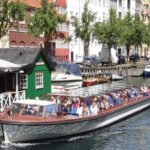
- Nyhavn: postcard views plus a sense of how the harbor shaped stories
- Amaliegade and WWII Denmark: embassies, politics, and the past you can’t ignore
- Amalienborg’s guard change: the timing game you can actually win
- Frederiks Kirke (Marmorkirken) finale: marble church, easy walking finish
- Price and value: $374.71 for a private up-to-one group
- Who should book this Copenhagen highlights walk
- Should you book it?
- FAQ
- How long is the Politically Incorrect Private Highlights Walking Tour in Copenhagen?
- What does the tour cost?
- Is this tour private?
- What language is the tour offered in?
- Is pickup available, and where do I meet the guide?
- Where does the tour end?
- Do I need admission tickets during the tour?
- Can I see the changing of the guards at Amalienborg?
- What if I need to cancel?
Key things you’ll notice on this Copenhagen tour
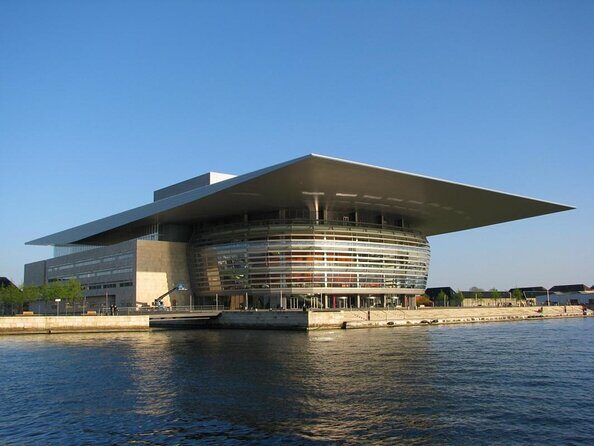
- Royalty stories with comedy energy that keep the facts memorable
- Copenhagen’s landmarks in a tight loop: Strøget, Nyhavn, Amalienborg, Marmorkirken
- WWII and Denmark: embassy history at Amaliegade with a guided explanation
- Guard change timing matters: you may catch the big noon moment depending on start time
- Quick-hit stops that mix views with short, focused history segments
- Guides with strong English and big personality (you may be with Troels, Truel, or Jack)
A 90-minute Copenhagen highlights route that actually feels like a story
This is a private walking tour built for one group at a time, with a guide using humor to connect the city’s royal and political themes. You’ll cover major city landmarks without the usual problem of bouncing between unrelated stops. Instead, the guide keeps pulling you back to the same question: who held power in Denmark, how did they show it, and why does Copenhagen look the way it does now?
The format is also practical. You get about 1 hour 30 minutes, it’s in English, and you’ll receive a mobile ticket. Pickup is offered, but it’s on foot—so think “meet-up and walk with the guide,” not bus transfers.
You can also read our reviews of more walking tours in Copenhagen


Højbro Plads start: Copenhagen’s origins in your first 5 minutes
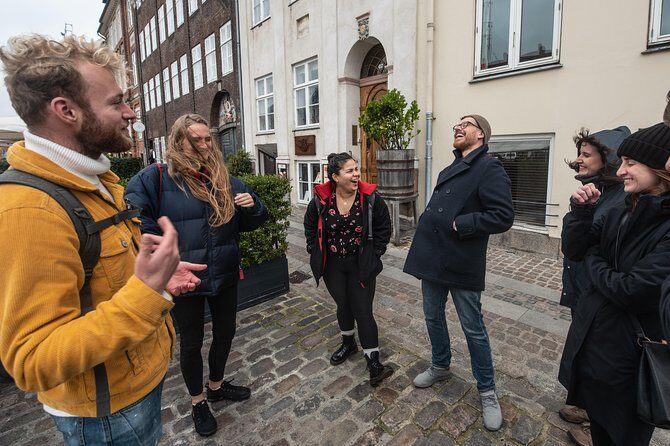
You begin at Højbro Pl. 10 (Højbro Plads). This is the kind of starting point that helps you get your bearings fast: you’re placed near the older core of the city, where you can link what you see in front of you to where Copenhagen came from.
The guide uses this early moment to set the frame: the origins of Copenhagen and the key historical figures tied to the area. It’s short—around 5 minutes—but it matters because it gives you context before you hit the bigger, more dramatic sights.
Tip for you: arrive a few minutes early and look for your guide at the exact start point on Højbro Plads. This tour moves at a comfortable walking pace, but you don’t want to start late.
Nikolaj Kunsthal: a church stop that comes with the Copenhagen fire story
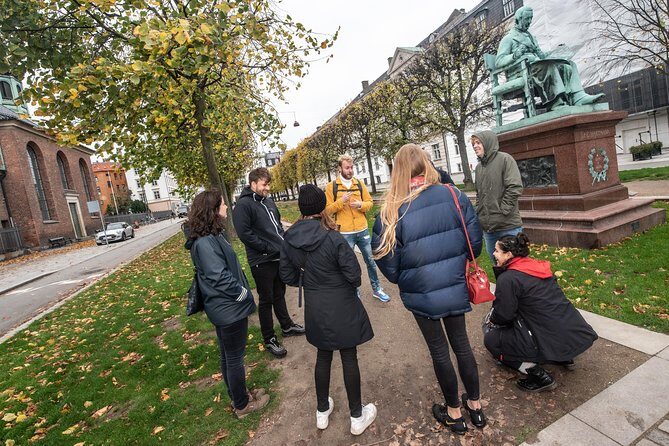
Next is Nikolaj Kunsthal, described as a church—so you’ll be paying attention to how the building works and what kind of place it is. This stop is timed to last about 15 minutes, and it’s one of the spots where the guide’s storytelling gets very specific.
The focus here is the great Copenhagen fires, and how that disaster shaped the city. You’ll likely spend more time looking at the details than you would on your own. You’re not just learning dates—you’re learning how a city rebuilds itself after something goes wrong.
One practical note: admission here is not included, so don’t assume you can step in freely without a ticket. The tour does say admission is not included for this stop, so if you want to go inside, plan for that.
Strøget and King’s New Square: the view-and-statue segment
After the fires, the tour swings into the central-city “walk and look” mode.
You’ll pass Strøget, described as the longest pedestrian-only shopping street in the world (the tour notes it isn’t personally verified, but it’s a common claim). This is a useful stop even if you’re not shopping. You’ll see how Copenhagen’s center works day-to-day—human traffic, the rhythm of storefronts, and the street’s role as a connector.
Then you move to Copenhagen King’s New Square, with about 15 minutes here. The guide turns it into a viewpoint lesson: the best buildings to watch, the statue at the centre, and how the architecture communicates status.
From the square, you’ll also get a guided look at:
- a French-inspired building tied to a major department store
- the answer to the question of where the rich and famous stay when they’re in the city
- an impressive building in the square, including the statues up front
Possible drawback for you: this is the part of the route where you’ll want to balance photos with listening. If you stop too long for pictures, you can miss the story beat that makes the statues and facades meaningful.
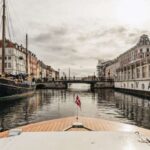
Nyhavn: postcard views plus a sense of how the harbor shaped stories

Then comes Nyhavn, with around 15 minutes. The guide frames it as more than a postcard: the harbor is tied to the birthplace of many histories and stories.
Nyhavn is one of Copenhagen’s most photographed stretches for a reason. But the tour adds value by guiding what to pay attention to. You’ll be nudged to look at the buildings and the harbor atmosphere without turning it into a museum-style checklist.
A practical warning you can plan around: the tour specifically says the buildings are worth looking at but not necessarily worth heading into. In other words, don’t expect every stop here to be a door-you-enter moment. This is a “watch and understand” segment, and it works best when you let the guide set the pace.


Amaliegade and WWII Denmark: embassies, politics, and the past you can’t ignore
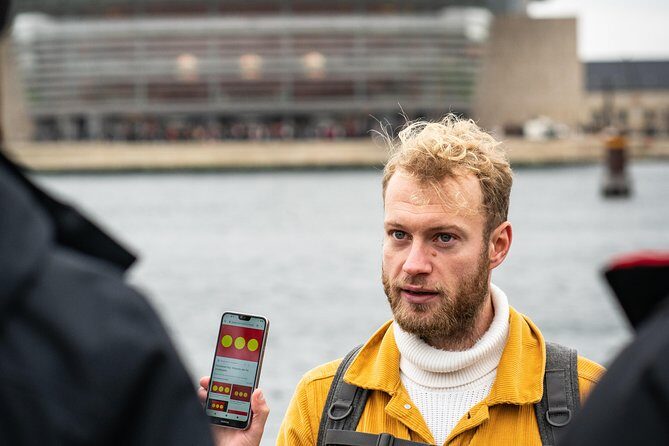
Next is Amaliegade, about 10 minutes. This stretch is described as home to embassies, including one tied to a historically dreadful foe. The tour tells you not to expect the guide to spoil it in advance, so you’re meant to arrive ready to hear the explanation.
What you take away from this stop is the connection between modern diplomacy and WWII-era Denmark. The guide’s angle here is about how Denmark lived through the pressure of the era—political choices, external forces, and how the city’s institutions reflect that layered past.
Admission here is listed as free, but the bigger “cost” is attention. This stop works best when you listen closely and accept that it won’t be light, fluffy sightseeing.
Tip for you: if you’re sensitive to heavier topics, pace yourself mentally. The tour mixes humor with real history, and Amaliegade is one of the more serious beats.
Amalienborg’s guard change: the timing game you can actually win
The tour then targets the Changing of her Majesty’s guard at Amalienborg Castle. This stop takes about 20 minutes and is specifically timed around the schedule: the tour notes guard changes happen every 2 hours, and if your tour starts at 11, you arrive just in time for the big daily one at noon.
That timing detail is gold. Many visitors show up randomly and miss the ceremony they came for. Here, the guide builds your schedule around it—so you’re more likely to see what you’re aiming to see.
Admission is listed as not included for this stop, which matters if you were thinking it would work like a museum entry. This is mainly a street-and-square ceremony experience, so the key “prep” is physical: you’ll need to stand and watch.
Possible drawback for you: if you start at a different time than the recommended 11:00 window, you might not catch the noon moment. You can still enjoy the location and context, but your photo moment may be different.
Frederiks Kirke (Marmorkirken) finale: marble church, easy walking finish

The tour ends at Frederiks Kirke (Marmorkirken). It’s described as the marble church, and the vibe is “end strong”: a beautiful visual anchor after a route packed with political and royal themes.
This stop runs about 10 minutes. The tour also says the ending point can vary slightly by guide, but all endings are within a 5-minute walk of Frederiks Kirke.
And there’s a nice bonus angle for planning your day: the tour is designed to finish with an easy path that keeps you close to the royal residences area, and from there you’ve got a 15-minute walk toward the Little Mermaid statue area. That makes it a smart choice if you want a coherent half-day arc: central sights, royal ceremony, and then a seaside icon.
Price and value: $374.71 for a private up-to-one group
This tour is priced at $374.71 per group (up to 1). That’s not “budget Copenhagen,” so you should judge it based on value, not cost.
Here’s what you’re really paying for:
- A private guide (not a crowd shuffle), so the route stays flexible to your group
- A tight 90-minute structure that hits multiple major areas without you needing to plan or connect the dots
- Storytelling that links royal places to modern Denmark, including the WWII angle at Amaliegade
- Comedy delivery that helps the history stick, not just sit in your notes app
If you’re solo, private tours cost more because you can’t split guide time. But for a first visit, I think this kind of tour can be a good shortcut: you get a strong overview while the city is still unfamiliar, and you learn what’s worth revisiting later on your own.
Also, the tour is commonly booked ahead (on average 48 days in advance). If your dates are fixed, don’t wait for a last-minute deal.
Who should book this Copenhagen highlights walk
This tour is a great match if:
- you want a first-time Copenhagen orientation that doesn’t feel like a generic checklist
- you enjoy humor-based storytelling paired with clear historical context
- you care about Danish royalty and how power is shown in public spaces
- you want to see Strøget, Nyhavn, Amalienborg, and Marmorkirken in one connected route
It might be less ideal if:
- you dislike walking and standing through ceremony-style viewing
- you want mostly museum time or lots of inside-the-building exploration
- you’re sensitive to a “politically incorrect” style of comedy (the tour leans into edgier humor as part of the concept)
Should you book it?
I’d book it if you want a Copenhagen day that feels like a narrative, not a list. The route is well-chosen for first-timers, and the tour’s biggest strength is the way it uses humor to connect royalty, public squares, and WWII-era Denmark to real places you can point to later.
One more practical reason: guides on this tour are often singled out for strong English and for keeping the pacing lively. Names like Troels, Truel, and Jack pop up when people talk about the experience, usually for making the time fly while still explaining what matters.
If that sounds like your kind of sightseeing, this is a smart way to spend 90 minutes in Copenhagen.
FAQ
How long is the Politically Incorrect Private Highlights Walking Tour in Copenhagen?
It runs about 1 hour 30 minutes.
What does the tour cost?
The price is listed as $374.71 per group (up to 1).
Is this tour private?
Yes. It’s a private tour/activity, so only your group participates.
What language is the tour offered in?
The tour is offered in English.
Is pickup available, and where do I meet the guide?
Pickup is offered, and it’s done on foot. The tour starts at Højbro Pl. 10, 1200 København, Denmark.
Where does the tour end?
The approximate ending area is near the royal palaces (Amalienborg). The end point is close to Frederiks Church / Frederiksgade 4, 1265 København, Denmark.
Do I need admission tickets during the tour?
Some stops are free, and some are not included. Nikolaj Kunsthal is noted as admission not included, and the changing of the guard stop also lists admission not included. Other listed stops are free.
Can I see the changing of the guards at Amalienborg?
Changing of the guard happens every 2 hours. If your tour starts at 11, the tour notes you arrive just in time for the big one at noon.
What if I need to cancel?
You can cancel for a full refund if you cancel at least 24 hours before the experience starts. If you cancel less than 24 hours before, the amount paid is not refunded.







Leave a Reply