REVIEW · COPENHAGEN
Copenhagen: Amalienborg Palace Museum Entry Ticket
Book on GetYourGuide →Operated by Kongernes Samling / The Royal Danish Collection · Bookable on GetYourGuide
Copenhagen’s royal core is right here. With this Amalienborg Palace Museum entry ticket, you can walk through rooms preserved like the royal family just stepped out, including major highlights like the Fabergé Chamber and grand spaces such as the Gala Hall. You also get a clear, chronological look at the Danish monarchy through the last 150 years, plus a special exhibition on the succession of the throne.
I like that this museum is built for real-life touring. You’ll get key rooms tied to specific kings and queens, not just generic portrait walls, and the interiors are detailed enough to reward slow looking. The main watch-out is value-for-money: at $19, it’s enjoyable and meaningful, but it’s not a full half-day mega-palace experience, so plan your time accordingly.
In This Review
- Key things to know before you go
- Amalienborg Palace Museum: what this ticket really gets you
- Where the entrance is, and the 20-minute ticket rule
- Your self-guided route through the royal rooms
- Fabergé Chamber: the Denmark–Russia story in jewels
- Christian X’s dining room: preserved life at the table
- Christian X’s study: why the details matter
- Queen Louise’s private salon: family ties across Europe
- Gala Hall: scale, gilding, and the palace square view
- Frederik X: King of Tomorrow exhibition: succession told in objects and media
- Price and logistics: is $19 worth it for your day?
- Who this museum suits best (and who may want a different stop)
- Quick practical tips before you go
- Should you book this Amalienborg Palace Museum ticket?
- FAQ
- Where is the entrance to the Amalienborg Palace Museum?
- Do I need to go downstairs to scan my ticket?
- Is the ticket valid for more than one day?
- How late can I arrive before the ticket becomes invalid?
- How long should I plan for the museum visit?
- What’s included with the ticket?
- Is a guided tour included?
- Is the museum wheelchair accessible?
- Are bags, strollers, or pets allowed inside?
- Until when is the special exhibition Frederik X: King of Tomorrow available?
- Can I bring food and drinks?
Key things to know before you go
- Royal rooms feel lived-in. Many rooms are preserved as if the occupants simply left, with furniture and personal details intact.
- The Fabergé Chamber connects Denmark and Russia. You can see Russian jewelry and an important Fabergé coronation brooch tied to Tsar Nicholas II.
- A self-guided route works well. There’s a logical flow, and audio support appears throughout the experience, including kid-focused audio.
- Expect a quick ticketing step. Your online ticket/QR code needs to be scanned downstairs at the cashier before you go upstairs.
- A special exhibition runs alongside the rooms. Frederik X: King of Tomorrow is on display through September 8, 2024.
- Bring light. Oversize bags and many larger items aren’t allowed inside, so pack for a museum, not a weekend.
Amalienborg Palace Museum: what this ticket really gets you

This ticket is for the Amalienborg Palace Museum, located at Amalienborg in central Copenhagen. Amalienborg is a palace complex made up of four palaces, and the museum area is part of Christian VIII’s Palace. In plain terms: you’re paying to access the royal-family-focused rooms and exhibitions, not a guided tour.
The big value here is how specific it feels. You’re not just seeing “royal stuff.” You’re seeing spaces associated with named Danish monarchs, preserved over time, and presented in a way that tells you who lived there and what their world looked like.
This museum also works well as a family stop. It’s described as suitable for all ages, and there’s audio support designed for children that makes the story easier to follow without turning it into a lecture hall.
A few more Copenhagen tours and experiences worth a look



Where the entrance is, and the 20-minute ticket rule

Getting inside is mostly straightforward, but you need to know the starting point. When you enter Amalienborg Square from Frederiksgade (near the Marble Church area), the museum entrance is in the first building to your left.
Once you’re at the right building, don’t rush straight into the galleries. You’ll need to go downstairs to the cashier to present and scan your online ticket. This is one of those steps that can quietly eat time if you forget it.
And here’s the practical gotcha: if you arrive more than 20 minutes late, your ticket no longer works. So if you’re coming from another timed stop in the city, give yourself a little buffer. Copenhagen is walkable, but it’s also easy to misjudge how long you’ll spend crossing busy streets or detouring around the palace square.
Your self-guided route through the royal rooms
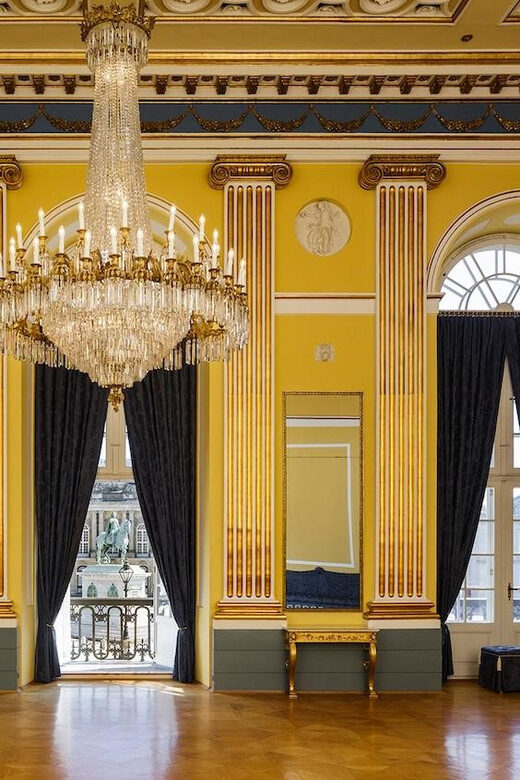
With the entry ticket, you can move at your own pace through the preserved rooms and the exhibitions. The museum experience is set up like a route, and the flow tends to make sense: you go room to room, with each space tied to a chapter of Danish monarchy.
A good approach is to keep one “slow look” rule for yourself. Let the preserved rooms do their job. When you’re in Christian X’s study or a queen’s salon, it’s the small details—furniture, finishes, how the space is set up—that make it feel real rather than staged.
How long to plan: many visitors end up spending around 45 minutes to 1 hour on the museum route, especially if you use the audio support. If you also want time for reading and a bit of outside palace-square wandering, plan closer to 1.5 hours total.
A tip that helps: if you’re using a QR code, expect a ticket exchange before you head upstairs for the exhibition areas. This is normal for this venue, and doing it early helps your visit feel smooth instead of rushed.
Fabergé Chamber: the Denmark–Russia story in jewels
The Fabergé Chamber is one of the most eye-catching stops in the museum. It focuses on handcrafted Russian jewelry from 1860 to 1917, with a specific emphasis on the close ties between the Danish and Russian monarchies.
This is the kind of room that makes you look twice. Not because it’s shiny for the sake of being shiny, but because the objects are tied to real historical relationships between royal families. In particular, you can see the Fabergé coronation brooch created for the coronation of Tsar Nicholas II.
If you like connecting art objects to political history, this section is a satisfying payoff. You’ll leave with a clearer sense that royal connections weren’t just ceremonial—they influenced the materials, styles, and meaning behind what elites wore and displayed.
Christian X’s dining room: preserved life at the table
Next up in the monarchy timeline is the Christian X and Queen Alexandrine dining room. The key detail is that it appears almost exactly as it did when Christian X and Queen Alexandrine lived in the palace from 1899 until their deaths (Christian X in 1947 and Queen Alexandrine in 1952).
This room works because dining spaces tell you a lot without needing big explanations. When a dining room is preserved in near-original condition, you can often spot the difference between a showpiece room and a working household space—where everyday events likely happened, how the furnishings support social life, and how formality shows up in the layout.
For museum visitors, this is where you shift from “seeing objects” to “reading lives.” It’s not just royal imagery; it’s a way of understanding household rhythm at a specific moment in time.
You can also read our reviews of more museum experiences in Copenhagen


Christian X’s study: why the details matter
The museum also includes Christian X’s study, preserved as though he left it just moments before you entered. The room reflects the period from 1899 to his death in 1947, and it’s presented with the dark, heavy furnishings and dark walls typical of a gentleman’s study around 1900.
There’s a useful insight here for anyone who thinks palaces are only about grandeur. The study reminds you that monarchs were also administrators and officers. In this space, the presentation makes it clear the room felt like it belonged to someone with military or official responsibilities—tools of governance and authority, translated into furniture and interior design.
If you prefer history that feels grounded in daily reality, this is a strong stop. It’s easier to imagine the working king here than in a purely ceremonial setting.
Queen Louise’s private salon: family ties across Europe
Another standout is Queen Louise’s private salon, shown with an interior style around 1895. The salon includes paintings and framed photographs on tables, and those items point directly to her family life and close ties throughout Europe.
What I like about this room is the emotional angle. Instead of focusing only on power, the museum gives you a window into relationships. Photographs inside a salon aren’t just decoration; they suggest travel connections, social circles, and personal networks that shaped politics too.
For many visitors, this is where the museum becomes more than architecture. It becomes a story about people—someone who hosted, traveled socially, and stayed connected beyond Denmark’s borders.
Gala Hall: scale, gilding, and the palace square view
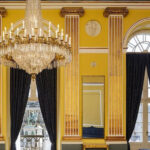
The Gala Hall is one of the most impressive rooms in Denmark, at least in terms of the space it gives you. The ceiling height is about 8 meters, the room features lavish gilding, and it comes with a view of the palace square.
The Royal Family commissioned artist Nicolai Abildgaard to design the interior in 1794. Sculptures in the hall were created by Bertel Thorvaldsen, which adds another layer of Danish art history to the royal setting.
If you’ve spent time in smaller museum rooms, the Gala Hall is a welcome change. You get a reminder that royal life also involved public staging—spaces designed to impress visitors and signal status. Take a few minutes to look around from different angles. The hall tends to feel different depending on where you stand because of height and ornament.
Frederik X: King of Tomorrow exhibition: succession told in objects and media
This museum visit also includes the special exhibition Frederik X: King of Tomorrow, running until September 8, 2024. It marks the historical succession of the Danish throne, which took place on January 14.
The exhibition uses multiple formats—photographs, objects, video clips, paintings, and sound—to create a portrait of the new king. That mix matters. It means this isn’t just a display of framed pictures. It’s built to keep you engaged even if you don’t read every wall label.
If you’re visiting around the exhibition period, this is one reason the museum feels current rather than locked in the past. You’ll get the monarchy’s story as a living institution, not only an old interior.
Price and logistics: is $19 worth it for your day?
At $19 per person, this is priced like a focused museum stop, not a budget attraction. The question is whether you’ll feel satisfied once you’ve seen the route.
Here’s how I’d judge value for your trip:
- If you like royal history tied to real rooms and named people, you’ll likely find it worth it. The preserved interiors make the story feel tangible.
- If you need a long, multi-gallery experience that takes most of your day, you might feel it’s short. The museum route often lands around 45 minutes to an hour, depending on how much you read and listen.
The bright side is that the museum sits in the middle of Copenhagen’s palace area. So even if the indoor portion is compact, you can pair it with a walk around Amalienborg Square and nearby sights without losing your day.
Also remember what you can’t bring. Food and drinks are not allowed, and large bags and backpacks aren’t allowed inside. Pack light so you’re not stuck dealing with storage rules.
Who this museum suits best (and who may want a different stop)
This is a strong match for:
- People who like history that’s anchored to specific monarchs and rooms.
- Families who want a museum that can keep kids engaged with audio support.
- Visitors who enjoy art and design details, especially in the Gala Hall and Fabergé Chamber.
It might be less ideal if:
- You’re expecting a huge, sprawling palace with endless rooms. The museum is focused.
- You want a guided experience. A guided tour isn’t included with this ticket, so you’re relying on the museum’s self-guided setup and audio support.
If you’re the type who likes to move at your own pace—read when you want, linger when something catches your eye—this kind of ticket is a good fit.
Quick practical tips before you go
Bring your patience for small museum rules. This one has clear boundaries.
- Don’t plan to bring oversized luggage, strollers, or big bags. Large purses and backpacks are not allowed inside.
- Pets aren’t allowed, but assistance dogs are allowed.
- Expect to present and scan your ticket downstairs at the cashier before going upstairs.
- Arrive early enough to stay within the 20-minute late limit.
If you’re traveling with kids, the audio support that’s geared toward children can make the visit easier and more fun. And if you prefer a steady flow, treat this like a route with chapters: Fabergé Chamber, dining room, study, salon, Gala Hall, then the Frederik X exhibition.
Should you book this Amalienborg Palace Museum ticket?
Book it if you want a compact, high-quality royal stop that feels personal and specific—especially if you’re curious about Danish monarchy through preserved interiors and named figures. The Fabergé Chamber and the preserved rooms tied to Christian X, Queen Alexandrine, and Queen Louise are the kind of highlights that make the ticket feel meaningful.
Skip it or consider another option if you’re hoping for a long, guided, all-day palace experience or if you hate the idea of arriving within strict timing rules. The museum is focused, and that’s a feature for some and a limitation for others.
If you’re planning a Copenhagen day around walkable highlights in the center, this fits nicely. It gives you a strong sense of place at the heart of Amalienborg—then lets you spend the rest of your time outside in the city.
FAQ
Where is the entrance to the Amalienborg Palace Museum?
The entrance is in the first building to your left when you enter Amalienborg Square from Frederiksgade / the Marble Church.
Do I need to go downstairs to scan my ticket?
Yes. Before your visit, you need to go downstairs to the cashier to present and scan your online ticket.
Is the ticket valid for more than one day?
No. The ticket is valid for 1 day. You should check availability for starting times.
How late can I arrive before the ticket becomes invalid?
If you arrive more than 20 minutes late, your ticket will no longer be valid.
How long should I plan for the museum visit?
A typical visit is around 45 minutes to an hour, depending on how you move through the route and use audio.
What’s included with the ticket?
The ticket includes entry to the Amalienborg Palace Museum and access to all exhibitions.
Is a guided tour included?
No. A guided tour is not included.
Is the museum wheelchair accessible?
Yes, it is wheelchair accessible.
Are bags, strollers, or pets allowed inside?
Oversize luggage, baby strollers, and large bags (including backpacks) are not allowed. Pets are not allowed, but assistance dogs are allowed.
Until when is the special exhibition Frederik X: King of Tomorrow available?
It is available until September 8, 2024.
Can I bring food and drinks?
No. Food and drinks are not allowed.