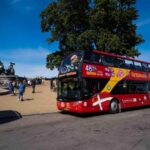
Copenhagen clicks into place fast when you can ride, pause, and look. I like the open-top double-decker setup because it makes photos easy, and I also really appreciate the free headphones with onboard audio so you’re not stuck reading a guidebook while the sights roll by. My main caution: the experience depends on buses actually stopping as you expect, and some people report long waits or confusion if you don’t spot the right stop quickly.
This tour is built for a “do the essentials first” day, then use the hop-off freedom to return to whatever grabs you. With routes that cover iconic waterfront views, royal buildings, and even Frederiksberg and Christiania, it’s a strong way to get oriented without turning your whole day into navigation work.
In This Review
- Key Points You’ll Feel on Day One
- City Sightseeing Copenhagen: The Real Value of a 24–72 Hour Hop-On Bus
- Choosing Your Route: Classic, Colourful, and Carlsberg (Yes, They’re Different)
- Ved Stranden to Black Diamond: The Classic Route’s Copenhagen Highlights
- Ved Stranden (Ved Stranden 26 / Stroget)
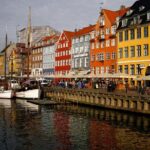
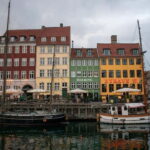
- Nyhavn
- Amalienborg Palace (Amalienborg Palace / Ofelia Plads) + Gefion Fountain
- The Little Mermaid + Langelinie (N/M in May–Sep)
- Rosenborg Castle + Gammeltorv
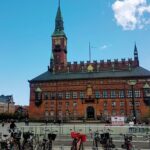
- Rådhuspladsen (City Hall Square / National Museum of Denmark)
- Radisson Collection Royal Hotel area (Tivoli / Radisson Collection Royal Hotel) + Fisketorvet (shopping)
- Copenhagen Marriott Hotel / Kalvebod Waves
- Søren Kierkegaards Pl. 1 (The Black Diamond / DAC / BLOX)
- Colourful Route: Christianshavn, Christiania, Opera, and Reffen
- Ved Stranden
- Christianshavn
- Freetown Christiania
- Det Kongelige Teater – Operaen
- Reffen – Skøjteøen (Street Food / Reffen)
- Casino Copenhagen (Islands Brygge)
- Radisson Collection Royal Hotel area (Tivoli / Radisson Collection Royal Hotel)
- Home of Carlsberg Route: Planetarium, Frederiksberg, Zoo, and Gardens
- Radisson Collection Royal Hotel area (Tivoli)
- Planetarium | Denmark
- Gammel Kongevej
- Copenhagen University Horticultural Gardens (Copenhagen University)
- Frederiksberg Centret
- Frederiksberg Town Hall
- Royal Copenhagen – Outlet
- Copenhagen Zoo / Cisternerne
- De Små Haver (Pile Allé) + Carlsberg / Bakkehuset
- Frederiksberg Have
- Meatpacking District (Meatpacking District / Scandic Kodbyen)
- Audio, Headphones, and the Art of Not Missing the Point
- Where the Tour Can Feel Frustrating: Stops, Timing, and Busy Days
- Should You Book This Copenhagen Hop-On Hop-Off Bus Tour?
- FAQ
- How long is the Classic route?
- How long are the other routes?
- What time does the Classic route start and end?
- Are tickets mobile, and can I use paper vouchers too?
- How do the audio guides work, and what languages are available?
- Is WiFi included on the bus?
- What’s included in the ticket price?
- Are attraction tickets included?
- Can I cancel and get a refund?
Key Points You’ll Feel on Day One

- Open-top double-decker rides make it simple to see Copenhagen’s waterfront and skyline from street level plus a higher angle.
- Hop-on, hop-off timing lets you spend more time where you care most, including Tivoli and the Little Mermaid area.
- Multiple routes mean you can tailor the neighborhoods you see instead of doing one fixed circuit.
- Headphones + audio commentary help you connect names to places as the bus rolls past.
- Stops near major sights reduce walking… but you still need to watch signage closely so you board the correct line.
City Sightseeing Copenhagen: The Real Value of a 24–72 Hour Hop-On Bus
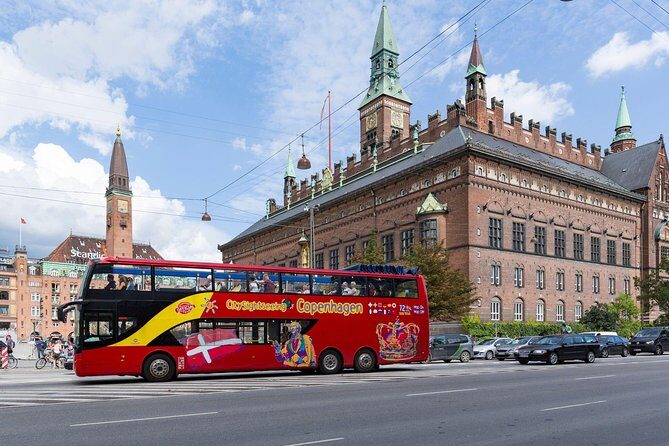
If you’re trying to get Copenhagen under control fast, this kind of tour is practical medicine. The ticket is designed for flexible sightseeing windows (24, 48, or 72 hours), so you can ride once to get the lay of the land, then hop back later for a museum, a long stroll, or a second look at the same photo spot from a better angle.
At an average price of $45.71 per person, you’re not paying for attraction tickets. You’re paying for transportation, orientation, and onboard context. That can be good value if you’ll actually use the hop-off freedom multiple times—especially if your hotel is near one of the stops.
What helps most is the “choose your own pace” structure. The bus does the moving; you do the decision-making. And Copenhagen is a city where that matters. You can easily spend 60 minutes wandering, then realize you want to linger near the harbor or the royal core. This tour lets you make that choice without committing to one nonstop walking itinerary.
That said, your experience is only as smooth as the day’s bus traffic and how quickly you can identify the right stop. Some issues show up when people miss a bus and then wait longer than expected. Plan a little buffer time, and you’ll enjoy the convenience much more.
You can also read our reviews of more city tours in Copenhagen

Choosing Your Route: Classic, Colourful, and Carlsberg (Yes, They’re Different)
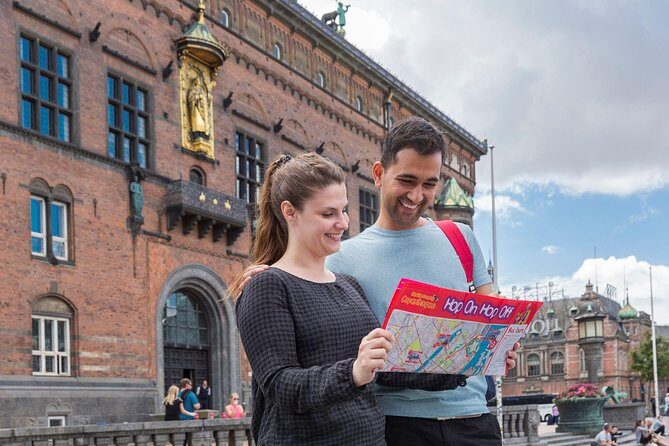
This is not one single loop. You’re picking among three routes, each with its own rhythm and stop pattern.
- Classic Route (Red line / 90 minutes, ~35-minute frequency)
First departure from Ved Stranden 26 at 10:00am, last departure from there at 4:30pm.
First departure from Tivoli area (Stop 12) at 9:30am, last departure at 4:10pm.
Frequency is listed as every 35 minutes.
- Colourful Route (55 minutes)
Departs from Tivoli (Stop 12) at 12:00pm, 2:00pm, and 4:00pm.
Departs from Ved Stranden (Stop 1) at 12:15pm, 2:15pm, and 4:15pm.
- Home of Carlsberg Route (45 minutes)
Departs from Tivoli (Stop 12) at 11:15am, 1:15pm, and 3:15pm.
It also has departures tied to Copenhagen Zoo and the Home of Carlsberg stop areas at about 11:25am / 1:25pm / 3:25pm and 11:35am / 1:35pm / 3:35pm, respectively.
If you want the fastest “big hits” day, start with the Classic Route. If you’re curious about Copenhagen’s quirkier side, the Colourful Route adds stops like Christiania and Reffen (street-food area). If you’d rather shift west to Frederiksberg and zoo/gardens vibes, the Carlsberg route gives you a calmer pace and a different set of sights.
Ved Stranden to Black Diamond: The Classic Route’s Copenhagen Highlights
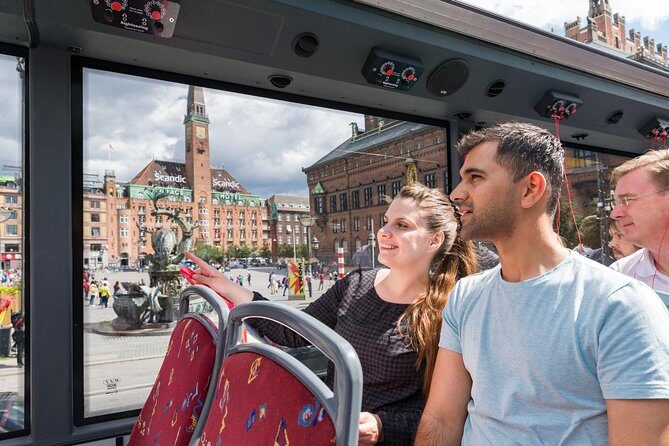
The Classic Route is built around central icons and “Copenhagen postcard” scenery. It’s the one I’d choose for your first pass through town, especially if you want to see the Little Mermaid, royal buildings, and the Tivoli area without planning in advance.
Ved Stranden (Ved Stranden 26 / Stroget)
This is where the tour gives you an easy start near the busy shopping core. If you’re arriving from transit or want a straightforward morning launch point, this stop is a natural anchor.
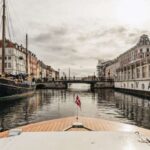
Nyhavn
Nyhavn is one of those places where even a quick stop feels worth it. Hop off if you want to walk the waterfront area instead of just watching it from the upper deck.
Practical note: since this is a high-demand zone, you might need to manage your timing. If you’re hopping off near peak hours, try to re-board promptly so you don’t miss the next bus.



Amalienborg Palace (Amalienborg Palace / Ofelia Plads) + Gefion Fountain
These are your “royal Copenhagen” stops. The bus ride between them is useful because you get a moving overview, then you can decide whether you want a longer on-foot look near the palace area.
What’s great here is the payoff for people who like architecture. You’re not just riding—you’re photographing and choosing where to spend your time.
The Little Mermaid + Langelinie (N/M in May–Sep)
This is the stop everyone has on their list. The value isn’t only the statue moment; it’s the whole waterfront context around it.
Langelinie is listed as two seasonal variants (N and M) in May–Sep. That tells you the route is adapted to the season—so if you’re visiting in summer, expect the bus to use the appropriate Langelinie stop entry for that period.
Rosenborg Castle + Gammeltorv
This is a nice rhythm change from waterfront. Rosenborg Castle gives you that historic, city-center feeling, while Gammeltorv is a different kind of local atmosphere—great for a short wander if you want a break from constant “look at the water” moments.
Rådhuspladsen (City Hall Square / National Museum of Denmark)
If you want a central civic anchor, this stop works. It also helps you understand the city grid—useful if you plan to switch to self-guided walking afterward.
Radisson Collection Royal Hotel area (Tivoli / Radisson Collection Royal Hotel) + Fisketorvet (shopping)
This is where the Classic Route links directly to the Tivoli zone. If Tivoli is on your list, this stop is one of your easiest “hop-off points” because you can ride, drop your viewpoint needs, and go straight into the amusement park area for however long you like.
Fisketorvet is listed as a shopping mall stop. It’s a practical choice if you want a quick coffee, a warm indoor reset, or a place to regroup between rides.
Copenhagen Marriott Hotel / Kalvebod Waves
This is a good “waterfront-in-a-different-light” stretch. Even if you don’t hop off, the bus ride itself gives you a cleaner view of the city edges.
Søren Kierkegaards Pl. 1 (The Black Diamond / DAC / BLOX)
This is a modern-and-cultural stop cluster. If your vibe is museums and design rather than only royal buildings, this is the zone that helps you pivot your day.
Also, keep your eyes on signage and stop names here. Some stop labels use acronyms and multi-building phrasing, and if you’re not expecting that, you might waste time confirming the right spot.
Colourful Route: Christianshavn, Christiania, Opera, and Reffen
The Colourful Route is shorter (55 minutes), but it feels more “Copenhagen personality” than “top-ten monuments.” It’s ideal if you want a mix of classic sights plus something more unusual.
Ved Stranden
You still start from the same central launch area. That makes this route easy to plug into a first-day plan.
Christianshavn
This is one of those neighborhoods where you’ll likely want to get off and walk a bit. Even if you only have time for a short stop, it’s a good change from the most tourist-heavy waterfront.
Freetown Christiania
Christiania is described in the tour info as a commune in the middle of the city. That’s already a big clue: this is not just scenery. It’s a chance to see a different kind of Copenhagen, and you should treat it like an on-foot exploration moment rather than a photo-stop-only stop.
Det Kongelige Teater – Operaen
This is a cultural marker on the route. If you like grand buildings, or you’re hoping to build a day around performance spaces, this is a useful hop-off point.
Reffen – Skøjteøen (Street Food / Reffen)
If you want a “food break with atmosphere,” Reffen is exactly the kind of stop that makes a bus tour feel more than mechanical. Hop off, grab something, and use the bus later rather than eating on the run.
Casino Copenhagen (Islands Brygge)
This stop pairs well with the idea of a late afternoon city drift. It also gives you an extra reason to be on this route beyond the headline sights.
Radisson Collection Royal Hotel area (Tivoli / Radisson Collection Royal Hotel)
The route loops back to the Tivoli zone area, so you can connect your Colourful Route day to a Tivoli revisit without starting over.
Home of Carlsberg Route: Planetarium, Frederiksberg, Zoo, and Gardens
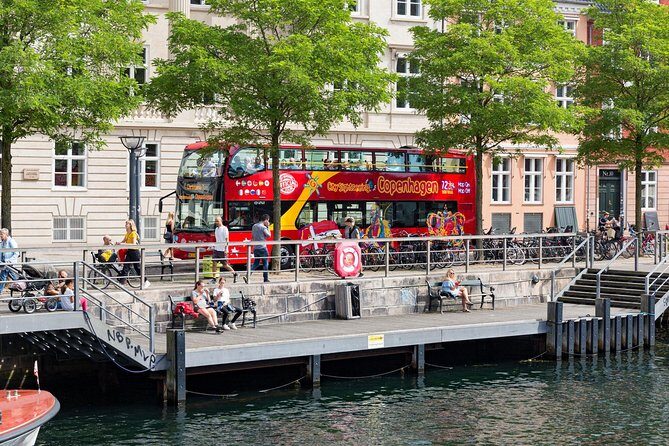
This route is built for variety, and it feels like a slow turn from the busy central core. Duration is 45 minutes, so it’s not a whole-day loop by itself—but it can be a perfect “half-day neighborhood sampler.”
Radisson Collection Royal Hotel area (Tivoli)
You start near the Tivoli zone again. It’s the tour’s main hub for switching between routes.
Planetarium | Denmark
If you’re trying to add something different from just churches and palaces, the planetarium stop is a clear pivot. Even if you don’t plan to enter, it’s a recognizable landmark for a short hop-off.
Gammel Kongevej
This stop signals “residential and local pace.” It’s useful when you want to break out of the major landmark cadence and see a broader city feel.
Copenhagen University Horticultural Gardens (Copenhagen University)
The tour info points to horticultural gardens through the university. This is a nice fit if your style is strolling and observation rather than rushing.
Frederiksberg Centret
This is your shopping and practical stop. If you’re building a day that includes warm breaks, it helps.
Frederiksberg Town Hall
Another local civic anchor. It’s a good mid-route waypoint for photos and “pause and breathe” time.
Royal Copenhagen – Outlet
This is a straightforward retail stop—useful if you want to browse without making it your main plan.
Copenhagen Zoo / Cisternerne
The route explicitly lists Copenhagen Zoo and Cisternerne. That combination tells you this is a nature/visiting stop, not just a pass-through view. It’s also one of the clearest “get off and spend real time” stops on this route.
De Små Haver (Pile Allé) + Carlsberg / Bakkehuset
This is one of the most interesting stop clusters because it blends gardens with Carlsberg-related landmarks. If you want a “why is Copenhagen designed like this” moment, these stops help you see the city as planned and curated rather than only historic.
Frederiksberg Have
This is the kind of stop that makes the Carlsberg route feel like a calmer day. If you like parks and outdoor wandering, you’ll probably enjoy this more if you hop off for longer rather than treating it as a quick photo stop.
Meatpacking District (Meatpacking District / Scandic Kodbyen)
The tour ends with a modern food-and-design neighborhood vibe. It’s a smart pairing with the earlier garden and zoo energy because it lets your day finish with city buzz.
Audio, Headphones, and the Art of Not Missing the Point
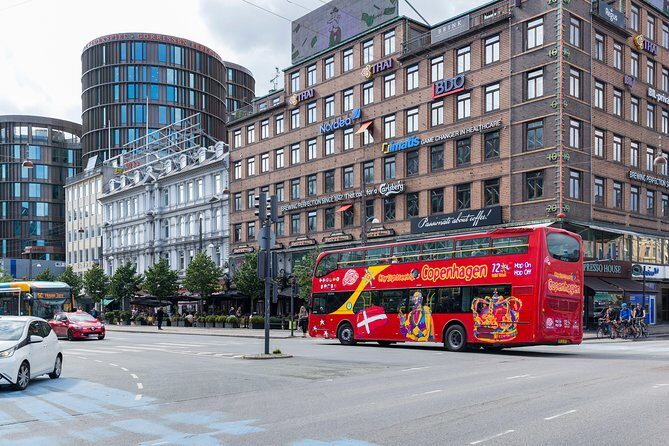
On paper, the audio experience is solid: the tour includes audio commentary in multiple languages, and you get free headphones. The overview also says multilingual audio is accessible to 12 languages, while the included details mention 6 languages.
Either way, the key is how you use it. Keep the headphones handy and test them early. If you’re trying to get the story and not just the visuals, you’ll get more out of the ride when the audio is actually working.
One more thing I learned the hard way—without even doing anything wrong: audio can be less detailed than you hope, and some stops may feel under-explained once you’re on the bus. That’s why I recommend this mindset: use the audio for orientation, then treat hop-off time as your real “deep learning” window by walking around the stop you care about most.
Also, pick your deck strategically. The upper level tends to be better for scanning streets and photographing while you roll. If your goal is portraits of landmarks, the height helps a lot.
Where the Tour Can Feel Frustrating: Stops, Timing, and Busy Days
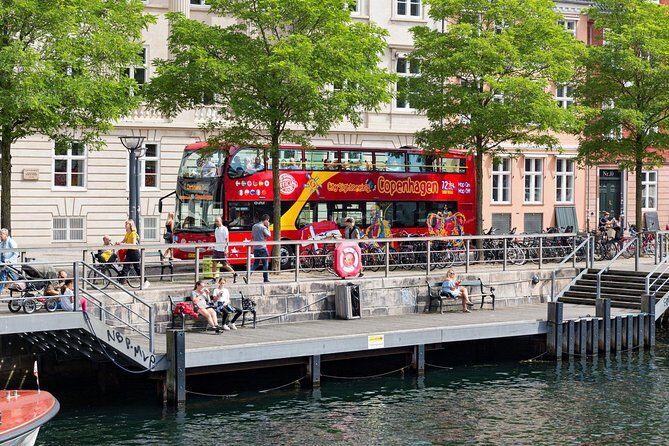
This is generally a smooth, well-used system. The buses are described as on time in many experiences, and the route structure makes it easy to see major places without committing to a single walking plan.
But you should know the pressure points:
- Finding the stop fast. Some people say the signage wasn’t clear enough, or acronyms in stop names made it harder to confirm where to wait. If you’re new to Copenhagen, don’t guess—check the stop name exactly and look for the correct bus line display.
- Buses can get packed. On very busy days, you may see long waits between buses, and crowding can slow down boarding.
- Major events can disrupt routes. One important example noted is that a marathon can affect the stops you can reach. If you’re traveling around a big event, assume you might need extra walking or a different approach to get back on the bus.
My advice: pick one “must-see” stop for each route you ride, then let everything else be bonus value. That way, even if timing gets messy, you still get your payoff.
Should You Book This Copenhagen Hop-On Hop-Off Bus Tour?
Book it if you want an easy, flexible first-day plan and you like the idea of seeing Copenhagen in chunks: waterfront highlights, royal/core stops, then neighborhood variety like Christiania or Frederiksberg.
Skip it (or choose a shorter plan) if you dislike waiting and you tend to plan obsessively down to the minute. This tour shines when you can be flexible. It gets less fun when you treat it like a precise timetable you must hit without any buffer.
If you do book, here’s the smart way to get the most from your money:
- Choose your route based on your mood: Classic for the icons, Colourful for character, Carlsberg route for gardens/zoo/Frederiksberg.
- Use the bus to get oriented, then hop off longer at your top 1–2 stops.
- Give yourself extra time around peak hours, especially if you’re boarding and re-boarding in the same busy area.
Overall, for most visitors who want convenience and a high success rate seeing big highlights, this is a good bet—just don’t over-trust signage or assume every bus stop will be perfectly obvious on the first try.
FAQ
How long is the Classic route?
The Classic Route is listed as about 90 minutes, with frequency every 35 minutes.
How long are the other routes?
The Colourful Route is listed as about 55 minutes, and the Home of Carlsberg Route is listed as about 45 minutes.
What time does the Classic route start and end?
For the Classic Route, the first departure from Ved Stranden 26 is at 10:00am and the last departure is at 4:30pm. From Tivoli (Stop 12), first departure is at 9:30am and last departure is at 4:10pm.
Are tickets mobile, and can I use paper vouchers too?
Yes. The tour uses a mobile ticket, and mobile and paper vouchers are accepted. Vouchers can be redeemed at any stop along the route.
How do the audio guides work, and what languages are available?
The tour includes audio guide commentary and provides free headphones. The information lists multilingual audio in up to 12 languages, and the included details also mention an audio guide in 6 languages.
Is WiFi included on the bus?
Yes. The included details say there is free WiFi and a map.
What’s included in the ticket price?
Included features are hop-on hop-off access for 24, 48, or 72 hours, audio guide commentary (with free headphones), free WiFi and a map, access to 3 city routes, and stops near major sights.
Are attraction tickets included?
No. Entry to attractions is not included, and food and drinks are also not included.
Can I cancel and get a refund?
Yes. Free cancellation is available if you cancel up to 24 hours in advance for a full refund. Cancellation cut-off is based on local time.