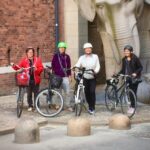
Copenhagen’s best architectural lessons happen on a bike. I love that this tour mixes modern design with Denmark’s real-world sustainability thinking, and does it away from the usual parade-route. You’ll ride through multiple parts of town, not just the postcard center, and the 17 km cycling distance keeps it active without turning into an all-day mission.
My other big win is the way the guides make it feel personal and practical. Guides like René, Jörn, John, and Josephine have a friendly, safe-riding focus, with enough stop-and-look time that you can actually absorb what you’re seeing, not just speed past it. One consideration: the emphasis is strongly on newer city planning and modern architecture, so if you’re chasing deep pre-1900 history, you might feel the coverage is mostly 21st-century.
In This Review
- Key highlights worth planning for
- Why Copenhagen’s sustainability shows up in buildings and streets
- Bike fit and comfort at Tropical Bikes before you roll
- The 3-hour route: what you’ll see from Blox to Israels Plads
- Starting points: get oriented fast
- Blox (guided stop, ~10 minutes)
- Lille Langebro (guided stop, ~5 minutes)
- Havnebadet Islands Brygge (guided stop, ~10 minutes)
- Karen Blixens Plads (guided stop, ~10 minutes)
- Ørestad (scenic drive, ~5 minutes)
- The Tietgen Residence Hall (guided stop, ~10 minutes)
- Amager Fælled (guided stop, ~10 minutes)
- E/F Gemini Residence (guided stop, ~10 minutes)
- Cykelslangen (scenic drive, ~5 minutes)
- Kaktus Towers (guided stop, ~10 minutes)
- Enghave Plads (guided stop, ~10 minutes)
- Israels Plads (guided stop, ~10 minutes)
- Drop-off back at Tropical Bikes
- The architecture and sustainability lessons you can actually use
- Price and value: is $70 per person worth it?
- Upgrades and add-ons: when to spend extra
- Who should do this Copenhagen bike architecture tour
- Should you book this architecture and sustainability tour?
- FAQ
- How long is the Copenhagen architecture and sustainability bike tour?
- How far will I cycle?
- What languages are the guides?
- Where do we meet for the tour?
- What bikes are provided?
- Is the tour equipment included?
- Are bike upgrades available, and what do they cost?
Key highlights worth planning for
- On-bike city planning: You learn how cycling culture and design choices shape daily life.
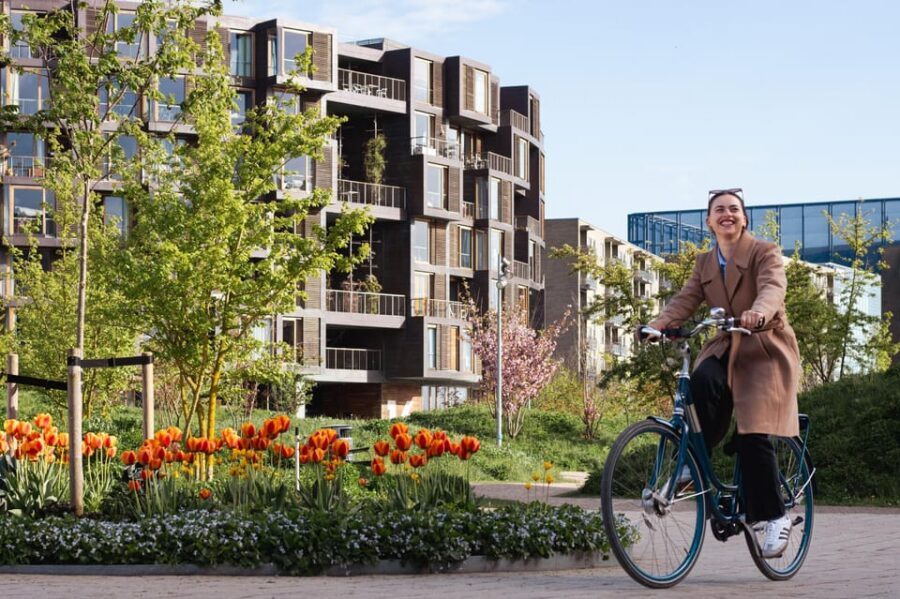
- Ørestad as a sustainability showcase: Modern buildings paired with sustainable living ideas.
- Harbor-area transformation: Once-industrial spaces are presented as community-focused redevelopment.
- Short guided stops, frequent chances to look: You’re guided for minutes at a time, then you get room to take it in.
- Comfort built in: Helmets, ponchos, luggage storage, plus a lounge before and after.
- Guide style matters: Expect a mix of clear explanations, humor, and safety reminders.
Why Copenhagen’s sustainability shows up in buildings and streets
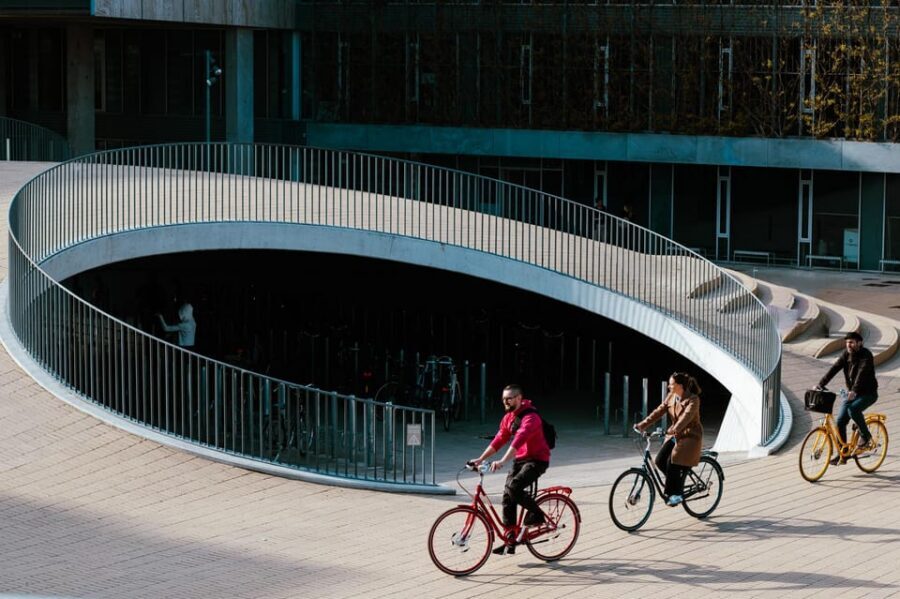
Copenhagen’s sustainability story isn’t just posters and policy. On this tour, you see how the city’s planning aims to be human-first: spaces designed for how people actually move, meet, and live. That’s one reason the architecture feels logical rather than decorative.
I also like that the tour treats sustainability as something you can spot in the city’s choices. You’ll move between areas that show redevelopment and reuse, and you’ll get guided context for why these changes matter for citizens, not just for design nerds.
You can also read our reviews of more guided tours in Copenhagen
Bike fit and comfort at Tropical Bikes before you roll
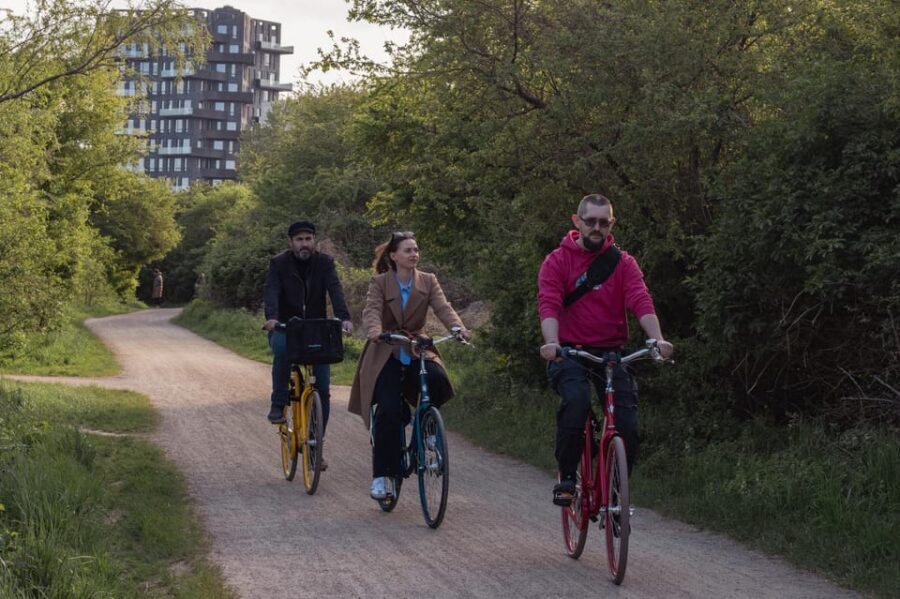
The meeting point can vary depending on what you book, with three starter options: Tropical Bikes at Vester Voldgade 2A, plus Blox and Lille Langebro. Either way, you’re set up to start smoothly, not “find the group and hope” style.
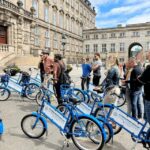
Getting the right bike is part of the experience. You can choose bikes in different sizes (48cm, 51cm, 56cm frames), and if you’re bringing kids there’s a children’s bike option too (24′ and 26′ frames) that you should reserve ahead. Helmets are included, and there’s a rain poncho if weather turns, plus luggage storage so you’re not riding with your whole life on your back.
Before and after the ride, you’ll have access to a comfy lounge with toilets. That’s a surprisingly big deal in Denmark, where the weather can shift fast and you’ll appreciate a place to warm up and regroup.
The 3-hour route: what you’ll see from Blox to Israels Plads
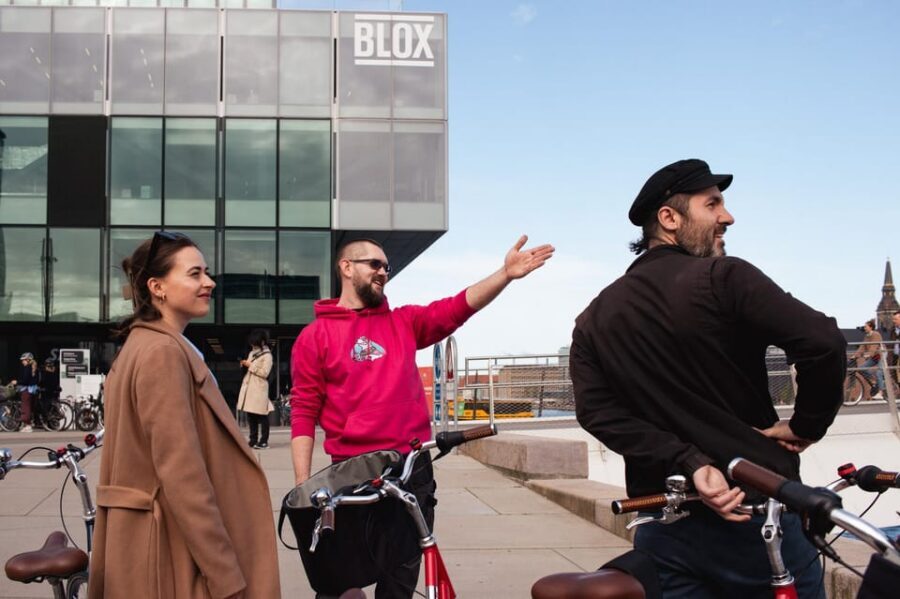
You cycle about 17 km at a steady pace, and the ride is designed around short guided moments. Plan for frequent stops for explanation and viewing, not a nonstop cruise, and wear comfortable shoes you’d actually walk in.
Here’s how the route feels in sequence, with what each stop adds to the architecture-and-sustainability story:
Starting points: get oriented fast
If you start at Tropical Bikes (Vester Voldgade 2A), you begin with the most “all-in one place” setup: bike fitting, quick logistics, then you roll. If your starting point is Blox or Lille Langebro, you’ll still get the same guided flow, just with a different kickoff.
Either way, the tour is built for a smooth handoff into a citywide ride.
Blox (guided stop, ~10 minutes)
Blox is a quick “enter the modern-city mindset” start. You get a guided look that sets the theme: Copenhagen doesn’t just mix old and new in a casual way; it plans the relationship so the newer parts feel connected to city life.
This is a good first stop because you learn what the guide is going to watch for as you ride.



Lille Langebro (guided stop, ~5 minutes)
This short stop is the kind you appreciate later. You’ll get a brief orientation that helps you understand sightlines and how the city opens up as you move through different neighborhoods.
It’s short on purpose: the tour wants you moving so the ride stays fun and practical.
Havnebadet Islands Brygge (guided stop, ~10 minutes)
Havnebadet Islands Brygge is where the harbor area starts to feel real. You get a guided window into how the water-adjacent areas fit into the broader city plan and why redevelopment choices can change how communities use space.
Even if you’re not a hardcore architecture fan, this is the part where the city starts feeling like a lived environment, not a museum.
Karen Blixens Plads (guided stop, ~10 minutes)
At Karen Blixens Plads, you get another structured pause. Use this time to look beyond the obvious: the guide’s focus helps you see how design choices affect everyday comfort and movement—exactly the “humanistic” angle the tour is built around.
Ørestad (scenic drive, ~5 minutes)
Ørestad is one of the main reasons you book. The guide frames it as a place where modern architecture is paired with sustainable living principles, so you can compare planning ideas with what you see on the ground.
Because you get it during a scenic drive, you’ll likely spot the scale differences quickly—big-picture city planning in motion.
The Tietgen Residence Hall (guided stop, ~10 minutes)
This stop leans into the idea that architecture isn’t only for looks. You’re looking at how residential design and public use can connect, with the guide bringing it back to city planning and sustainable thought.
If you like learning how buildings support daily life, this is a satisfying stop.
Amager Fælled (guided stop, ~10 minutes)
Amager Fælled gives you breathing room in the route. It’s a chance to connect sustainability with how the city balances built areas and open space for people.
The ride tempo matters here; you want to slow down enough to notice, not rush past.
E/F Gemini Residence (guided stop, ~10 minutes)
Another architecture-focused residential stop. Here, the tour keeps the conversation grounded: what you see in design ties back to how people live, not just how buildings look.
It’s also a good moment to compare older and newer parts of Copenhagen as you watch the city’s “evolution” story unfold in front of you.
Cykelslangen (scenic drive, ~5 minutes)
Cykelslangen is a scenic drive moment, and it works because you’re physically moving through it. Use it as a reset: take photos if you want, but also pay attention to how the bike route itself feels like part of the design.
This is where Copenhagen’s bike identity stops being a slogan and starts being a real experience.
Kaktus Towers (guided stop, ~10 minutes)
Kaktus Towers continues the modern-architecture thread. You’ll get guided context for what makes these choices part of the city’s broader sustainability and planning approach—again, not just building features, but how the city thinks.
Enghave Plads (guided stop, ~10 minutes)
Enghave Plads is another “urban life and planning” checkpoint. Even though your guided time is limited, it helps you understand how redevelopment and public space connect—especially once you’re later near the harbor and historic areas.
Israels Plads (guided stop, ~10 minutes)
This is a strong capstone stop for the sustainability angle. The tour frames Israels Plads as a transformation site—historic roots paired with a greener future and environmentally conscious use of the space.
It’s the kind of location that helps you see the “New with the Old” theme as intentional planning rather than accidental charm.
Drop-off back at Tropical Bikes
The tour ends back at Tropical Bikes (Vester Voldgade 2A) or your selected drop-off option. The lounge access after the ride is there for a reason: hydrate, cool down, and sort through photos while the city memories are still fresh.
The architecture and sustainability lessons you can actually use
What makes this tour more than a slideshow is how the guide explains architecture as a system. You’re not only learning about buildings; you’re learning about why Copenhagen builds the way it does, and how that impacts daily life.
Here are the themes I found most practical as a visitor:
How design shapes behavior. In bike-first cities, streets and buildings don’t just sit there. They help determine comfort, safety, and where people naturally gather and move.
Redevelopment as sustainability. The harbor-area story centers on once-industrial spaces becoming community-focused hubs. That’s sustainability in the real world: reusing space and reimagining it for people.
Modern areas with a planning mission. Ørestad isn’t treated as a fashion statement; it’s treated as a living example of modern design tied to sustainable living ideas. That’s why the tour works well even if you usually skip architecture tours.
Guide energy that keeps you engaged. From what I’ve seen of how guides present it, the best ones balance clear explanations with real safety care on the bike. Guides like René and Jörn are known for being friendly and informative, and Josephine’s style is noted as both knowledgeable and funny—so even if you’re tired after a day of walking, you’ll still feel awake.
Price and value: is $70 per person worth it?
At $70 per person for a 3-hour guided experience, the value depends on how you like to travel. If you enjoy bike tours and you want a local guide to connect architecture to sustainability, this price starts to make sense fast.
You’re getting more than “a person pointing at buildings.” The package includes:
- Bikes in multiple sizes, plus helmets
- A rain poncho and luggage storage
- A lounge before and after (including toilets)
- Live English and German guidance
Those extras matter when you’re actually on the road, especially in changeable weather.
Upgrades and add-ons: when to spend extra
Baskets and phone holders can be purchased on-site for 49 DKK each, if you want more practicality. There are also bike upgrades, with pricing listed for:
- Cargo/tandem: 449 DKK
- E-bike: 249 DKK
- E-cargo: 649 DKK
- Child-seat: 119 DKK
If you’re a confident cyclist, you might not need upgrades. But if you’re bringing kids or you want less effort for any reason, an e-bike or child-seat can turn the tour from enjoyable to comfortable.
Who should do this Copenhagen bike architecture tour
I’d book this if you fit at least a couple of these:
- You can ride a bike comfortably.
- You want modern Copenhagen more than purely old-town sightseeing.
- You care about sustainability beyond buzzwords and want it explained with real examples.
- You like learning through movement—seeing how urban design feels while you ride.
This is also a good choice if you want a second side of Copenhagen that goes beyond the tourist hot spots. The route takes you through neighborhoods and architectural areas that feel more like where people live and gather.
One more note to keep expectations realistic: the focus skews toward modern architecture and urban design, so if you’re expecting a heavy emphasis on earlier periods, you might find it less satisfying.
Should you book this architecture and sustainability tour?
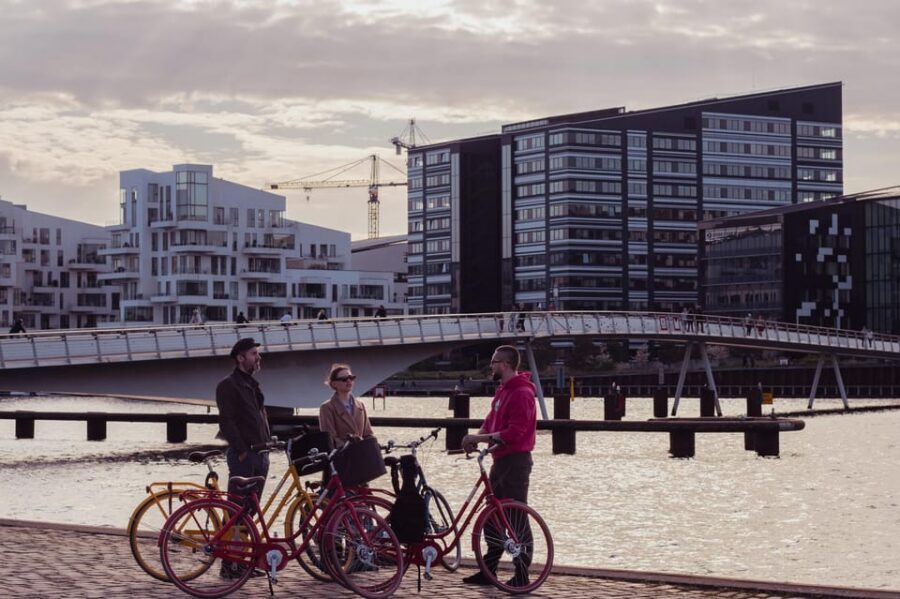
Yes—if you want Copenhagen’s design thinking explained while you bike through the city. This is one of the best ways to understand how the city blends the New with the Old, because you’re not just looking; you’re traveling through the planning itself. The guide-led stops, the included comfort gear, and the focus on sustainability make it a strong use of a half day.
Skip it if cycling is a problem for you, or if you’re only interested in older historical sights. Also, if you prefer long, slow photo walks with minimal riding, this ride may feel too structured.
If you do book: bring comfortable shoes, wear clothing suited for cycling, and reserve a children’s bike in advance if needed. Also, pay attention at the guided stops—staying close makes the whole experience smoother.
FAQ
How long is the Copenhagen architecture and sustainability bike tour?
It lasts 3 hours.
How far will I cycle?
You’ll cycle a total of roughly 17 km.
What languages are the guides?
The live tour guide speaks English and German.
Where do we meet for the tour?
The meeting point may vary depending on the option booked. Starting options include Tropical Bikes at Vester Voldgade 2A, Blox, and Lille Langebro.
What bikes are provided?
Bikes are provided in different sizes with frame options listed as 48cm, 51cm, and 56cm. Children’s bike options are also available with 24′ and 26′ frames if reserved beforehand.
Is the tour equipment included?
Yes. The tour includes a helmet, rain poncho (in case of rain), luggage storage, and bikes. There’s also a comfy lounge before and after the tour, including toilets.
Are bike upgrades available, and what do they cost?
Bike upgrades listed include cargo/tandem (449 DKK), e-bike (249 DKK), e-cargo (649 DKK), and a child-seat (119 DKK). Baskets and phone holders can be purchased on-site for 49 DKK each.