Aarhus surprises you fast—if you walk it right. This compact Surprise Walk mixes major sights with the kind of small, practical local tips you can use later in the day. I especially like how it starts with orientation and then flows naturally toward the waterfront culture zone at Dokk1 and the cathedral at the finish.
One of my favorite parts is the guide-led storytelling. In particular, Mai Britt (Maj-Britt) stood out for her smooth English, on-time meeting, and energetic take on how Aarhus works—especially when it comes to the art scene. You also get that very Danish touch early on: a small Danish specialty as you begin.
The main drawback to consider is simple: this is a 1.5-hour walk, and you’ll be moving. Expect cobblestones and a brisk pace, so if you have mobility limitations, this may be a tougher fit.
In This Review
- Key highlights you’ll feel on the walk
- Aarhus in 90 minutes: why this local walk works
- Meeting at Christian X: the start that sets the tone
- Rooftop terrace stop: the quick way to read the city
- Dokk1: Denmark’s modern library-city hub
- Former railway station turned alternative art space
- Møllestien cobblestones: the Danish charm you can actually feel
- Charming old-building quarter and the momentum toward the finish
- Aarhus Cathedral finish: the longest-tallest detail that lands
- Price and value: what $126.29 buys you in real terms
- Who should book this Surprise Walk (and who might skip it)
- The little guide touches that matter most
- Should you book this Aarhus local walk?
- FAQ
- How long is the Surprise Walk of Aarhus with a Local?
- How large is the group?
- Where do I meet the guide, and where does the tour end?
- What sights are included on the route?
- What’s included in the price?
- What should I budget for that isn’t included?
- Can I cancel for free?
Key highlights you’ll feel on the walk
- Small group (up to 8), so you can actually ask questions and get real answers
- Rooftop terrace views that help you understand the city layout in minutes
- Dokk1 as more than a building—government, library, and culture all in one stop
- Møllestien cobblestones for that old-street look with a lived-in feel
- Art-forward detour at a former railway station turned alternative art space
- Finish at Aarhus Cathedral, Denmark’s longest and tallest church
Aarhus in 90 minutes: why this local walk works
Aarhus is the kind of city where the best experience often comes from small overlaps: architecture, street scale, harbor energy, and the arts scene all feeding each other. This tour does that efficiently. You’re not trying to conquer everything. You’re building a mental map while enjoying the walk between stops.
The best value here is the combination. A lot of city walks give you landmarks only. This one pairs them with local context—why that library matters, what that old station became, and which corner of town has the most “yes, this is Denmark” atmosphere. You’ll leave with more than photos. You’ll have better instincts for where to go next.
The time window also helps. Ninety minutes is short enough that you don’t burn your whole day, but long enough to hit both the waterfront culture area and the older city feel before ending at the cathedral.
You can also read our reviews of more walking tours in Aarhus


Meeting at Christian X: the start that sets the tone
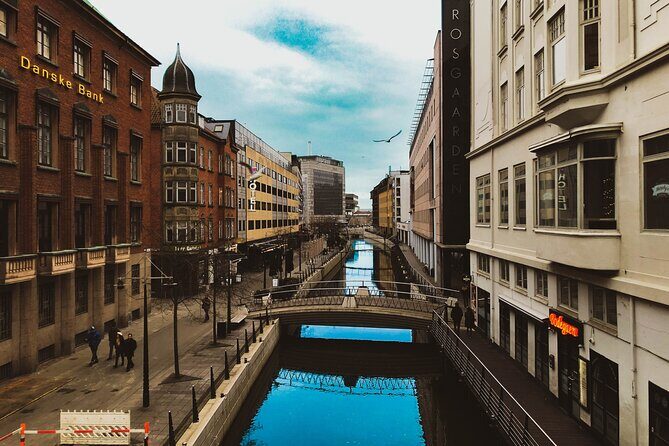
You meet at the equestrian statue of Christian X in central Aarhus. That’s a solid choice because it’s easy to spot, and it puts you close to the areas you’ll cover next. You’re also near public transportation, which matters if your hotel isn’t right in the center.
From the beginning, the guide’s approach is part of the experience. Several guides on this format kick things off with a small Danish specialty—an easy way to settle in and start conversations without it feeling like a “performance.” Then you’re off, with explanations that sound like someone showing you their city rather than reading a script.
You should plan on comfortable shoes. Cobblestones show up, and they always take longer than you think. If you want to enjoy Aarhus, not just speed through it, pace yourself—especially on older streets.
Rooftop terrace stop: the quick way to read the city
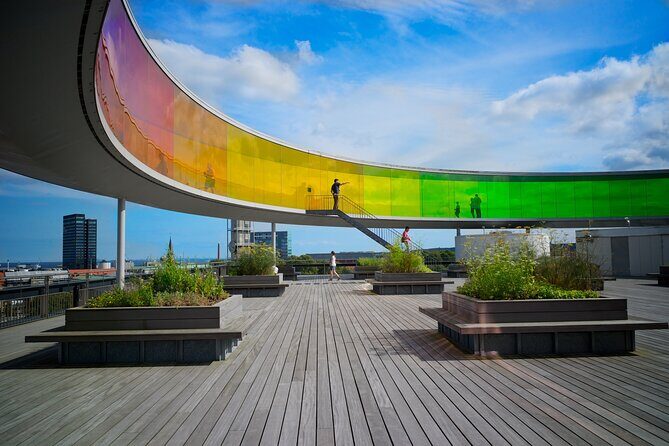
Aarhus isn’t just flat “walk everywhere” easy. From above, the city makes more sense. That’s why the rooftop terrace stop is such a smart opener. Even when you don’t know the details yet, you’ll be able to connect what you see below—the waterfront, the main hubs, the general direction of neighborhoods—to what’s happening on street level.
This is also where you’ll likely get the kind of insider recommendation you can actually use later, like the best rooftop terrace view for a return visit. The practical payoff is big: once you’ve seen the city from that angle, you can orient yourself for the rest of your trip.
Possible drawback? Rooftop stops can feel exposed, especially in rough weather. The tour also notes that stops may vary depending on conditions, so if the weather looks questionable, keep your expectations flexible.
Dokk1: Denmark’s modern library-city hub
Then you hit Dokk1 (Dokken)—a government building, public library, and culture center right by the waterfront on Hack Kampmanns Plads. This stop is more interesting than it sounds because it’s not only about a cool building. It’s about what Aarhus decided to build at the center of everyday life.
This is where the local perspective pays off. One guide approach shines here: explaining the art and culture angle, and pointing out how Dokk1 fits into the city’s rhythm. In particular, Mai Britt got high marks for focusing on the library experience itself—so if you like places where locals actually hang out, this will land well.
Why it’s worth your time: Dokk1 works as a bridge between “big Denmark” and “daily Aarhus.” It’s modern, yes, but it also feels human. And because you’re near the waterfront, it’s a natural launching point for the rest of the walk.
If you’re the type who can’t stop yourself from taking photos, this is a great place to do it without turning the rest of the tour into a long detour.
Former railway station turned alternative art space
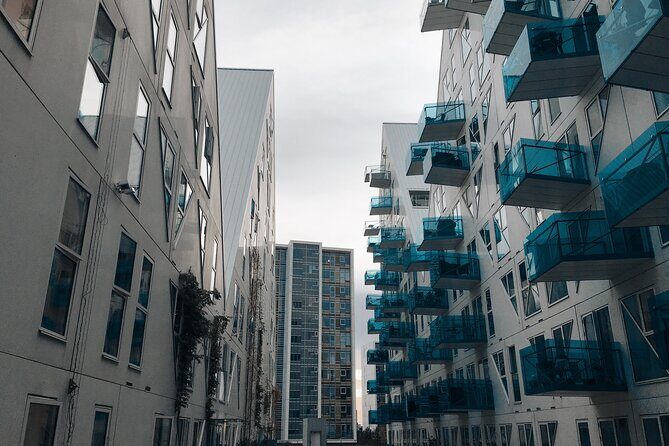
Next comes the creative detour: an old railway station repurposed as an alternative art center. You’re basically getting a lesson in how cities reuse structures instead of erasing their past.
This stop is also a nice contrast to Dokk1. Both are culture-focused, but in different ways. Dokk1 is built as a public civic heart; the old station is culture by transformation. That difference makes the walk feel like a conversation rather than a checklist.
There’s also an “easy Instagram” factor here, but try to look past the photo moment. The more useful part is what your guide points out about the art sector—what kind of spaces work well in Aarhus, and why locals go for certain styles and venues.
If you’re short on time during your trip, this is the kind of stop that upgrades your understanding of the city without requiring a full museum day.






Møllestien cobblestones: the Danish charm you can actually feel
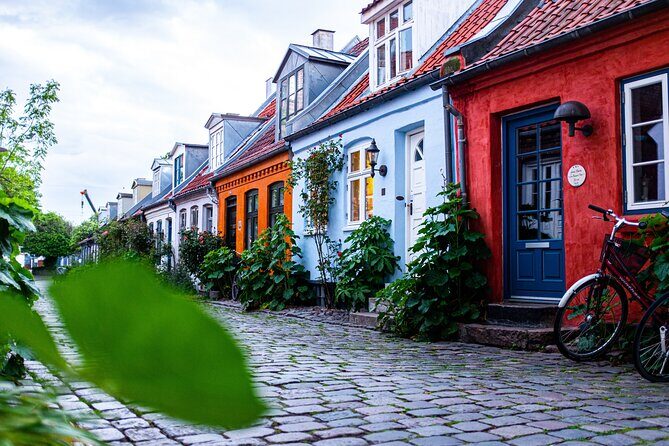
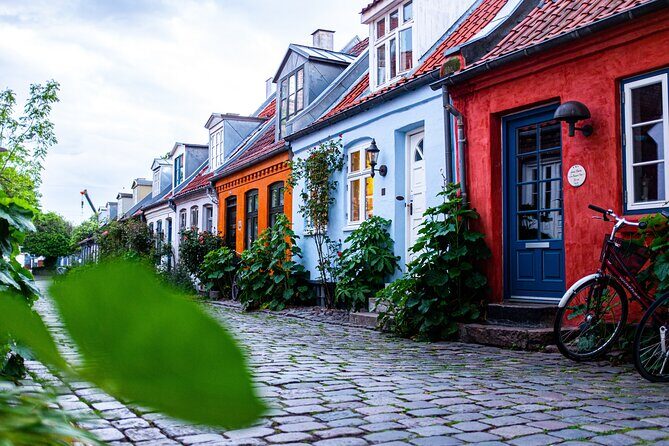
After the art stop, you shift into the older-street mood with Møllestien—a cozy cobblestone street with quaint houses that makes Aarhus feel like a living place, not a staged postcard.
Cobbles are the real star here. They slow you down just enough to notice the details: street edges, building scale, and the way people move through this part of the city. It’s the kind of street where you’ll naturally want to pause for a moment, even if you’re trying to stay on pace.
This segment also sets up what you’ll see later near the cathedral: older architecture feels heavier and more grounded after you’ve just experienced the city’s modern cultural hubs.
Tiny caution: cobblestones can be slippery if it’s wet. If it’s raining, bring grip in your shoes. Your knees will thank you.
Charming old-building quarter and the momentum toward the finish
You’ll then explore another well-known area characterized by charming, picturesque old buildings. This is the “transition” part of the tour—where you feel the city becoming more historic as you close in on the final landmark.
This segment tends to work best if you go with the flow and ask questions when your guide mentions something specific. That’s where the guided part truly matters. The tour adapts to your interests and walking pace, so if you care more about architecture or local culture details, you can steer your attention in that direction.
And because the group is small (up to 8), you’re not stuck watching others set the speed. You’ll usually feel like you’re walking with a thoughtful companion rather than getting swept up in a mass queue.
Aarhus Cathedral finish: the longest-tallest detail that lands
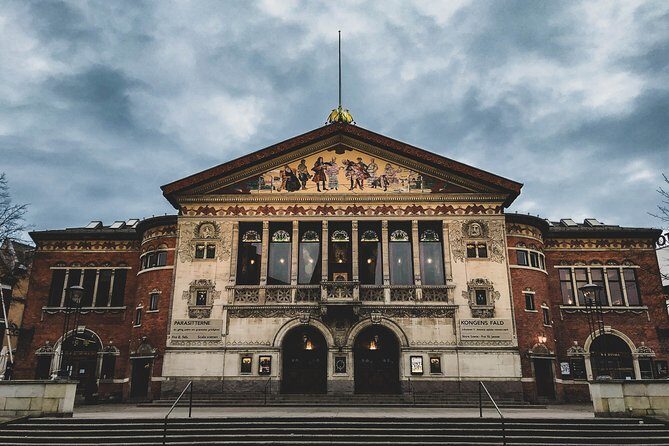
The walk ends at Aarhus Cathedral, noted here as Denmark’s longest and tallest church. That fact matters less than the experience itself: the cathedral is a strong visual anchor at the end of the route, giving the tour a satisfying “arrival” feeling.
Finishing at a major church also changes the pace emotionally. Up to this point, you’ve been moving through culture centers, repurposed spaces, and older streets. Ending with the cathedral pulls everything together into a sense of place—what Aarhus values, what it preserves, and how different eras sit side by side.
If you have a little extra time after the tour, take a moment to stand back and look at it before you rush off to your next plan. You’ll get more out of that first glance than you think.
Price and value: what $126.29 buys you in real terms
At $126.29 per person for about 1 hour 30 minutes, you’re paying for three things:
- Time saved: a guided route that hits a cluster of key areas without you figuring it out block by block.
- Local context: stories and insider recommendations, including strong attention to the art sector.
- A small-group setup: up to 8 people means less waiting and more direct interaction.
Is it cheap? No. But it’s not priced like a fancy private tour either. For many visitors, this sits in the sweet spot because it compresses multiple “worth doing” experiences into one afternoon window—especially if you’re still trying to get your bearings.
It also includes a mobile ticket and there are group discounts (the fine-print isn’t provided here, but the point is: pricing can be more flexible if you travel with others). And remember: entry tickets for transportation, museums, and monuments are not included—so plan a little extra spending buffer if you decide to go inside something on your own afterward.
Who should book this Surprise Walk (and who might skip it)
I’d book this if you want an introduction that’s:
- Fast but not careless
- Focused on both famous sights and lesser-known corners
- Guided with enough personality to make the city feel like someone’s home, not an exhibit
It’s especially good for:
- First-time Aarhus visitors
- People who enjoy art and culture context
- Anyone who likes a walk route with built-in recommendations, like the rooftop viewpoint tip
You might skip or choose something else if:
- You dislike guided walking tours or need lots of stop-and-start time
- You have mobility challenges. This is not recommended for guests with impaired mobility.
- You’re hoping for a long, slow, sit-down sightseeing day. This one is built for movement.
The little guide touches that matter most
What stood out across the best experiences wasn’t only the route. It was the guide style.
Mai Britt (Maj-Britt) earned strong praise for being on time, very fluent in English, personable, and energetic—then pairing that with real city knowledge focused on the art sector. That matters because Aarhus can feel like it has layers, and a good guide helps you understand which layer to look at first.
You’ll also benefit from the “small Danish specialty” start. It’s not a meal. It’s a warm-up. But it makes the tour feel more human right away.
Finally, the personal attention in a group of up to 8 is a real advantage. If you want to ask something specific—where locals go, what to see next, what to skip—you’re more likely to get a straight answer.
Should you book this Aarhus local walk?
Yes—if your goal is to get oriented quickly and leave with better instincts for where Aarhus shines. This tour gives you the big anchors (Dokk1 and Aarhus Cathedral), adds art-and-street contrast (the old station and Møllestien), and sprinkles in local recommendations that help you plan the rest of your trip.
I’d only hesitate if you need slow pacing, step-by-step navigation, or if cobblestones and continuous walking are hard for you. Otherwise, this is a smart use of 90 minutes, and it’s the kind of experience that makes a city feel readable fast.
FAQ
How long is the Surprise Walk of Aarhus with a Local?
It runs for about 1 hour 30 minutes.
How large is the group?
The tour is limited to a maximum of 8 travelers.
Where do I meet the guide, and where does the tour end?
You start at the equestrian statue of Christian X in Aarhus and end at Aarhus Cathedral.
What sights are included on the route?
You’ll visit a rooftop terrace for city views, Dokk1, an old railway station repurposed as an alternative art center, Møllestien, a historic old-building quarter, and finish at Aarhus Cathedral.
What’s included in the price?
The tour includes a knowledgeable local guide, a small group experience, and personalized recommendations.
What should I budget for that isn’t included?
Personal expenses are not included, and entry tickets for transportation, museums, and monuments are excluded.
Can I cancel for free?
Yes. You can cancel for a full refund up to 24 hours before the experience’s start time.