REVIEW · COPENHAGEN
Kayak Tour in Copenhagen Harbor in May and September
Book on Viator →Operated by Kajakhotellet ApS · Bookable on Viator
Kayaking in Copenhagen is a smart way to see more. You get water-level views of Christianhavn canals and the harbor, plus short history stops along the way, not just a silent glide. I love the time on the water at a leisurely pace with room to talk, and I love the guide-led focus on landmark architecture like Christiansborg Palace, Gammel Strand, and The Black Diamant. In one recent mention, the guide Liv stood out for helping people get kitted out and giving a local angle during the paddle.
There’s one practical catch to plan around: this is not recommended for people prone to seasickness, and the tour only runs during the May 1–31 and September 1–30 windows. Weather also matters, since it requires good conditions to operate.
In This Review
- Key Highlights Worth Planning For
- From Kajakhotellet to the Kayak: What the Experience Is Really Like
- Kalvebod Bølge: The Starting Point and the First Big View
- Sliding Under Bridges and Moving Into the Canals
- Thorvaldsens Museum From the Water: Sights You Can Actually See
- Christiansborg Palace and the Waterline Perspective That Makes It Special
- Gammel Strand and Historic Copenhagen’s Harbor Feel
- Axel Berg’s Privatbanken Building: When the Details Matter
- Christianshavn’s Origins: Built for Protection, Seen Up Close
- Christianshavn to the Black Diamond Zone: Royal Library and More
- Bridges for Bikes and Walking: The Return That Feels Like a Bonus
- Price and Value: Is $70.03 Worth It?
- When This Kayak Tour Fits Best (and When to Skip It)
- Should You Book This May or September Kayak Tour?
- FAQ
- How long is the kayak tour on the water?
- Where does the tour start and end?
- How much does the tour cost?
- What’s included in the price?
- What should I bring or plan for?
- Is the tour suitable for non-swimmers?
- Is it recommended for people prone to seasickness?
- What are the age rules for children?
- When does the tour operate?
- What is the maximum group size?
- What happens if the weather is poor?
Key Highlights Worth Planning For
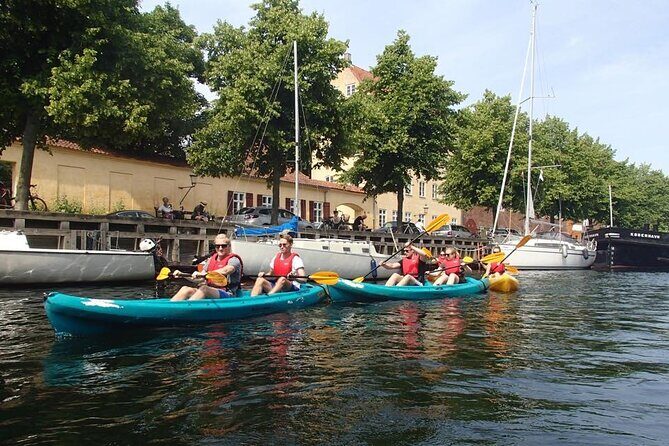
- Christianhavn canals + Copenhagen Harbor: you see the city from canal edges and open water views
- Leisurely pace and small stops: enough time to listen and soak in the sights without rushing
- A guide who handles the basics: you’ll get instructions, then get kitted out before you paddle
- Photo-worthy targets from the water: Christiansborg Palace, Thorvaldsens Museum, Royal Library, The Black Diamant
- Short on-water time, total 2 hours: about 1 hour 15 minutes paddling, plus changing and briefing
- Max group size of 12: small enough to feel personal, not like a conveyor belt
From Kajakhotellet to the Kayak: What the Experience Is Really Like
This tour is built for a smooth start. You meet at Kajakhotellet, Kalvebod Bølge (Kalvebod Brygge 7) where you’ll handle the pre-paddle routine: instructions, changing clothes, and getting into your kayak gear. It’s also set up with a changing room and lockers for small bags, which matters because you’ll want to store your phone and essentials safely while you’re on the water.
Gear is part of the value here. You’re provided a swim vest and paddle, plus rain pants or wetsuits depending on conditions. That’s not just comfort. It lets you focus on the city instead of worrying about whether you’ll be miserable if the weather turns.
The tour is short by design. The total experience is about 2 hours, with the actual paddling time around 1 hour 15 minutes. You’ll also get a practical note on who this fits: most travelers can participate, but there’s a weight limit of 286 lbs / 130 kg per person and age rules for youth (more on that later).
A few more Copenhagen tours and experiences worth a look
Kalvebod Bølge: The Starting Point and the First Big View
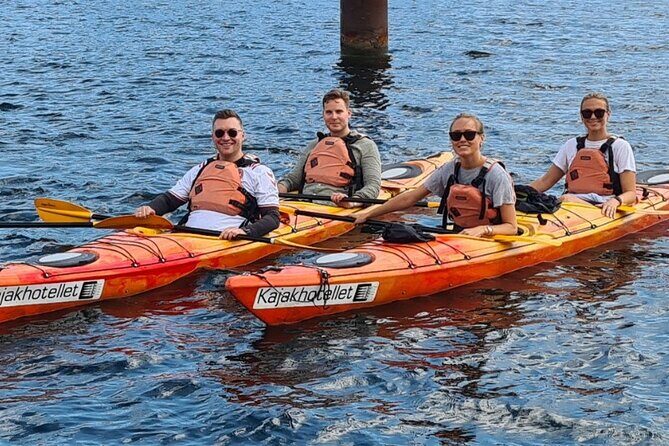
Your tour begins and ends at Kalvebod Bølge. At this point you’re still on land, but the setting tells you what kind of experience you’re in for: Copenhagen Harbor access, with bridges and canal angles close by.
You’ll get your instructions here and then head out. The format matters because you’re not thrown into the water cold. The pre-departure time is there for safety and comfort, and once you’re on the water, you’re set up for a relaxed rhythm.
Expect the first minutes to feel like you’re getting your bearings fast—because you’ll be under bridge structures and moving through the harbor-canal mix soon after. Even if you’re an experienced paddler, the early coaching helps you align with your kayak and your guide’s pace.
Sliding Under Bridges and Moving Into the Canals
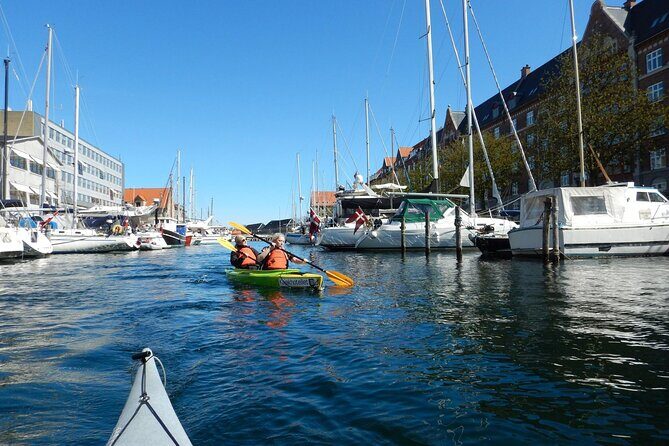
Very quickly, the route brings you to a major bridge that connects Copenhagen with Amager, and you’ll sail under the bridge on the way through. This is a small detail that makes the whole ride feel more like a tour of real waterways than a long straight canal crawl.
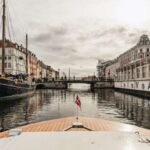
Then you transition toward the canals and start seeing the city at water level in a way walking tours can’t match. You get walls, roofs, and waterfront details at the height you’re actually floating—so Copenhagen doesn’t look like a postcard. It looks like a living place built right on the water.
One of the nicest aspects is the leisurely pace. There’s time and space to talk and have fun while you paddle. That doesn’t mean it’s aimless. It’s more like the guide is timing the ride so you can listen at the right moments and still enjoy the motion.
Thorvaldsens Museum From the Water: Sights You Can Actually See
As you pass through the canal area, you’ll get a chance to view Thorvaldsens Museum from the waterside. From a sidewalk, museums can feel like a destination. From the water, they feel like part of the canal’s architecture—right next to the places where life happens.
This is also where the guided approach starts to click. The guide doesn’t just point at buildings. The guide gives history and knowledge about what you’re passing, and that makes your time feel intentional rather than like you’re just moving past landmarks.
If you like architecture, this is the sweet spot. Buildings framed by canal lines look different when you’re floating inches from the waterline. Even if the view is brief, it lands harder when you’re seeing it in motion.
Christiansborg Palace and the Waterline Perspective That Makes It Special
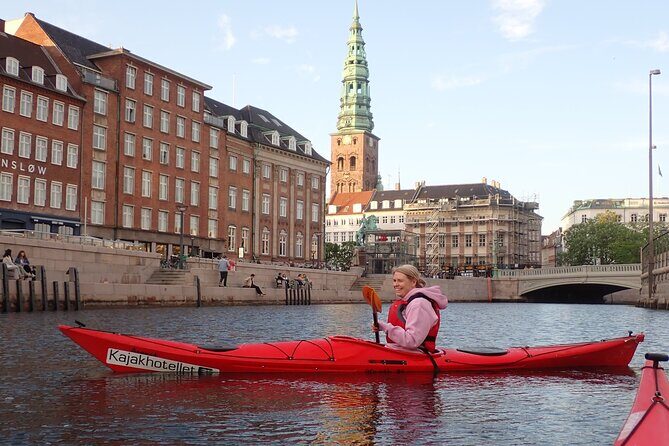
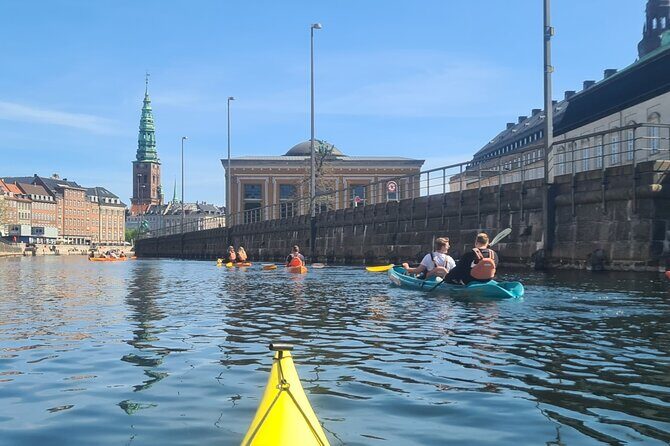
You’ll paddle by Christiansborg Palace and get the front-of-palace view from the kayak, along with history from the guide. This is one of those stops where being on the water changes how the building reads.
From land, palace facades can be distant or blocked by streets and angles. From the canal, you’re aligned with the façade in a way that makes the scale feel immediate. You don’t have to imagine how it fits into the waterfront; you’re seeing it in context.
There’s also a practical benefit: your guide’s explanations during the passing moment help you connect the visual to the story. That’s the kind of detail you’ll remember later when you’re back on shore looking at the same shapes from a different angle.


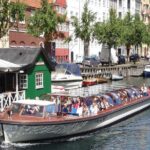
Gammel Strand and Historic Copenhagen’s Harbor Feel
Another stop highlights Gammel Strand, described as the oldest harbor in Copenhagen. The value here isn’t just a fact drop. It’s that the oldest harbor concept makes the waterway feel older and more layered than it might at first glance.
As you move, you’ll see older buildings and houseboats in the canal area. The tour stays at a pace that lets those details register. You’re not speeding past; you’re watching the city’s waterfront life—how structures sit at the edge and how the canal creates its own little world.
If you’re the type who likes to understand why cities look the way they do, this historical framing is a strong part of the ride.
Axel Berg’s Privatbanken Building: When the Details Matter
The route includes a key stop for a distinctive waterfront building: a four-storey rectangular structure built by Axel Berg (1856–1929) for Privatbanken in the years 1901–1904.
This is a great example of why a guided kayak tour can feel better than a general sightseeing loop. The guide gives you a specific name and a specific time range. That makes the visual detail easier to place when you’re standing in it.
From the water, the building’s straight lines and waterfront relationship come forward. You can spot how it sits in the harbor edge—less abstract than if you were seeing it from farther away.
Christianshavn’s Origins: Built for Protection, Seen Up Close
You’ll also learn about Christianshavn, which was built by HRH Christian IV in 1617 with the goal of protecting Copenhagen’s city and harbor from attack. This is one of those moments where a sentence can make the whole area feel different.
Instead of just seeing “old buildings,” you understand why that waterfront mattered. When you later look at fortifications, canals, and the city’s water access, you’ll understand the logic behind the layout.
The tour also includes sailing through the canal and seeing old buildings and houseboats. That combination—the defensive origin plus the lived-in waterfront—helps you picture the place as functional and inhabited, not just historic scenery.
Christianshavn to the Black Diamond Zone: Royal Library and More
As you continue, the guide points out and explains the Royal Library and The Black Diamant from the waterside. These are the kinds of modern-to-in-between landmarks that often feel disconnected when you only view them from streets.
From the kayak, you’re directly in the same visual plane as the waterfront structures. That makes these buildings feel like part of the harbor experience instead of separate attractions.
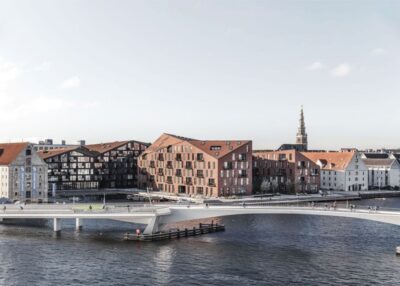
You’ll also pass a newer waterfront building from 2017. That keeps the ride from turning into a pure nostalgia trip. You get continuity: older harbor edges, then later architecture, all seen from the same moving viewpoint.
Bridges for Bikes and Walking: The Return That Feels Like a Bonus
On the way back, you’ll sail under another bridge—one “made for bicycles and walking.” The return route is more than just getting back to the start point. It gives you a second round of perspectives as you head toward Kalvebod Bølge again.
This is where the relaxed pace pays off. By the time you’re paddling back, you’ve already picked up the key visual landmarks. You’re not just passing them—you’re recognizing them.
When you return, you’re back at the meeting point for the end of the activity. The whole design is efficient: you get a compact water experience with a full sense of place.
Price and Value: Is $70.03 Worth It?
At $70.03 per person, this isn’t a cheap impulse buy. But it’s also not priced like a premium private experience. The value comes from what’s included and how the time is used.
You’re getting:
- Kayak use plus a paddle
- Swim vest
- Rain pants or wetsuit
- Changing room and locker access
- A guide who provides history and context at stops, including named landmarks
The tour also caps at 12 travelers, which helps keep it from feeling too crowded. And the on-water time is focused: about 1 hour 15 minutes paddling within a total 2 hours. For a day in Copenhagen, that’s a practical chunk of time—enough to feel active, short enough that you’re not locked into a full half-day.
One more value note: departures only run May 1–31 and September 1–30. If you’re visiting during those windows, it’s worth booking ahead. The tour is commonly booked about 30 days in advance, so you’ll likely have fewer choices if you wait too long.
When This Kayak Tour Fits Best (and When to Skip It)
This is a great fit if you want a water-based city view that includes real explanations, not just landmark spotting. If you like architecture, this route is built around recognizable names: Christiansborg Palace, Thorvaldsens Museum, Gammel Strand, Privatbanken’s building by Axel Berg, the Royal Library, and The Black Diamant.
It also fits well if you’re not trying to turn vacation into a gym session. The pacing is described as leisurely, and there are small stops where you stay in the kayaks while the guide talks.
Skip it if:
- You’re prone to seasickness, since it’s specifically noted as not recommended.
- You can’t meet the basics like the weight limit (286 lbs / 130 kg).
- You’re traveling with kids who don’t meet the age rules (see below).
It’s also good to know the rules for families. People under 15 sail in a double kayak with an adult, and there’s a stated restriction that there are no children under 12.
And yes, it’s designed so non-swimmers can participate, since swim vests are provided. Still, if water comfort is a big personal issue for you, it’s worth weighing that before you book.
Should You Book This May or September Kayak Tour?
I’d book it if you’re the kind of visitor who wants Copenhagen to look like Copenhagen—from the water, with buildings framed in canals and harbor angles. The combination of guided history stops and a small group size is the right mix for first-timers and architecture fans alike.
I would not book it if you’re likely to feel unwell on the water or if you’re traveling outside May 1–31 or September 1–30. Also, plan to dress for weather because you’ll be provided gear like rain pants or wetsuits, but you still need conditions that allow the tour to run.
If you want a short, meaningful outdoor activity that shows the city’s waterfront character, this one makes sense. It’s practical, structured, and focused on sights you can only fully understand from the water.
FAQ
How long is the kayak tour on the water?
The time on the water is about 1 hour 15 minutes. The total experience is about 2 hours.
Where does the tour start and end?
You meet at Kajakhotellet, Kalvebod Bølge, Kalvebod Brygge 7, 1560 København V. The tour ends back at the same meeting point.
How much does the tour cost?
The price is $70.03 per person.
What’s included in the price?
Included are instructions, kayak use, a swim vest and paddle, rain pants or wetsuits, a changing room, and a locker for changing clothes and small bags.
What should I bring or plan for?
The tour provides key gear like the swim vest and rain pants or wetsuit, but you should plan on dressing appropriately for the weather and bringing any personal items you want to keep in your locker.
Is the tour suitable for non-swimmers?
Yes. The tour notes that non-swimmers can participate, with the swim vest provided.
Is it recommended for people prone to seasickness?
No. It is not recommended for people prone to seasickness.
What are the age rules for children?
There are no children under 12. Riders under 15 sail in a double kayak with an adult.
When does the tour operate?
It operates only from May 1–31 and September 1–30.
What is the maximum group size?
The tour has a maximum of 12 travelers.
What happens if the weather is poor?
The experience requires good weather. If it’s canceled due to poor weather, you’ll be offered a different date or a full refund.