REVIEW · COPENHAGEN
Copenhagen & Christiansborg Palace Private Walking Tour
Book on Viator →Operated by OURWAY Tours - Copenhagen · Bookable on Viator
Copenhagen hits you fast, on the ground. This private walking tour is a smart, no-drama way to connect the dots between the harbor streets, royal landmarks, and the power center at Christiansborg. I like that you walk up close, so history isn’t just read about, it’s seen—buildings, statues, and even the small squares make sense in one smooth route.
Two things I really like: entrance fees are included for Christiansborg Palace, and the guide turns what you see into an easy story you can carry beyond the tour. One potential drawback: Christiansborg can be partially or fully closed for the king’s official functions, and the operator may swap part of your visit to Rosenborg Castle instead. That’s still a good backup, but it can change the exact feel of the final hour.
If you want a fun and easy introduction to the Danish capital—without spending your whole day figuring out what’s what—this format fits. And if your guide happens to be Julie, you’re in for a solid historical explanation and well-paced stops, based on a prior guest’s experience.
In This Review
- Key things that make this tour worth your time
- Why this 3-hour walk gets you oriented quickly
- Nyhavn to Kongens Nytorv: 350-year harbor charm with real names attached
- The King’s Garden: where Renaissance design meets royal routine
- Rosenborg Castle and the Round Tower: the included core vs. extra tickets
- Rosenborg Castle (ticket not included)
- The Round Tower (ticket not included)
- Practical takeaway
- Gråbrødetorv, Helligåndskirken, and Strøget: stories behind the streets
- Højbro Plads and ending inside Christiansborg Palace
- Price and pacing: what you’re really paying for at $409.41 per person
- Who this private tour is best for
- Should you book this Copenhagen & Christiansborg Palace tour?
- FAQ
- How long is the Copenhagen & Christiansborg Palace private walking tour?
- What is the meeting point and where does the tour end?
- Is the Christiansborg Palace entrance fee included?
- Are tickets included for Rosenborg Castle and the Round Tower?
- Is the tour private?
- Does the tour run in bad weather?
- What happens if Christiansborg Palace is closed?
Key things that make this tour worth your time
- Christiansborg Palace entrance is included, so you get inside the seat of Denmark’s Parliament instead of just looking from the outside
- A professional English-speaking guide helps you understand the city’s street layout and royal symbolism as you walk
- A tight 3-hour route that covers major hits from Nyhavn to Strøget to Christiansborg with minimal transit hassle
- You’ll see the city’s contrasts: old harbor houses, Renaissance-style gardens, and modern Denmark’s government hub
- Two stops have extra tickets (Rosenborg Castle and the Round Tower), so you can plan your budget without surprises
- Flexible endpoint plan if Christiansborg is closed, with a possible swap to Rosenborg Castle
Why this 3-hour walk gets you oriented quickly
This tour works because it’s built for orientation. Copenhagen can feel like a puzzle at first: charming waterfront, busy shopping streets, and royal sites all packed close together, but not always logically connected. Walking it in sequence fixes that.
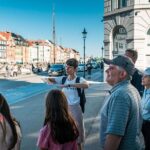
You start at Nyhavn, then move through key squares and pedestrian streets before ending at Christiansborg Palace—the place where Denmark’s political life happens today. The pacing matters, too. With an approximately 3-hour duration and stops designed for short visits, you get a taste of each spot without the typical “rushing and photos only” vibe.
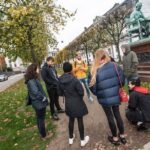
And since it’s a private tour, the guide can slow down when you want to read details off a façade or speed up if you’re mostly there for views and atmosphere. That flexibility is a big part of the value, especially at this price point.
You can also read our reviews of more walking tours in Copenhagen


Nyhavn to Kongens Nytorv: 350-year harbor charm with real names attached
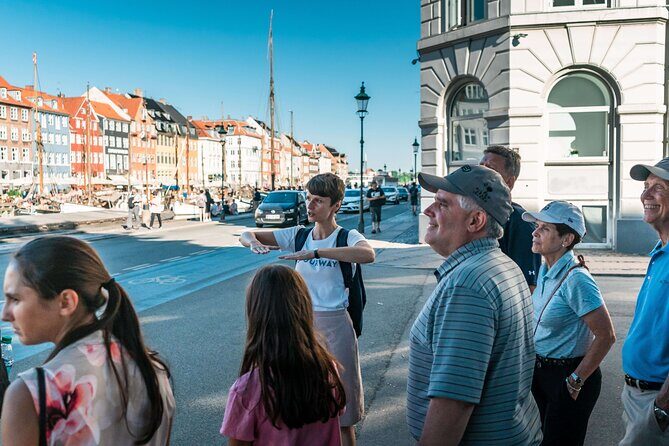
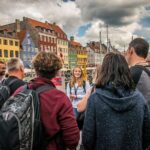
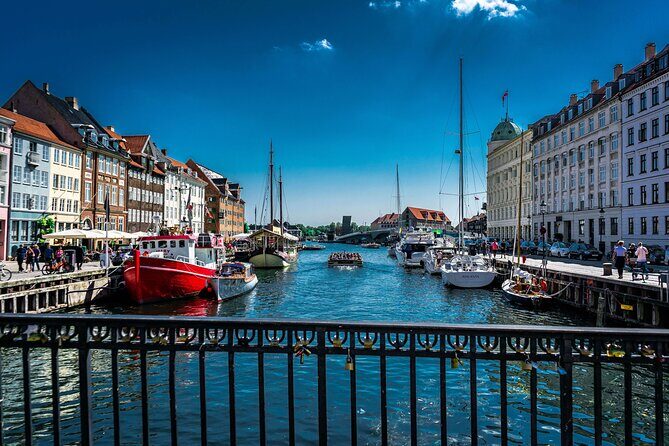
Nyhavn is where Copenhagen flexes its postcard muscles—but it’s also more interesting than the photos. You’ll pass houses that are nearly 350 years old. They’ve been restored to look more colorful, shifting the street’s mood toward cosy instead of gloomy.
Nyhavn earned its nickname as the longest outdoor bar in Scandinavia, mostly because so many cafés, pubs, and restaurants line the canal area and keep their doors open around the clock. You’ll also hear the literary connection: Hans Christian Andersen once had ties to the area, which helps make the street feel less like a theme park and more like part of Denmark’s story.
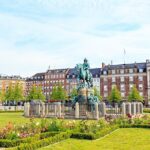
From there, you head to Kongens Nytorv (King’s New Square), next to Nyhavn. The key visual is the equestrian statue of King Christian V, tied directly to the square’s origin. What I like here is that the guide doesn’t treat it as a random monument stop. You learn how Copenhagen’s squares were shaped by rulers and trade, and then you see those layers in the surrounding landmarks.
This is also where you’ll notice modern-famous names mixed with old prestige. For instance:
- Magasin du Nord, a Danish department store chain with its flagship at the square
- Hotel d’Angleterre, known historically for hosting famous guests like Winston Churchill, Bill Clinton, Ozzy Osbourne, and Neil Diamond
Those details aren’t trivia for trivia’s sake. They’re clues for how this city presents itself—elegant, but still practical.
Stop time is short (about 10 minutes), so you’ll use this as a launching pad. Think of it as: get your bearings, then let the walk do the rest.
The King’s Garden: where Renaissance design meets royal routine
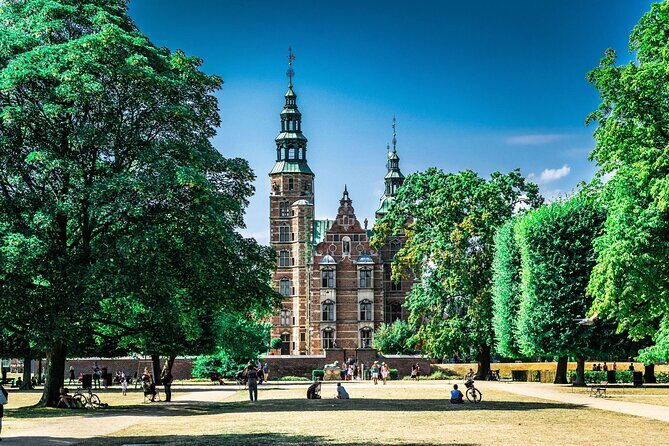
Next is the King’s Garden. This is Copenhagen’s oldest park and royal garden, set up by Christian IV and designed in a Renaissance style. Even if you’re not a garden nerd, it’s a nice shift in pace.
Why it works on a walking tour: you’re moving from canal-and-shopping energy into a calmer space that feels intentionally planned. It’s the kind of place where you start noticing the city’s “built order” rather than just its visual beauty.
You’ll only get around 10 minutes here, so don’t expect a long sit-down moment. But you will leave with a clearer mental map of where royal power once expressed itself through design—and how that authority still shows up in Copenhagen’s overall layout.
Rosenborg Castle and the Round Tower: the included core vs. extra tickets
This is the part where planning matters, because the tour mix includes one major entry ticket and leaves two other popular stops as optional add-ons.
Rosenborg Castle (ticket not included)
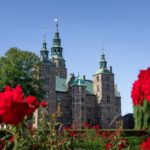
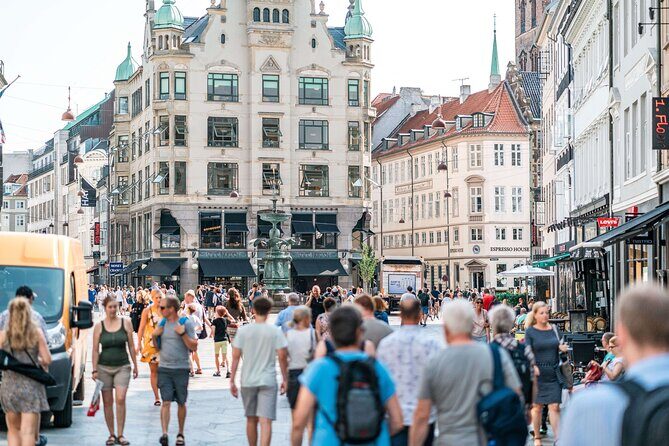
You’ll visit Rosenborg Castle, built as a summer residence for Christian IV. The big “why you should care” detail is the crown jewels.
Rosenborg is home to the Danish crown jewels, and they’re special because they’re the only crown jewels in the world that are both displayed as museum exhibits and worn by royalty. That’s a strong reason to make time for this stop, even if you’re not a long-museum type.
The drawback is simple: admission isn’t included in the tour price for this stop. If you want to go inside the castle, you’ll need to buy a separate ticket (or confirm ticket options with the operator).
You can also read our reviews of more private tours in Copenhagen


The Round Tower (ticket not included)
Then you’ll reach the Round Tower (Rundetårn), built in the 1600s. It’s the oldest observatory in Europe that’s still functioning. The science angle is the hook: famed Danish astronomer Tycho Brahe developed the Tychonian system, an in-depth model of the solar system that was advanced for its time.
Again, admission here is not included. If you’re curious about astronomy or you like mixing practical science with old-world architecture, this is one of the most rewarding “extra ticket” stops in Copenhagen.
Practical takeaway
If you want the full experience at both Rosenborg Castle and the Round Tower, set aside some budget beyond the tour price. If you’re trying to keep costs tight, you can still enjoy the exterior and the explanation from the guide—just know the ticketed highlights are inside.
Gråbrødetorv, Helligåndskirken, and Strøget: stories behind the streets
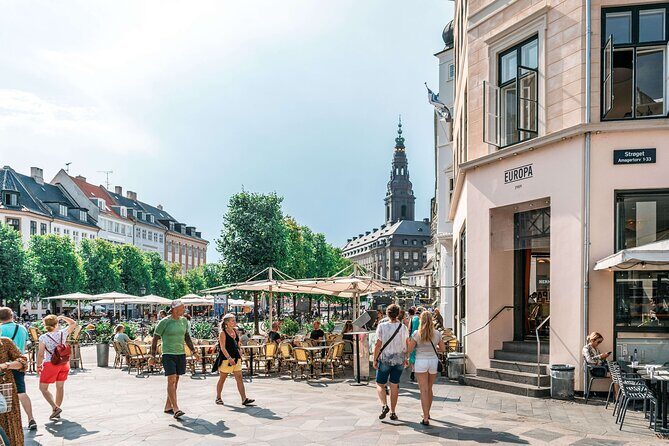
After royal buildings and scientific history, the route turns more street-level—this is where Copenhagen feels like a real city you can walk through without needing a plan.
At Gråbrødetorv (Gråbrødetorv / Grey Friars Square), the focus is the Stone of Shame. The original stone is kept at the Natural History Museum, but the square’s naming points you to a darker historical story. You’ll hear how the story connects to Leonora Christina, daughter of Christian IV.
This is one of those moments where a short stop works well. A square looks pretty, but the guide’s context changes what you notice: symbolism, power, punishment, and memory.
Then you’ll head to Church of the Holy Spirit (Helligåndskirken), built in the 1200s. One fun detail here is that the church initially didn’t have a tower. That’s the kind of clue guides use to help you see churches as evolving spaces, not fixed monuments.
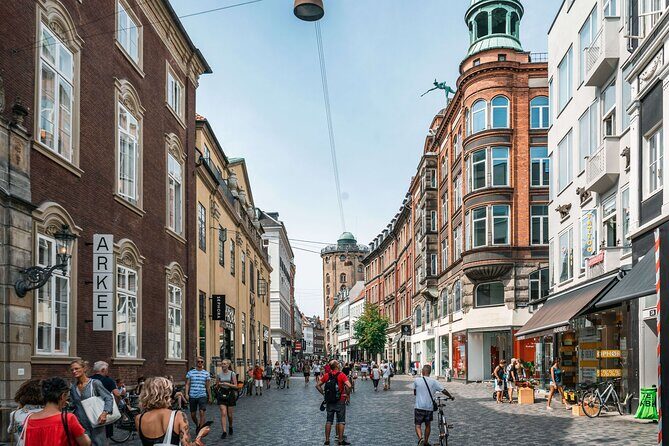
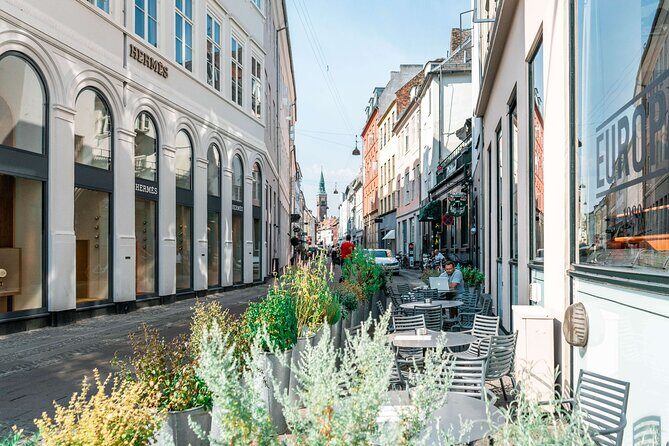
Next comes the big pedestrian experience: Strøget. You’ll walk part of this stretch, which is one of Europe’s longest pedestrian streets, at 1.11 kilometres. Yes, it’s famous for shopping—but it’s also famous for street performance. Expect to spot acrobats, musicians, and magicians as you go.
For me, this stop works because it’s not forced. You’re not locked into a museum pace. Strøget is where you can:
- pause for a quick snack or coffee
- watch people and street rhythm
- enjoy the sense of how Copenhagen moves at human speed
Also, since you’re on foot with a guide, you’ll likely understand why the shopping street is where it is and how it connects back toward key squares like Kongens Nytorv and Town Hall.
Højbro Plads and ending inside Christiansborg Palace
Near the finish, you’ll reach Højbro Plads. It was built after the great fire of Copenhagen in the 1700s, which gives it a strong “rebuilt city” vibe. The square features an equestrian statue of Bishop Absalon, credited as the founder of Copenhagen.
If you happen to be there in winter, this square also hosts one of Copenhagen’s many Christmas markets. Even if it’s not season, the fact that it’s a natural gathering place is useful to know for planning your own free-time strolls.
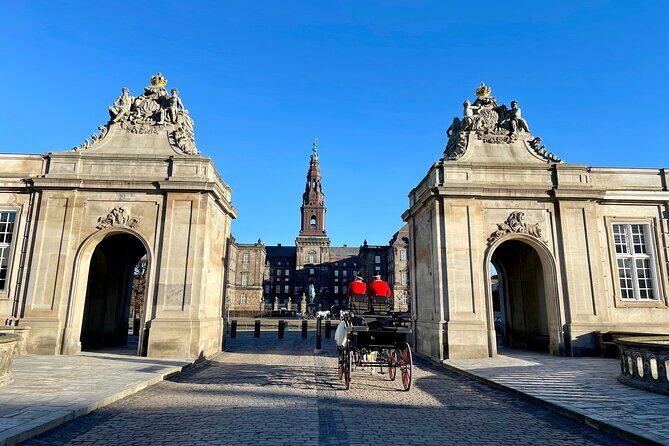
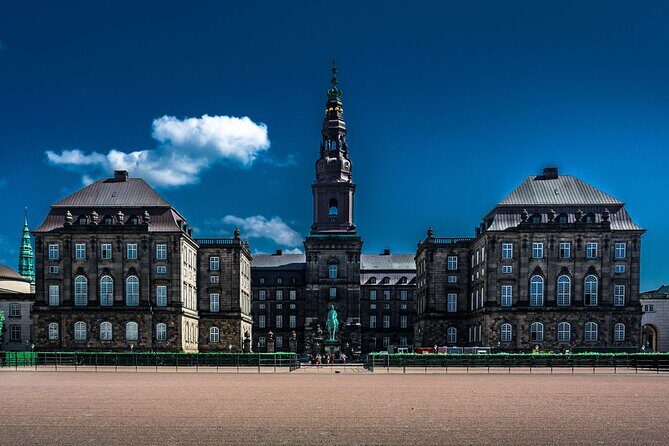
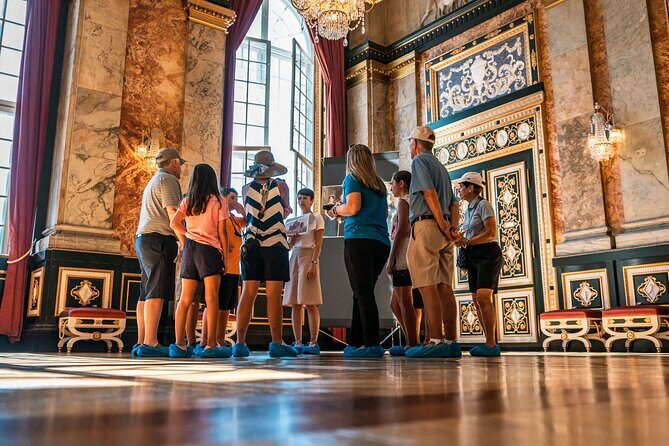
Finally, the tour ends at Christiansborg Palace. This is a major difference-maker, because the tour includes the entrance fee here and you go inside for about 1 hour.
Christiansborg is the seat of Danish Parliament today, but it was also once a royal home. The guide helps you connect those roles—power shifting from monarchy to state. You’ll also be pointed toward standout art details, including The Queen’s Tapestries.
One more practical note: the palace can be partially or fully closed due to the king’s official functions. If that happens, the operator may swap the visit to Rosenborg Castle instead. So if you specifically care most about one interior, consider asking your guide day-of (or confirming ahead) which rooms are open.
As for timing, the tour ends inside Christiansborg Palace, and it’s about a 10-minute walk back to Nyhavn if you want to continue your evening by the water.
Price and pacing: what you’re really paying for at $409.41 per person
At $409.41 per person for a roughly 3-hour private walking tour, this isn’t the cheapest way to see Copenhagen. So you should ask: what makes it worth it?
Here’s the value logic I see:
- You get a professional guide who can explain what you’re looking at while you walk, instead of you reading signs and guessing
- Christiansborg Palace entrance is included, which takes a bite out of the typical add-on cost
- You save time on navigation and deciding what to prioritize. Copenhagen is easy to love, but it’s not always easy to plan perfectly in one day
- Private format means your route and pace can feel tailored to your group rather than forced into a standard group shuffle
- The route is efficient: Nyhavn, central squares, and key attractions without requiring lots of rides or backtracking
There are trade-offs, too. Two of the biggest “inside” experiences on the route—Rosenborg Castle and the Round Tower—are not included. So your final spending depends on how many interior tickets you choose to add.
Also, this is listed as requiring moderate physical fitness. That usually translates to: comfortable walking, some time on your feet, and weather you dress for. The good news is the tour operates in all weather, so you’re not stuck waiting for a sunny day to get value.
Who this private tour is best for
This tour fits best if you want:
- a first-time Copenhagen orientation (or a quick reset if you’ve been away)
- a walking plan that hits both “pretty” and “meaningful” sites
- an English-speaking guide who can turn landmarks into stories you’ll remember
It’s also a smart pick for couples or small groups who’d rather pay for guidance and avoid decision fatigue.
If you’re the type who loves going off on long self-guided detours, you might find the pace a bit structured. But if you prefer a clean route with explanations and then freedom afterward, this is a good match.
Should you book this Copenhagen & Christiansborg Palace tour?
I’d book it if you want Copenhagen’s highlights connected into a clear route, plus inside access to Christiansborg Palace with entrance included. It’s a fast, efficient way to learn the city’s patterns—harbor life, royal design, scientific legacy, and the modern seat of government—without turning your day into a map chase.
I’d think twice only if you’re mainly focused on two ticketed interiors (Rosenborg and the Round Tower) and you’d rather avoid extra charges. In that case, you could still enjoy the walk and context, but you may end up paying separately if those stops matter most.
If your goal is an easy, meaningful introduction to Copenhagen that leaves you with a stronger sense of where everything fits, this private walking tour makes that happen.
FAQ
How long is the Copenhagen & Christiansborg Palace private walking tour?
It runs for about 3 hours.
What is the meeting point and where does the tour end?
You start at Nyhavn 1F, 1051 København, Denmark. The tour ends inside Christiansborg Palace.
Is the Christiansborg Palace entrance fee included?
Yes. Entrance to Christiansborg Palace is included.
Are tickets included for Rosenborg Castle and the Round Tower?
No. Admission tickets for Rosenborg Castle and the Round Tower are not included.
Is the tour private?
Yes. It’s a private tour, so only your group participates.
Does the tour run in bad weather?
Yes. It operates in all weather conditions, so dress comfortably and appropriately.
What happens if Christiansborg Palace is closed?
Christiansborg can be partially or fully closed due to the king’s official functions. If that happens, the operator may swap the visit to Christiansborg Palace with Rosenborg Castle.