REVIEW · COPENHAGEN
Explore Copenhagen: Self-Guided Audio Tour
Book on Viator →Operated by Citywalksz Ltd · Bookable on Viator
One walk can tell a lot. This self-guided Copenhagen audio tour strings together major city landmarks in about 2 to 3 hours, with an English guide in your pocket. I like that it focuses on big, recognizable sights without forcing you into a rigid group schedule.
What I especially appreciate is the downloadable ZIP setup that gives you a map and audio files, so you are not stuck if phone GPS acts up. I also like the route logic: it moves from Rådhuspladsen out through royal Copenhagen, then toward Tivoli, so you end right where many people want to be.
One consideration: audio quality can be hit or miss. If you are sensitive to muffled or staticky sound, test your headphones before you start and keep the phone volume sensible.
In This Review
- Key highlights you should know
- Price and what you really get for $15.29
- How the audio tour works: ZIP download, GPS map, and phone directions
- Rådhuspladsen to Tivoli: timing, walking rhythm, and the 9:00 am start
- Stop 1: Copenhagen City Hall Square, Bishop Absalon, and Martin Nyrop’s style
- Stop 2: The Round Tower’s ramp and the 1657 library at Trinitatis Complex
- Stop 3: Rosenborg Castle and King Christian IV’s Dutch Renaissance look
- Stop 4: Frederiks Kirke (Marble Church) and the biggest dome in Scandinavia
- Stop 5: Amalienborg Palace, octagonal design, and the Danish royal family
- Stop 6: Royal Danish Theatre Play House from French comedies to performing arts
- Stop 7: Christiansborg Palace Royal Kitchens, the Blue Tower, and Leonora Christina
- Audio quality reality check and how to avoid a bad sound day
- Who this tour is for (and who might skip it)
- Should you book this Copenhagen self-guided audio tour?
- FAQ
- Is this tour available in English?
- How long does the Copenhagen self-guided audio tour take?
- What is included in the ticket price?
- Are admission tickets included for the stops?
- Where does the tour start and end?
- Can I get a free cancellation refund?
Key highlights you should know
- Offline-friendly ZIP download with a map and multiple audio files, not just live GPS chitchat
- Seven landmark stops that cover civic, academic, royal, and performance-history Copenhagen
- Clear “where am I going next” directions built into the audio flow
- Best for a paced morning walk starting at Rådhuspladsen and ending near Tivoli
- No admission included, so you may need extra money if you want to enter any buildings
Price and what you really get for $15.29
At about $15.29 per person, you are paying for the audio experience itself: downloadable files, GPS mapping help, and a mobile ticket. You are not paying for a physical guide, and you are not paying for entry tickets.
That matters for value. Copenhagen is full of sites where admissions add up fast, but this tour is designed around a walkable route where you can enjoy the architecture and stories even if you skip interiors. Still, if you plan to step inside any stop, budget separately because admission fees are not included.
Also note the audio device point. Your ticket includes audio files and GPS map, but no audio device—so bring your smartphone and ideally headphones you trust. If you want good sound while walking, test your setup early in the route.
You can also read our reviews of more guided tours in Copenhagen

How the audio tour works: ZIP download, GPS map, and phone directions
This is not a “stand here and hope GPS figures it out” style tour. The smartest part is that you download a ZIP file ahead of time to your phone. Inside, you get a map plus audio files (there are 13 audio files in the package), so the tour has structure even when your signal is imperfect.
Once you start, the audio guides your timing and sequence from stop to stop. That is a big deal in Copenhagen, where you can easily turn a corner and lose your bearings when you are walking between major landmarks.
There are also two practical tips I would treat as mandatory:
- Download and unzip before you leave. The tour instructions say to do this in the Before You Go section, and it really helps.
- Get your phone ready before the first stop so you are not fiddling with settings on Rådhuspladsen.
Rådhuspladsen to Tivoli: timing, walking rhythm, and the 9:00 am start
The tour is listed as 2 to 3 hours (approx.), with about 15 minutes per stop across seven locations. That is a friendly pace: enough time to read what you are looking at, but not so long that you feel stuck.
The route start is Rådhuspladsen, 1599 Copenhagen. The end is Tivoli Gardens, Vesterbrogade 3, 1630 København V. Even though it says there is a 9:00 am start time, this is self-guided, so you can typically begin within a practical window that works with your morning.
One more thing: the tour lists moderate physical fitness as a requirement, and it includes walking between stops. You do not need to be an athlete, but plan for city pavement and stairs near some viewpoints.
Stop 1: Copenhagen City Hall Square, Bishop Absalon, and Martin Nyrop’s style
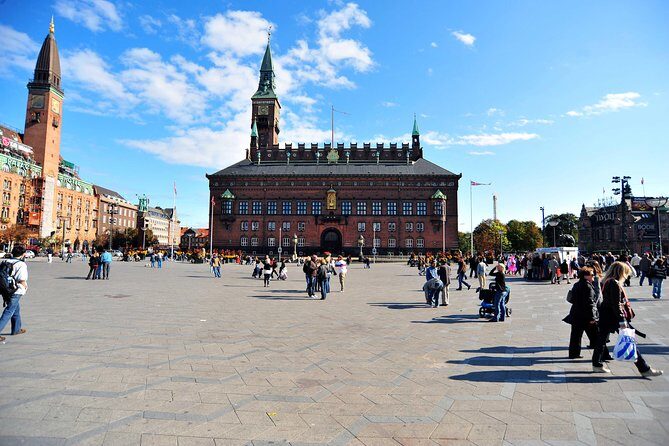
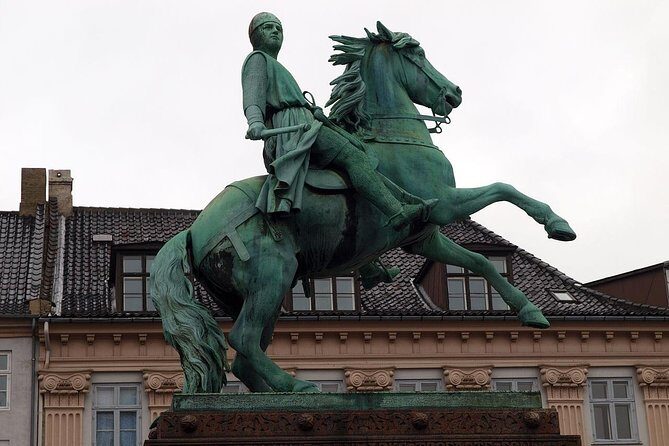
Your first landmark is the Copenhagen City Hall on City Hall Square, which is described as the city’s largest square. The building is instantly recognizable for its ornate brick façade, clock tower, and the gilded statue of the city’s founder, Bishop Absalon.
What I like about starting here is that you get the “Copenhagen identity” feeling fast—this is not just another pretty building. The hall was built in the National Romantic style, made popular by the architect Martin Nyrop, and the design inspiration is linked to City Hall in Siena. Even if you are not an architecture nerd, those details make the façade easier to “see.”
A quick practical note: admission is not included. That usually means you enjoy the square and exterior views more than indoor exploring, unless you choose to pay separately on your own.
Stop 2: The Round Tower’s ramp and the 1657 library at Trinitatis Complex
Next up is the Round Tower (Rundetårn), a 17th-century astronomical observatory within the Trinitatis Complex. The complex also includes Trinitatis Church and an academic library tied to Copenhagen University.
Here’s a standout detail: the library opened in 1657 and once held around 10,000 books. That gives the stop weight beyond a photo moment.
The tower itself has an unusual feature: instead of stairs, there is a ramp that spirals to the top. This is exactly the kind of detail that makes an audio tour worthwhile—you would not automatically learn that from a quick glance.
Again, admission fees are not included, so plan your expectations accordingly. If you want interior or tower access, budget extra time and money.
A few more Copenhagen tours and experiences worth a look


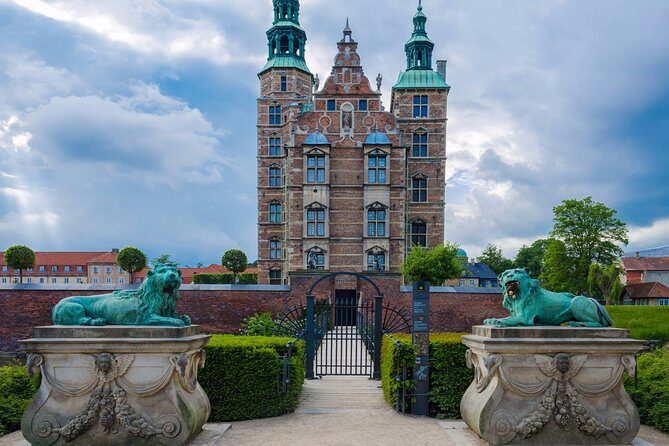
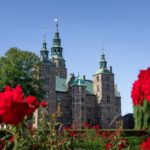
Stop 3: Rosenborg Castle and King Christian IV’s Dutch Renaissance look
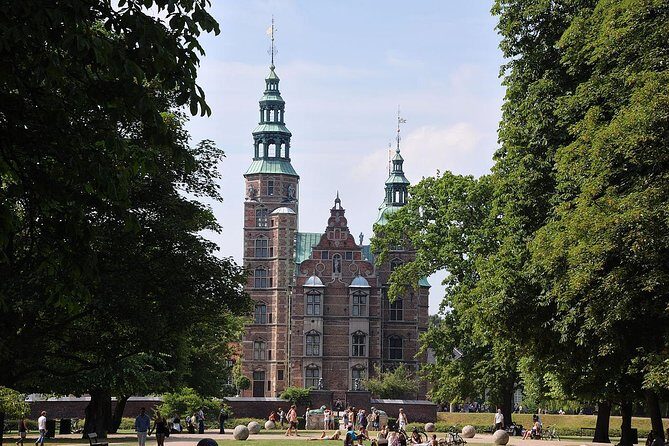
At Rosenborg Castle, you are stepping into the world of royal commissions. The castle was commissioned by King Christian IV, and its style is Dutch Renaissance, known for features like high gables and spires.
The castle’s timeline is also part of what makes it interesting. After completion, it continued to be expanded, reaching its current form in 1624. That means what you see today reflects a process, not a single day of construction.
This stop is useful even if you do not go inside, because the exterior gives you a strong sense of era and intention—Rosenborg was built to be seen as much as to live in.
As with the others, admission is not included, so if your plan includes entering the castle or paying for special areas, you will need separate tickets.
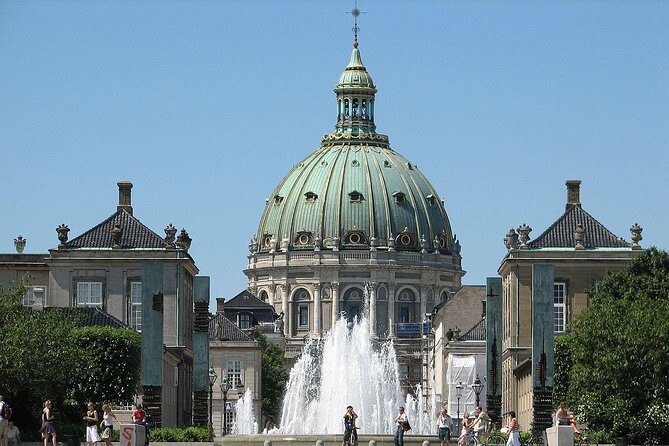
Stop 4: Frederiks Kirke (Marble Church) and the biggest dome in Scandinavia
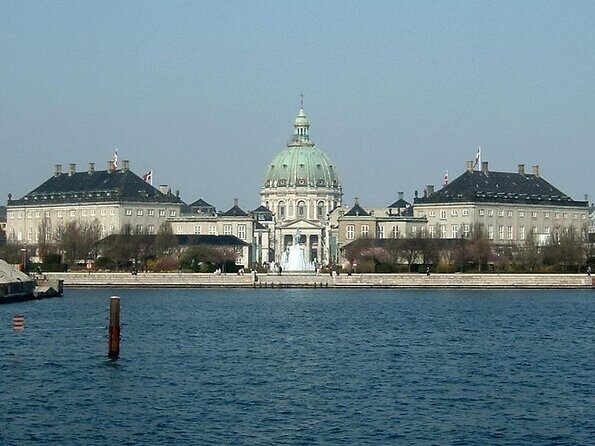
The route turns to Frederiks Kirke, also known as Marble Church. It is described as having the largest church dome in Scandinavia, and the official name honors King Frederik V.
One more layer ties the church to city planning. In 1748, Frederik V began planning a grand new district called Frederiksstaden. So while you are looking at a church, you are also looking at an idea of Copenhagen’s expansion and vision.
This is a stop where audio context helps. Without that extra background, you might just see a striking building. With it, you see how the church fits into the wider “how the city was shaped” story.
As usual on this tour, admission fees are not included, so treat it primarily as a viewing and storytelling stop unless you opt in to paid entry.
Stop 5: Amalienborg Palace, octagonal design, and the Danish royal family
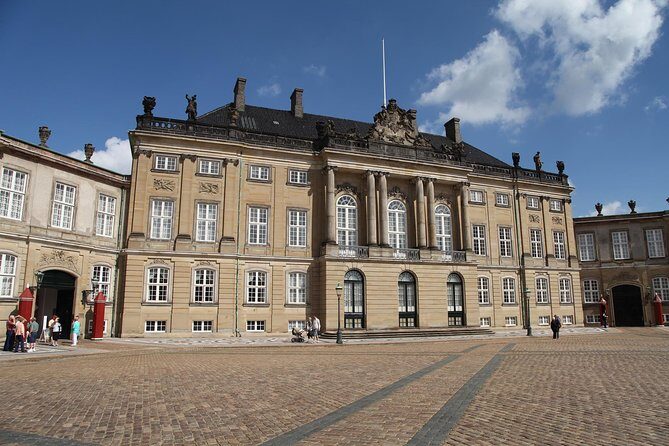
Your next royal stop is Amalienborg Palace, the current residence of the Danish royal family. The tour notes that the first palace was built between 1669 and 1673 by Queen Sophie Amalie, wife of King Frederik III.
Then it gets specific about why the current look matters. Frederik V dismantled the earlier palace and replaced it with the octagonal complex you can see today. That is the kind of detail that makes the square feel like a coherent “designed moment,” not just a collection of grand buildings.
This stop is great for people who like watching how power is presented through architecture. Even if you do not have time for interior visiting, you can appreciate the layout and scale from the outside.
No admission is included here either, so if you want to go beyond exterior viewing, plan for separate tickets.
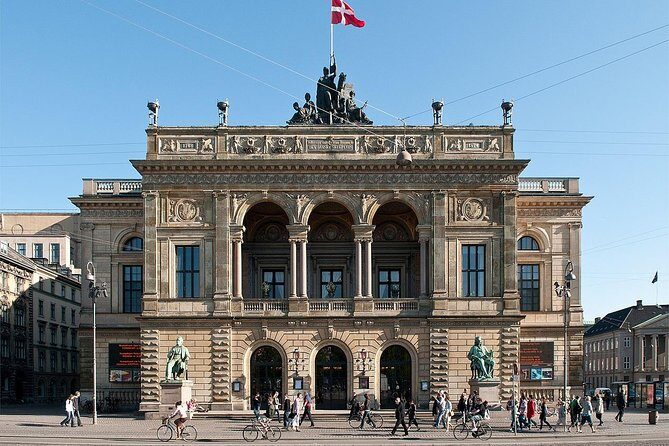
Stop 6: Royal Danish Theatre Play House from French comedies to performing arts
At the Royal Danish Theatre Play House, you are looking at performance history with exact dates attached. The first theatre built in this location dates to 1748. It seated 800 and employed eight actors and four actresses, with performances mainly French comedies.
But it outgrew its own size. In 1774, it was rebuilt for a larger audience. The Royal Danish Theatre then became home to performing arts including ballet, opera, and the royal orchestra.
I like this stop because it gives you something to listen for in the audio. You can picture the shift: from a smaller stage tuned to French comedy to a broader cultural engine for major performing arts.
Admission is not included, so if you want a show or paid areas, you will need to handle that separately.
Stop 7: Christiansborg Palace Royal Kitchens, the Blue Tower, and Leonora Christina
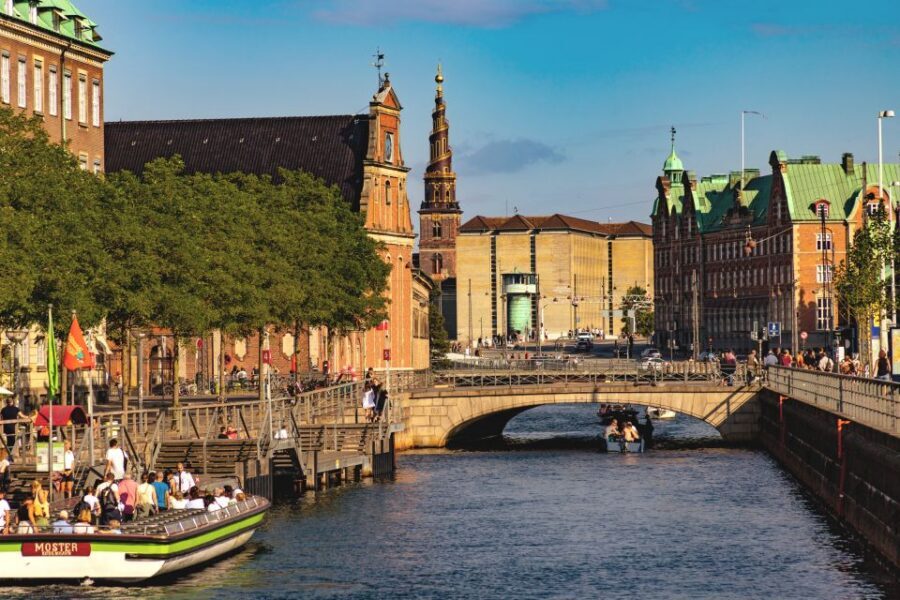
The last stop brings you to the Royal Kitchens of Christiansborg Palace. Christiansborg is built over remnants of four previous castles, which means the area carries layers of Copenhagen’s shifting power.
The tour highlights one early chapter: in 1167, Absalon built the first castle on the island, which lasted over 200 years. After its destruction by the Hanseatic League, Copenhagen Castle was built over the ruins.
A key dramatic detail is the Blue Tower, which held Leonora Christina, daughter of Christian IV, captive for almost 22 years. That story is heavy, but it also makes the location feel real—this is not just sightseeing.
This is a strong final stop because it connects civic and royal Copenhagen back to its deeper roots. And since the tour ends near Tivoli, you can finish with a change of pace—especially if you want a relaxed break after your walk.
Admission is not included, so stick to what you can enjoy without paying unless you add tickets yourself.
Audio quality reality check and how to avoid a bad sound day
Here’s the honest part: audio quality can be inconsistent. One set of feedback described muffled background effects and staticky sound when played loudly. Another note praised the audio directions and offline-ready planning, but still called for improvements in audio clarity and narrator delivery.
So what should you do to protect your experience?
- Use headphones if you have them. Walking sound can swallow speaker audio fast.
- Keep volume moderate. If you crank it, you may trigger distortion or noise.
- Pause when you stop. Don’t “speed listen” while walking between corners—let the audio catch up.
If sound is a make-or-break issue for you, it may be worth confirming your phone model supports clean headphone output. Otherwise, you might spend energy fighting audio instead of enjoying the stories.
Who this tour is for (and who might skip it)
This tour is a good fit if you like:
- Self-paced sightseeing where you control timing and rest breaks
- Walking routes that connect major Copenhagen landmarks
- Offline-ready planning using a ZIP download and a map
- History delivered in short stop-by-stop blocks rather than a long lecture
It may not be ideal if:
- You strongly depend on high-quality audio and hate any background noise
- You want a guide present in person to answer questions or adjust in real time
- You plan to rely on admissions without factoring extra costs, since no entry fees are included
Should you book this Copenhagen self-guided audio tour?
Book it if you want an organized, walkable highlights route that costs less than a private guide and gives you enough structure to avoid getting lost. The ZIP download with map and audio files is the standout value—this tour is built to work when GPS is annoying.
Skip it or think twice if you are highly sensitive to audio playback. Sound quality is a real concern in the feedback, so bring good headphones and test early at your first stop.
If you do book, treat it like a morning plan: download first, start at Rådhuspladsen, enjoy the big architectural markers—City Hall, the Round Tower, Rosenborg, Marble Church, Amalienborg, the theatre, and Christiansborg—and then wrap up near Tivoli.
FAQ
Is this tour available in English?
Yes. The audio tour is offered in English.
How long does the Copenhagen self-guided audio tour take?
It takes about 2 to 3 hours (approx.), with time allotted for each of the stops.
What is included in the ticket price?
You get audio files and a GPS map, plus a self-paced experience using a mobile ticket. An audio device is not included.
Are admission tickets included for the stops?
No. Admission fees are not included, so if you want to enter any sites, you’ll need to pay separately.
Where does the tour start and end?
It starts at Rådhuspladsen (1599 Copenhagen) and ends at Tivoli Gardens (Vesterbrogade 3, 1630 København V).
Can I get a free cancellation refund?
Yes. You can cancel for a full refund if you cancel at least 24 hours in advance of the experience’s start time.