Christiania is better when you play. This self-guided smartphone escape game turns Freetown Christiania into an easy-to-follow story hunt, and I like that there’s no equipment pickup—just your phone. The main catch: some of the directions can feel a bit fussy, so be ready to slow down and sort it out.
I also love that it helps you move through multiple standout spots without feeling like a strict tour. You’ll be checking off places like Church of Our Saviour and Den Grå Hal while solving puzzle clues that keep you walking.
One more thing to consider: because there’s no guide, you’re fully in charge of pace, interpretations, and any detours. The upside is freedom; the tradeoff is you’ll rely on the app when you want help.
In This Review
- Key points to know before you go
- Why this Christiania adventure works in the real world
- Getting started at Christianshavn Metro: your first clue, your first decision
- Church of Our Saviour: where the story shifts from clues to context
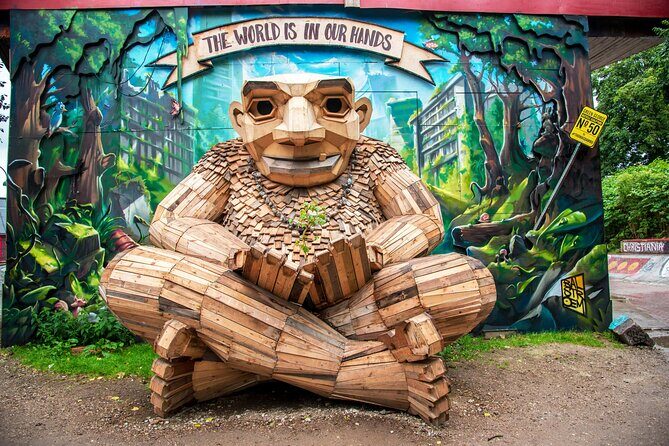
- Green George af Thomas Dambo (Trold nr. 50): playful art that pulls you off-track
- Den Grå Hal (The Grey Hall): when the walking part starts to feel like the point
- Freetown Christiania and the Scrap Metal Sculpture: where the route turns iconic
- Månefiskeren Cafe and Moon Fisher: your clue, your break
- Christiania Art Gallery: turning the last clues into a final set of wins
- Finishing at Stupa / Kid’s Zone: closing the story without a hard stop
- Pacing and route reality: how long it really takes (and how to plan)
- Price and value: $7.21 is cheap, but spend wisely
- Who should book this Christiania self-guided adventure
- Practical tips so you don’t waste time
- Should you book this hidden stories adventure?
- FAQ
- How long does the Christiania Hidden Stories adventure take?
- Do I need a tour guide?
- What do I need to bring?
- Where does the adventure start and end?
- Is it in English?
- Are there admission tickets at the stops?
- Can I cancel and get a refund?
Key points to know before you go
- Smartphone-only clues so you can skip gear and just start
- No time limit, meaning breaks and slow wandering are part of the plan
- 12 puzzle challenges stacked into a story across key Christiania-adjacent spots
- Focused walking route through Christianshavn, Christiania, and the finish at Kid’s Zone
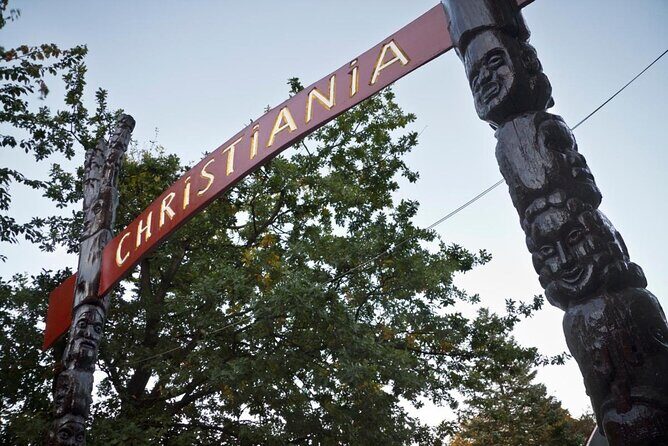
- Respect rules matter, including areas where photos may not be appropriate
- Your group only, so you won’t feel rushed by other people
Why this Christiania adventure works in the real world
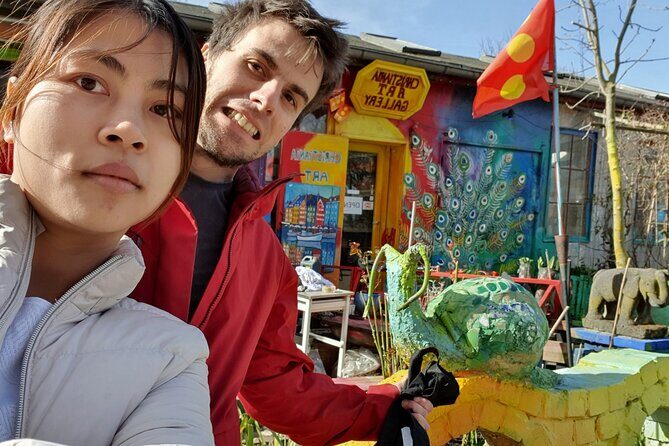
Christiania isn’t a museum. It’s a place where people live, make art, and run daily life around you. A normal guided tour can feel too scripted. This format solves that problem by giving you a story mission and then stepping back.
I like the escape-game structure because it naturally breaks the area into manageable chunks. Instead of wondering where to go next, you’re always moving toward the next clue. And because it’s self-paced, you can linger if you’re curious, take a longer look at street art, or pause when the route asks you to stop and think.
The practical side is just as good. You’re not scheduling around a guide’s pacing. You’re also not juggling complicated logistics—if you want to take a break, you can.
You can also read our reviews of more guided tours in Copenhagen
Getting started at Christianshavn Metro: your first clue, your first decision
You begin outside Christianshavn Metro Station. That matters because it’s a simple way to orient yourself at the start of the day in Copenhagen, then walk into the quieter, more winding parts ahead.
At the starting point, you get your first clue. Solving it doesn’t just unlock the next bit of story—it also tells you how to move to the next stop. In other words, you’re not left holding a map and hoping you guessed correctly.
Here’s what to watch for right away. Since the adventure relies on step-by-step navigation, you’ll want to take a moment to check your screen before you set off. If you rush into the next streets without looking, you’ll likely hit the small direction glitches people sometimes report.
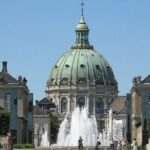
Church of Our Saviour: where the story shifts from clues to context
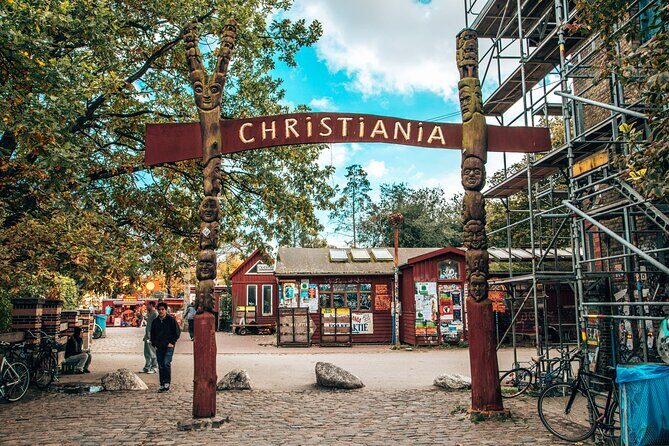
Next, you head to Church of Our Saviour. This stop is short on paper, but that’s exactly the point. It’s designed as a quick “solve and reposition” moment in the route.
You’ll get a new clue to handle the challenge at this location, and then you can keep exploring as long as you like. This flexibility is great if you’re the type who likes to look around for a few minutes before moving on. It also helps if you need time to catch your breath or figure out the next turn.
The benefit of this stop is balance. You’re not only focused on Christiania sites—you’re also moving through a more conventional Copenhagen landmark area. It gives your walk rhythm: clue, reset, clue again.
Green George af Thomas Dambo (Trold nr. 50): playful art that pulls you off-track
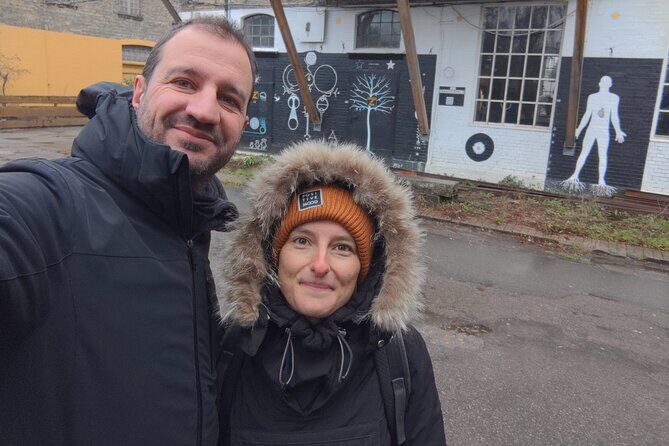
From there, you go to Green George af Thomas Dambo, also known as Trold nr. 50. This is the kind of place where the route feels fun instead of purely “efficient.”
Again, the structure is the same: clue in, puzzle handled, then you can stay as long as you want. The difference here is tone. Trolls by Thomas Dambo are visually distinctive, and they make it easier to feel like you’re sightseeing, not just following directions.
One practical tip: give yourself a little extra time here compared to the other stops. These works are the sort of thing you might want to look at from multiple angles, and you’ll probably take longer than you planned even without meaning to.
Den Grå Hal (The Grey Hall): when the walking part starts to feel like the point
Next up is Den Grå Hal, the Grey Hall. This stop continues the pattern of clue-based movement, but now you’re deeper into the mood that makes Christiania memorable.
You’ll receive the clue for the challenge here and then continue at your own pace. Since this is a self-guided adventure, you’ll likely find your own rhythm: some puzzle-solving, some wandering, a few stops to re-check the next instruction.
This is also a good stretch to pay attention to how you’re moving through people and space. In a community like this, you’ll want to keep your voice at a reasonable level and watch for areas where photo-taking is not welcome.
A few more Copenhagen tours and experiences worth a look
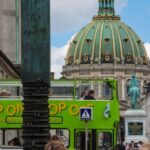

Freetown Christiania and the Scrap Metal Sculpture: where the route turns iconic
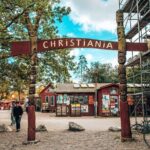
Now you reach Freetown Christiania. The clue challenge at this phase is tied to a Scrap Metal Sculpture stop, which fits Christiania’s reputation for repurposed creativity.
This is a turning point in the experience. Earlier stops can feel like you’re learning the “rules” of the game. At Freetown Christiania, the route becomes about noticing details while you solve.
Here’s what to expect in the real world: you’ll likely feel tempted to stop, browse, or talk to people. That’s normal. One of the best bits of value in this adventure is that it gives you permission to slow down.
Månefiskeren Cafe and Moon Fisher: your clue, your break
Then the route takes you to Månefiskeren Cafe for the Moon Fisher part of the story hunt. This stop is especially useful if you want a natural break.
Since there’s no time pressure, you can take a breather while you work through the clue. If you want a snack or a quick pause, this kind of café stop makes it easier to time it without feeling like you’re breaking the flow.
I’d treat this as your reset moment. If you’ve been moving quickly, slow down for a minute. If you’ve been stuck on a puzzle, this is a good spot to regroup before the final stretch.
Christiania Art Gallery: turning the last clues into a final set of wins
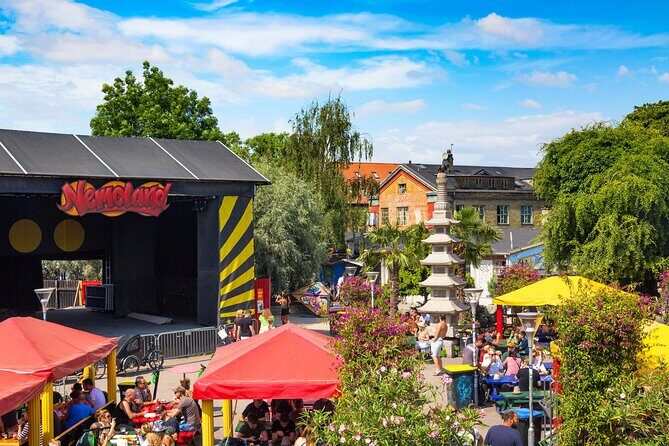
Next comes Christiania Art Gallery. Like the other stops, you get a new clue to solve and then you can continue exploring as long as you like.
This is where you’ll probably start feeling the advantage of the format. You’re not just collecting puzzle answers; you’re also gradually building a personal picture of what Christiania’s art scene looks like when you’re walking through it rather than looking at it from a distance.
If you’re the type who likes to take photos, keep it respectful. A note from earlier experiences here is that there are areas where photos are not appropriate. When in doubt, ask or simply skip.
Finishing at Stupa / Kid’s Zone: closing the story without a hard stop
Your adventure ends at Stupa / Kid’s Zone. The route wraps up with the final clue and then the story and city exploration games end there.
This finish point is useful because it’s designed as a clear endpoint. You don’t have to guess when the experience is “over.” You also don’t have to return to your starting area, which saves time if you’re planning dinner or hopping to another Copenhagen neighborhood afterward.
Also, because the activity runs daily (showing hours from 12:00 AM to 11:30 PM), you can fit it into your schedule more easily than tours with tight start times.
Pacing and route reality: how long it really takes (and how to plan)
The suggested duration is roughly 40 minutes to 1 hour 10 minutes. But I’d plan for more. One solid piece of real-world advice: allow extra time if you like detours—especially around flea-market-style browsing and street life.
In practice, you might find yourself slowing down simply because the area is interesting. When that happens, you’re not doing it wrong. You’re doing what this format is built for: pause, resume, and keep moving when you’re ready.
A good planning approach:
- If you want a quick mission: try for about an hour.
- If you want to actually enjoy Christiania at street level: give yourself 2 to 3 hours.
Since it’s your group only, you also won’t feel pressured to keep up with strangers. That makes it easier to linger without turning the experience into a race.
Price and value: $7.21 is cheap, but spend wisely
At about $7.21 per person, this is priced low enough that it feels like a playful add-on rather than a big commitment. For that money, you’re getting mobile access plus 12 puzzle challenges and storyline content, with the option to pause and resume anytime.
What you’re not getting is a guide. That’s the main tradeoff. If you want someone to explain the deeper meaning behind every artwork or community decision, this won’t be your best option.
But for the right traveler, the value is strong. You’re paying for structure, motivation, and a fun way to move through places you’d otherwise skip or struggle to navigate. You’re also getting to explore at your own speed instead of under a guide’s clock.
So ask yourself this: do you enjoy figuring things out on your own? If yes, the price makes sense. If you want constant expert commentary, you may feel under-served.
Who should book this Christiania self-guided adventure
This is a great match if you:
- like scavenger hunts and puzzle-solving
- want to explore Christiania without feeling locked into a timeline
- prefer a flexible plan you can pause for photos, rest, or browsing
- don’t mind navigating with your phone when directions get a little tricky
It’s less ideal if you:
- strongly prefer a guide for context and conversation
- hate any uncertainty in navigation
- need a very straightforward route with zero wandering or decision-making
Also note: most people can participate, and service animals are allowed. It’s near public transportation too, which helps if you’re fitting it into a busy Copenhagen day.
Practical tips so you don’t waste time
A few small habits can make this go smoother:
- Keep your phone charged and ready. If you start solving without being able to read the next step clearly, you’ll lose time.
- Look at the clue screen before you walk across confusing streets.
- Don’t treat each stop like a checklist. If you get a clue at a new location, spend a couple minutes around it before you rush to the next instruction.
- Be respectful with photography. There are areas where photos may not be appropriate, especially when people are living their lives nearby.
And if the directions feel challenging, don’t panic. The whole point is to slow down, figure it out, and keep the game fun.
Should you book this hidden stories adventure?
I think you should book it if you want a lighthearted way to explore Christianshavn and Freetown Christiania with smartphone puzzles and plenty of freedom. It’s also a strong pick for budget-minded travelers because the cost is low and the experience includes structured challenges.
Skip it if you’re craving an interpretive guide who can tell you what every artwork means, or if you’re not comfortable navigating independently.
For most people, though, this hits a sweet spot: you get to move through real places, not just see them. And when you’re done at Stupa / Kid’s Zone, you’ll be ready to keep exploring Copenhagen with your brain buzzing from the little wins along the way.
FAQ
How long does the Christiania Hidden Stories adventure take?
It typically takes about 40 minutes to 1 hour 10 minutes. In real life, you may take longer if you stop to shop or linger at the sights.
Do I need a tour guide?
No. This is a self-guided experience, and a tour guide is not included.
What do I need to bring?
You’ll use your smartphone. You’ll receive a mobile access code, and the puzzles are designed to be played on your phone.
Where does the adventure start and end?
It starts outside Christianshavn Metro Station and ends at Stupa / Kid’s Zone, finishing near Mælkebøtten 162B in Copenhagen.
Is it in English?
Yes, the experience is offered in English.
Are there admission tickets at the stops?
The stops listed are free to enter.
Can I cancel and get a refund?
Yes. You can cancel for free up to 24 hours in advance for a full refund.