REVIEW · COPENHAGEN
Copenhagen Bicycle Adventure
Book on Viator →Operated by Scandinavian Guides · Bookable on Viator
Copenhagen clicks into place on two wheels. I like the easy meet-up right by Tivoli and the local, multilingual guide who turns landmarks into stories you can actually remember. With 10+ stops, you get a focused hit list of Copenhagen’s biggest sights, all connected by bike lanes that make moving around feel simple.
The only real catch I’d flag is timing and tickets: Rosenborg Castle’s entry isn’t included, and the tour runs in all weather—so plan for a bit of walking and quick detours if it’s wet or cold. Still, the overall format is a smart way to see more than you’d manage solo, especially with a small group (max 15) and included bike support.
In This Review
- Key takeaways
- Price and what you get for $74.02
- Meeting at Axel Torv 1 and how the tour starts smoothly
- The biking feel in Copenhagen: fast, easy, and why it works here
- City Hall Square to the Strøget start: classic Copenhagen in minutes
- Rosenborg Castle: royal power, clever details, and a paid entry choice
- Kongens Have and the royal garden break
- Nyboder and Christian IV: where the navy stories live
- The Little Mermaid: famous landmark, plus the story behind it
- Citadel area and the moat crossing: history you can feel
- Seaside Toldboden: warming up with Danish market energy
- Gefion Fountain by Churchill Park: the oxen power story
- Frederik’s Church and the geometry of the city
- Amalienborg around noon: guard change spectacle, handled by timing
- Nyhavn at the end: canal color and the best finish
- Guides and the small-group advantage (Arthur, Marc, and what to expect)
- Who this Copenhagen bicycle tour is best for
- Should you book this Copenhagen bicycle adventure?
- FAQ
- How long is the Copenhagen bicycle adventure?
- What does the $74.02 price include?
- Is a helmet provided?
- Do I need to pay for tickets during the tour?
- Where do I meet the guide, and where do we end?
- What time does the tour start?
- What happens if my bike has a problem?
- Does the tour run in bad weather?
Key takeaways

- Start at Axel Torv 1 (by Tivoli), then roll straight into central sights without wasting time.
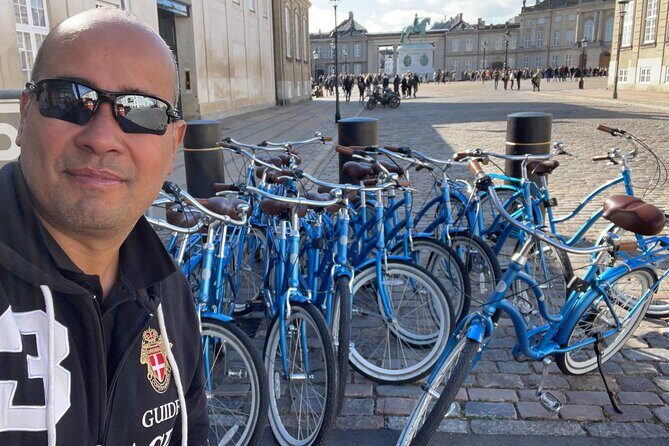
- Bike rental is included, and if you get a flat, they bring a replacement bike with no extra charge.
- You’ll pass major royal and classic Copenhagen stops like Rosenborg, Kongens Have, Amalienborg, and Nyhavn.
- You get real context from the guide, including stories about Danish monarchy and the Little Mermaid’s origin.
- You’ll have time for the changing of the guard at Amalienborg around noon, if you arrive with the group.
Price and what you get for $74.02
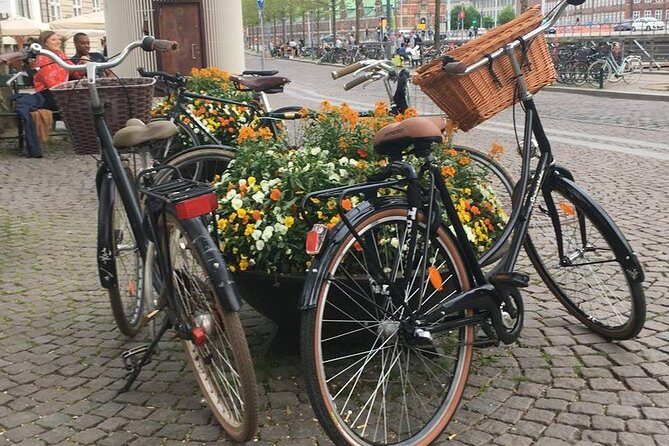
At $74.02 per person for a roughly 1 to 3 hour ride, this isn’t a “cheap-and-fast” add-on. It’s priced more like a guided experience—because you’re getting the bike rental, a local guide, and a route built around Copenhagen’s best-known areas. When you add up what it costs to hire bikes plus pay a guide for a short, high-efficiency tour, the value starts to make sense.
Also, the bike is not just dropped off. If something goes wrong—like a flat tire—they provide a replacement bike without charging you again. That matters, because Copenhagen cycling is great, but a broken bike can ruin your day fast.
One more value point: the group is capped at 15. That usually means less waiting, more time at each stop, and a better chance your guide can answer your questions without turning the tour into a traffic jam.
You can also read our reviews of more tours and experiences in Copenhagen.


Meeting at Axel Torv 1 and how the tour starts smoothly
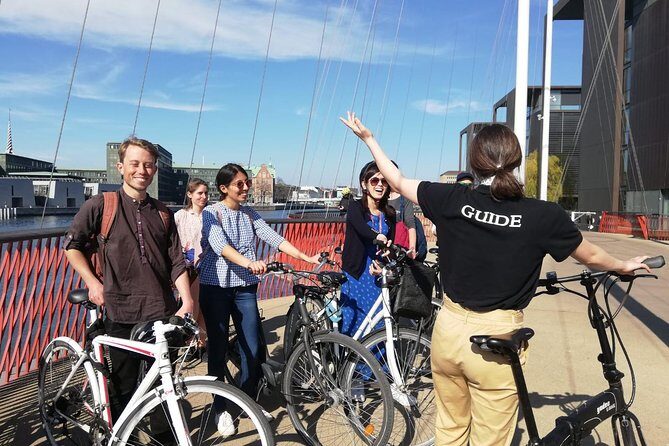
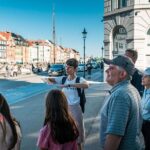
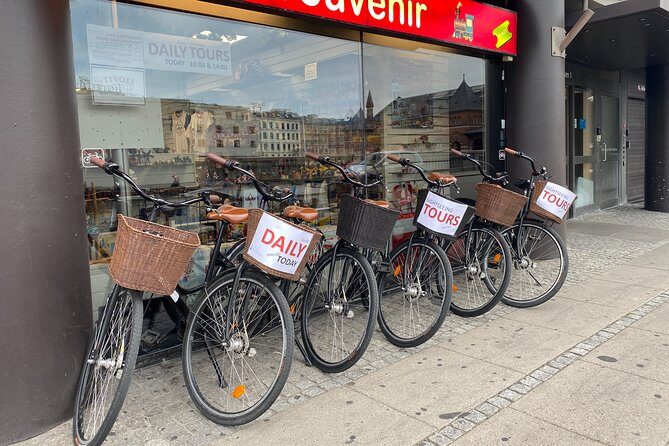
Your tour begins at Axel Torv 1, in the square in front of Tivoli Park’s main entrance. The Axel Tower buildings are used as the “you’ll find us here” landmark, and the guide team also ends the ride back at the same meeting point.
I like meeting points like this for one simple reason: you don’t need a treasure map. You’re dropping into the heart of the city, near major streets and easy transit. If your travel day has already included some museum lines and long walks, starting somewhere central and obvious is a big quality-of-life win.
Tip: arrive a few minutes early. You’ll want time to locate the bicycle area, get adjusted, and confirm you’ve got the mobile ticket ready.
The biking feel in Copenhagen: fast, easy, and why it works here
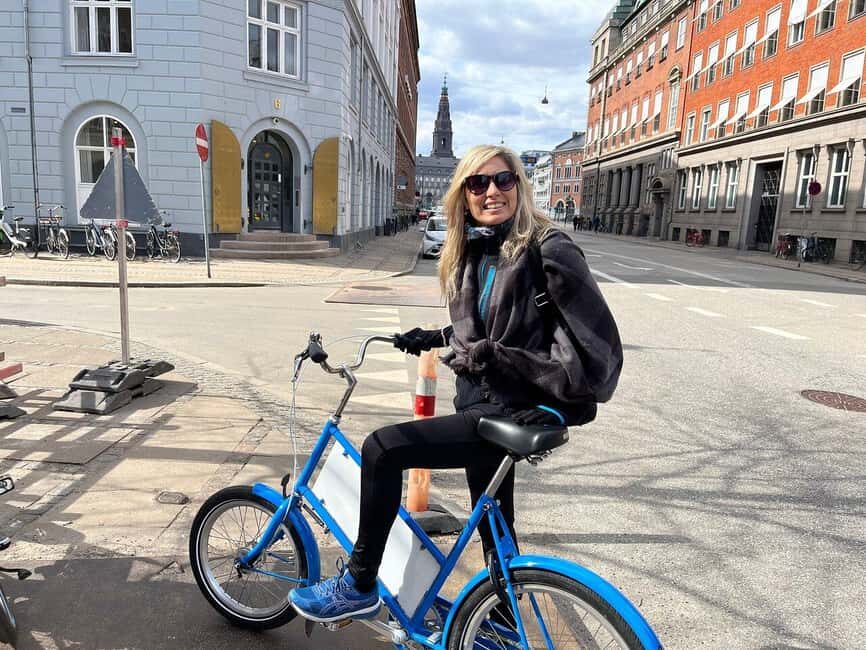
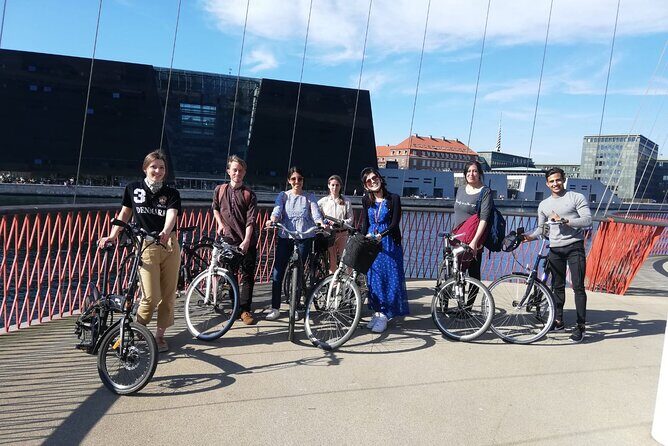
Copenhagen is one of those cities where cycling is not a novelty—it’s the default. This tour leans into that. You’re not “touring on bicycles” in the tourist-bus sense. You’re actually moving like locals do, using bike lanes and predictable routes between key sights.
Helmets are not included, but they’re recommended. If you don’t own one, you might still want to consider bringing something simple for comfort and safety—especially if you’re riding in wind or drizzle.
The route also includes shorter stop times at many points. That means you’ll spend most of the experience actively riding, not shuffling along with a huge group. It’s a good balance if you want to see a lot without ending up exhausted.
And yes, it operates in all weather. So think layers, not one thin outfit. Bring a rain jacket or wind protection and you’ll be fine.
City Hall Square to the Strøget start: classic Copenhagen in minutes
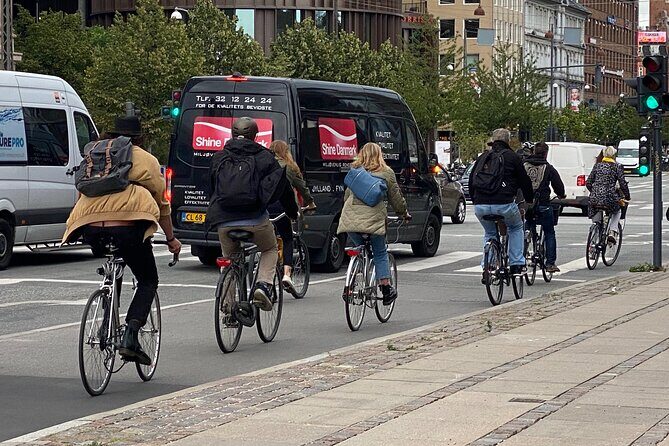
After meeting by Tivoli, the ride moves to City Hall Square (Rådhuspladsen). This is right in front of Copenhagen City Hall and functions as a key event space. It also marks the start of Strøget, the famous shopping street that pulls you away from “quick sightseeing” and straight into lived-in city life.
This is a smart early stop. You get your bearings fast while the tour is still fresh and your legs are not yet tired. You also get a feel for the city’s layout: where people gather, where the big streets flow, and how the center connects by bike.
If you’re the type who likes to understand how a city works—not just what it looks like—this first stretch is your kind of start.
Rosenborg Castle: royal power, clever details, and a paid entry choice
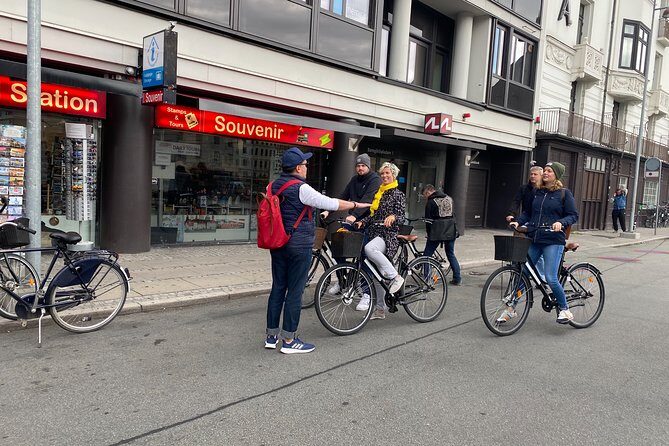
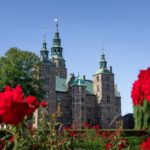
Next comes Rosenborg Castle, built as King Christian IV’s summer residence from 1606 to 1634. This stop is your first deep dive into the “royal Copenhagen” theme, and it’s packed with details you’ll only appreciate with context.
Here’s what’s notable from the information you’ll be hearing:
- The castle’s basement houses the Danish crown jewels and royal crowns.
- You’ll hear about the Knights’ Hall, including thrones and three life-size silver lions.
- The royal throne is described as made with a narwhal stand and gilded figures, while the queen’s throne is silver.
- There’s also mention of a major tapestry series from 1693 showing battles between Denmark and Sweden.
- The interiors are described as well-preserved, with references to rooms like the king’s private writing room, bathroom, and wax figures.
Practical note: Rosenborg Castle admission is not included. That means you’ll need to decide whether you want to pay for entry based on your interests and your time. With only about 10 minutes at this stop, the “quick look” approach is likely. If you love palaces, you might consider adding extra time elsewhere—but for a bike tour, this stop is a great hook into royal Copenhagen.



Kongens Have and the royal garden break
Kongens Have is a different kind of royal site. It’s the country’s oldest royal garden, laid out in a Renaissance style by Christian IV in the early 1600s. It’s been open to the public since the 1770s, and today it draws an estimated three million visitors each year.
What makes this stop worth your time is the contrast. After the heavy symbolism of castles, you get open alleys, classic garden geometry, and a “pause” in the middle of a sightseeing ride. The route also references specific walkways, like the Cavalier Hallway and the Ladies Hallway, and landmarks within the garden such as the Hercules Pavilion and a statue of H.C. Andersen.
Admission here is free, and the stop duration is about 10 minutes. That’s perfect for a quick reset. You’ll come out of it feeling less like you just toured a list and more like you actually experienced a slice of the city’s rhythm.
Nyboder and Christian IV: where the navy stories live
Then the tour shifts from royal gardens to a more local, neighborhood-scale history: Nyboder. This historic row house district was planned by Christian IV to house personnel of the rapidly growing Royal Danish Navy and their families.
You’ll also see a statue of King Christian IV here. That makes the stop feel anchored. Instead of reading about him in a museum, you see how his policies shaped daily life—housing workers, not just ruling from palaces.
This is one of those stops I’d call “small but smart.” It helps you understand Copenhagen isn’t only monuments and photo spots. It’s also neighborhoods designed around real needs.
The Little Mermaid: famous landmark, plus the story behind it
Next up: The Little Mermaid. It’s hard to overstate how globally recognized this statue is, but what makes this stop better than a casual photo is the origin story you’re given.
You’ll hear how Carl Jacobsen, the founder of Carlsberg, attended a ballet adaptation of Hans Christian Andersen’s fairy tale in 1909 and then asked sculptor Edvard Eriksen to create the sculpture. The work was unveiled in August 1913 as part of a city initiative to add classical historic figures to public areas. The date August 23, 1913 is even referenced as the mermaid’s birthday.
Admission is listed as free, and the stop time is about 15 minutes. That’s usually enough time to get a meaningful look without turning it into a half-day queue. If you want the photo and the context, this is a solid amount of time.
Citadel area and the moat crossing: history you can feel
From there, you move toward the Citadel area. This is described as a mix of adventure, history, nature, and recreation. The key idea here is the defense story: for centuries, it was part of Copenhagen’s defense against attacks from the sea.
You’ll also pass through the moat area and enter through a royal gate as you approach from the city center—basically walking into a 1660s world. This stop works well on a bike tour because you can see the site’s scale quickly. You get the “this was built to protect a city” sense without needing a long museum day.
Seaside Toldboden: warming up with Danish market energy
After the big sights, the tour includes a break-stop at Seaside Toldboden, a well-known Danish food market by the port. It’s described as featuring 7 famous chefs recognized worldwide and as a place where the queen arrives with her royal ship.
Even if you don’t plan to buy anything, this stop makes sense. It’s a change of pace, and it’s a chance to warm up (or cool down) before the royal grand finale.
Consumption is not included, so you’re choosing your own level of spend. The value here is not the shopping—it’s the location and the vibe of Copenhagen’s food culture by the water.
Gefion Fountain by Churchill Park: the oxen power story
Near the Langelinie waterfront area (which you pass by on the way), you’ll see the Gefion Fountain in Churchillparken (Churchill Park). This is one of Copenhagen’s largest monuments, and it’s tied to Norse mythology.
The fountain shows a group of strong oxen pulling the plough of the goddess Gefion. The story gets extra Copenhagen-specific: the sculptures were created by Anders Bundgaard, and the work is described as a gift from the Carlsberg Foundation to the city on the brewery’s 50-year anniversary in 1897. Construction is referenced as happening between 1897 and 1904, created in rented facilities at the Danish Cryolite Company.
This stop is about 10 minutes, free to view, and it adds myth and art to the day. I like monuments like this because you can glance up, understand the symbolism, and keep moving without feeling you lost hours.
Frederik’s Church and the geometry of the city
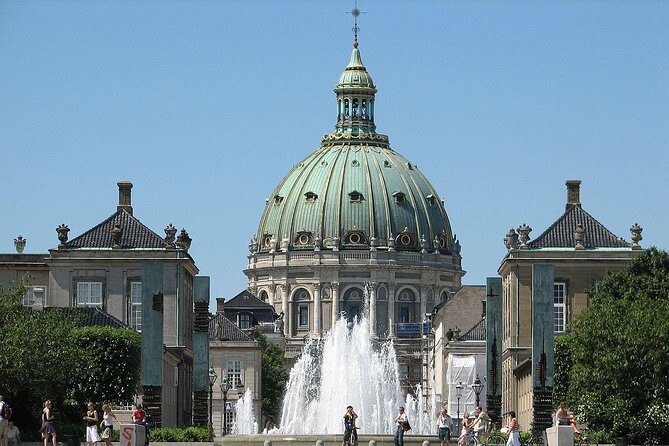
Next comes Frederik’s Church (Frederiks Kirke), part of the Frederiksstad plan. The information you’ll hear links it to King Frederik V, who decided to build a church in 1749 to mark a tercentenary celebration of ruling the country.
You’ll also learn the church and town share the Frederik name, and the planner and builder referenced is architect Nicolai Eigtved, who is also mentioned as the architect of the Marble Church.
Admission is listed as free, and the stop duration is about 25 minutes—which is plenty for a longer look and photos. This is a good moment in the ride to slow down, because you’ll want time to appreciate how the church fits into the surrounding urban plan.
Amalienborg around noon: guard change spectacle, handled by timing
This is the stop most people picture when they think “royal Copenhagen.” The tour includes the changing of the guards at Amalienborg Castle.
The schedule is clear: the changing happens every day at 12:00 noon. The guards march from their barracks in 100 Gothersgade, passing from Rosenborg through Copenhagen streets, ending at Amalienborg.
Since the tour starts at 10:00 am, you’re building the day so that you can watch the lead-up and still have time to settle near the palace square. The stop time listed is 25 minutes, and admission is free.
Then you also visit Amalienborg Palace Museum, described as part of Denmark’s royal family residence. Amalienborg is made up of four identical buildings around the palace square, each with a different royal connection:
- Christian VII’s Palace (Moltke’s Palace): guest residence
- Frederik VIII’s Palace (Brockdorff’s Palace): home of the Crown Prince family
- Christian IX’s Palace (Schack’s Palace): home of the Queen
- Christian VIII’s Palace (Levetzau’ Palace): guest palace for Prince Joachim and Princess Benedikte
This is a free stop in the tour details, and it’s a neat way to connect the spectacle of guard change with the everyday structure of the palace area.
If you’re only mildly interested in royal stuff, this is still worth it. The sheer visual organization of the square makes it easy to understand why people stop and watch.
Nyhavn at the end: canal color and the best finish
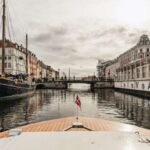
To close, you roll into Nyhavn, the 17th-century waterfront canal and entertainment district. It runs from Kongens Nytorv to the harbor front just south of the Royal Playhouse. The key feature: it’s lined with brightly colored 17th and early 18th century townhouses, plus bars, cafés, and restaurants.
Admission is free and the stop is about 15 minutes. This is the right kind of ending for a bike tour: you get the “postcard Copenhagen” canal scene without needing to commit to a long meal unless you want to.
And because you’re ending back at the original meeting point at Axel Torv 1, you’re not stuck far from where you started.
Guides and the small-group advantage (Arthur, Marc, and what to expect)
One of the strongest points here is the guide. The tour description emphasizes a local, multilingual guide, and the guide experience shows up in the way people talk about the tour—names like Arthur and Marc come up, along with the idea that they share lots of information and anecdotes and keep things flexible.
In practical terms, that means you’re not just getting a spoken script. You can ask quick questions, get clarifications on what you’re seeing, and learn how the landmarks connect. With max 15 travelers, you’re also less likely to get ignored.
Who this Copenhagen bicycle tour is best for
This tour suits you if:
- You want a high-efficiency route through top Copenhagen sights.
- You feel comfortable biking and want to ride rather than just walk.
- You like context: a guide explaining what you’re seeing, not only where it is.
- You’re traveling with time limits and want a dependable structure (starts at 10:00 am and includes the guard change timing).
It’s less ideal if:
- You hate being outside in all weather.
- You want long museum time. Rosenborg Castle entry isn’t included, and many stops are short.
- You want a totally private experience. This is capped at 15.
Also, there’s a minimum age of 14, so it’s best for older teens and adults who can handle a bike-based sightseeing day.
Should you book this Copenhagen bicycle adventure?
Book it if you want to see Copenhagen’s biggest hits in a way that feels efficient and local. The included bike rental, the replacement-bike promise, and the guide-led stop sequence make it a practical value at $74.02. The route is built around major photo stops, but the added stories—especially around Rosenborg and the Little Mermaid—give the day more meaning than a checklist.
Skip it if your priority is deep museum time or you’re not into weather-dependent outdoor riding. In that case, you might prefer a slower, walk-heavy approach with paid entries as you go.
If you can ride comfortably and you like learning while you move, this is one of the easiest ways to get a real feel for Copenhagen without spending your whole day in transit.
FAQ
How long is the Copenhagen bicycle adventure?
The tour is listed as lasting about 1 to 3 hours, depending on the flow of the day and how time is used at each stop.
What does the $74.02 price include?
It includes bicycle rental and a local guide. The tour also uses a mobile ticket.
Is a helmet provided?
No. Helmets are not included. They’re described as not mandatory but recommended.
Do I need to pay for tickets during the tour?
Rosenborg Castle is not included (admission ticket not included). Other stops are listed as free entry in the tour details.
Where do I meet the guide, and where do we end?
You meet at Axel Torv 1, 1608 København in the square in front of Tivoli Park’s main entrance. The activity ends back at the same meeting point.
What time does the tour start?
The start time is 10:00 am.
What happens if my bike has a problem?
If anything happens to the bike (for example, a flat tire), the provider will bring a new bike without an additional charge.
Does the tour run in bad weather?
Yes. It operates in all weather conditions, so you’ll want to dress appropriately.