REVIEW · COPENHAGEN
Walking tour – Copenhagen Old Town & Tivoli Park included
Book on Viator →Operated by Scandinavian Guides · Bookable on Viator
Two hours, and Copenhagen clicks into place. This guided Old Town stroll gets you quick context for the city’s key sights, then hands you Tivoli Park time with skip-the-line entry. I love how the walk is relaxed but not vague, so you get landmarks plus the “why” behind them. I also like that the route is planned around the daily Royal Guard moment at Amalienborg.
You’ll start in the heart of the pedestrian zone and move through royal squares, canal views at Nyhavn, and stops built around major Danish events. Along the way, the guide keeps you moving between places that are easy to miss if you’re wandering solo. One thing to consider: this is a short, walking-first route, so if you’re hunting for every single interior detail, opening hours (especially on days when buildings may close early) can affect what you can see.
If you want a practical hit of Copenhagen plus Tivoli without spending your day “researching on the go,” this is a strong match.
In This Review
- Key things to know before you go
- Starting at Højbro Plads: getting oriented fast (without sprinting)
- Kongens Nytorv: the royal square with the big-city plan
- Nyhavn canal time: the classic postcard, explained
- Amalienborg and the 12:00 Royal Guard changing: the centerpiece moment
- A small timing reality check
- Rosenborg Castle area context: Christian IV’s building habit in one stop
- Copenhagen Cathedral (Church of Our Lady): the building plus the stories inside
- Why this stop feels different from a typical “look at the facade” moment
- The main consideration here
- Gammeltorv and Nytorv: squares shaped by disaster and rebuilding
- Rådhuspladsen and the ride’s last stretch toward Tivoli
- Tivoli Park after the tour: how to spend the included time well
- Price and value: is $79.30 a smart use of time?
- What the guide quality looks like in real life
- Who this tour suits best (and who should skip it)
- Should you book this Copenhagen Old Town + Tivoli walk?
- FAQ
- How long is the walking tour?
- What time does the tour start?
- Where do I meet, and where does the tour end?
- Is the tour offered in English?
- What’s included with Tivoli Park?
- Does the tour include skip-the-line entry to Tivoli?
- Which major attraction is not part of this route?
- Is admission included for the main sight stops?
- How big is the group?
- Can I cancel for a full refund?
- Is coffee or tea included?
Key things to know before you go
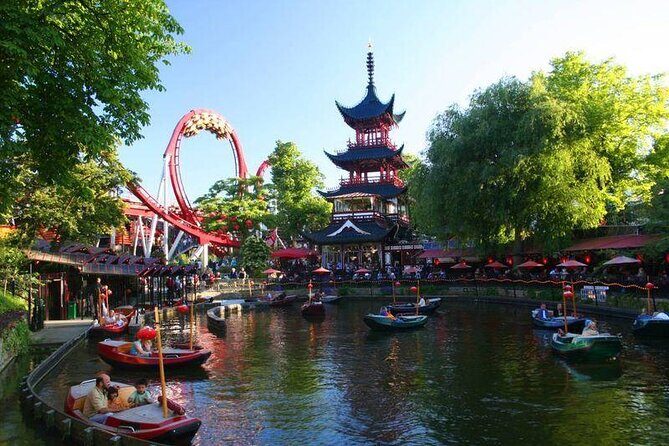
- Skip-the-line Tivoli Park entry included, so you can spend less time queuing and more time enjoying
- Timed Royal Guard changing at 12:00 from Amalienborg, plus a clear walk-through of what you’re seeing
- Top Old Town anchors like Kongens Nytorv, Nyhavn, and Copenhagen Cathedral (Church of Our Lady)
- Rosenborg area context (and why Christian IV’s building style still shapes Copenhagen)
- Small group feel with a maximum of 21 people, plus English-language guidance
Starting at Højbro Plads: getting oriented fast (without sprinting)
Your morning begins at Højbro Plads (near Højbro Plads in central Copenhagen) and the tour is designed to help you understand the city layout in a short time. You’re not just ticking boxes. You’re learning how the downtown “stage” works—pedestrian streets, major squares, and where royal power shows up in stone.
The walking pace is steady and realistic. It’s the kind of route where you can stop for a photo without the guide turning it into a race. That matters in Copenhagen, where you’ll naturally want pictures—especially around the canals and palace squares.
Also, you’ll be in an English tour format with a local guide. If you’ve traveled before, you know the difference between someone reciting dates and someone explaining why a place was built the way it was. The guide style here leans toward storytelling with practical context.
You can also read our reviews of more walking tours in Copenhagen



Kongens Nytorv: the royal square with the big-city plan
One of my favorite early stops is Kongens Nytorv—the large square laid out in the 1600s as Copenhagen grew beyond the older medieval core. Standing there, it’s easy to see how city planning can feel political. This is where the center of gravity shifts.
At the center is the equestrian statue of King Christian V, and the square is framed by major landmarks. You get a run-down of why each one matters, including the Royal Danish Theater (1874), the Charlottenborg Palace (1671, now tied to the Royal Danish Academy of Fine Arts), the Thott Palace (1683), and prominent buildings like Hotel D’Angleterre and Magasin du Nord.
If you’re short on time, this stop is valuable because it sets the theme for the walk: Copenhagen’s old power and its grand 17th-century planning aren’t random. They’re coordinated.
Nyhavn canal time: the classic postcard, explained
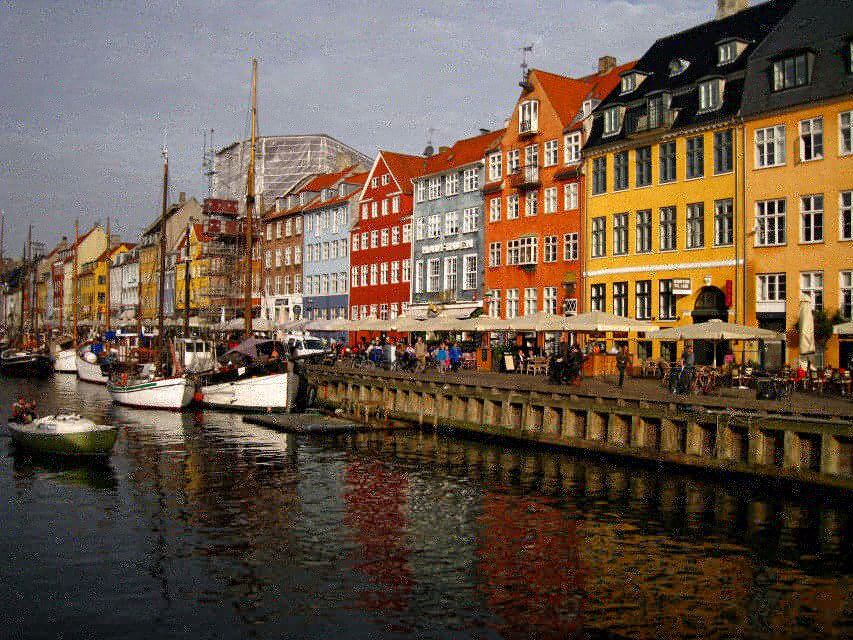
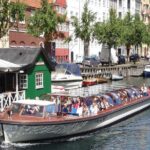
Next comes Nyhavn, the canal front that everyone wants to see at least once. The guide’s value here is speed with meaning. You’ll get the essential “what you’re looking at” so the canal isn’t just pretty water and colorful buildings.
This is one of those parts of the route where you’ll naturally slow down. It’s photo-friendly from multiple angles, and it’s a good mental reset before the palace area.
Practical tip: if you hate crowds, the earlier you can lock in photos here, the better. The tour timing gets you through before the midday crush that often builds around the most famous canal sections.
Amalienborg and the 12:00 Royal Guard changing: the centerpiece moment
The highlight for many people is Amalienborg Palace—four identical Rococo-style palace buildings built around the palace square. This is royal Copenhagen where you can feel the “still in use” factor. Unlike museums, this is tied to real daily presence.
Amalienborg is known for its Royal Guard ritual. Daily, the changing includes a march route through Copenhagen, and the experience includes the 12:00 changing of the Royal Guard.
The guide helps you understand the basic layout:
- Christian VII’s Palace (also known as Moltke’s Palace), used as a guest residence
- Frederik VIII’s Palace (Brockdorff’s Palace), tied to the Crown Prince family
- Christian IX’s Palace (Schack’s Palace), home connected to the Queen
- Christian VIII’s Palace (Levetzau’ Palace), connected to Prince Joachim and Princess Benedikte
One extra detail you’ll appreciate: there’s an open museum for the public connected to one of these buildings (the information points to the museum in the Christian IX’s Palace).
A small timing reality check
Because the 12:00 moment is the point, the tour schedule matters. If something throws you off—late arrival at the meeting point, for example—you might feel it later in the walk. Plan to be early.



Rosenborg Castle area context: Christian IV’s building habit in one stop
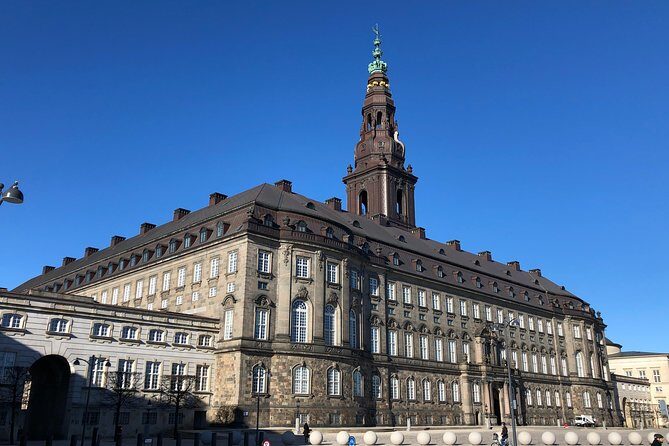
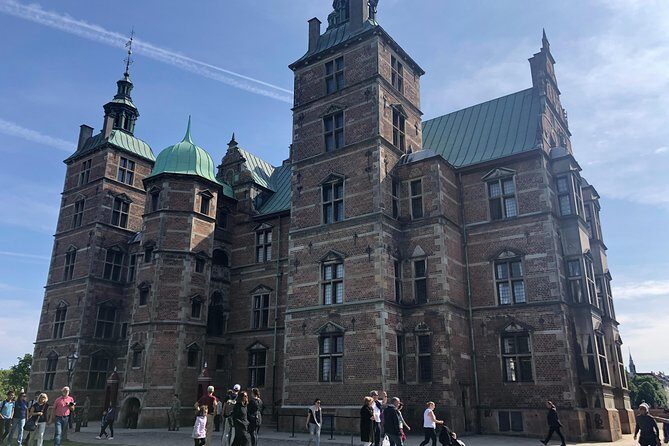
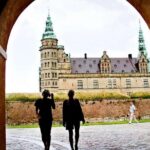
Rosenborg Castle is a renaissance landmark tied to Christian IV. The tour introduces it as a castle that began as a country summerhouse in 1606, and it’s an easy place to connect Copenhagen’s royal taste with architecture that still reads as “intentional” centuries later.
Even if you don’t linger for a deep interior visit, this stop gives you a framework. You start seeing royal buildings as part of a broader pattern—where power, leisure, and city growth overlap.
Copenhagen Cathedral (Church of Our Lady): the building plus the stories inside
You’ll stop at Church of Our Lady / Copenhagen Cathedral, a major landmark shaped by C.F. Hansen’s Neo-Classicist design. The dates alone tell a story: foundation stone laid by King Frederik VI in 1817, consecration in 1829.
Even better, the tour explains that this site has served as a religious center long before the cathedral you see today. The narrative stretches back to a church connection from the time of Bishop Absalon, and earlier structures that occupied the high point around 1200.
Why this stop feels different from a typical “look at the facade” moment
The guide points out key moments tied to Danish history, including:
- the 1363 marriage of the nine-year-old Margrethe (later Queen Margrethe I)
- the 1855 funeral of Søren Kierkegaard
- the 2004 wedding of Crown Prince Frederik and Mary Donaldson
And yes, you also get interior attention. The tour highlights Thorvaldsen’s sculptures, including Christ and the twelve apostles, with the detail that Judas has been replaced by Paul. That’s the kind of specificity that helps you spot what you’re seeing rather than guessing.
The main consideration here
If you’re visiting on a day when parts of the building may have limited access, you might not be able to see every interior element you hoped for. One guide-led group noted that indoor opening can lag on Sundays. So if your trip lands on a Sunday, I’d treat this stop as “expect highlights,” not “guaranteed chapel access.”
Gammeltorv and Nytorv: squares shaped by disaster and rebuilding

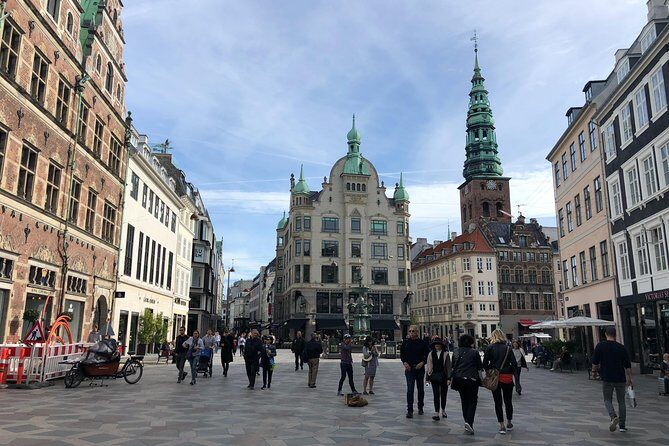
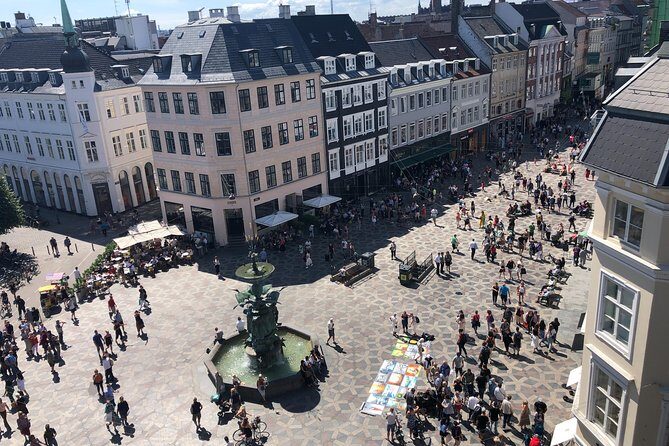
Next, you’ll walk through the central Old Town squares around Gammeltorv and Nytorv. This is Copenhagen’s older heartbeat. The square dates back to the city’s foundation around the 12th century, but most of the buildings you see are later—especially after the Great Fire of 1795, when neoclassical construction took over.
Look out for the Caritas Well, a Renaissance fountain erected by King Christian IV in 1610. It’s a small detail that gives the square personality. It’s also one of those things that makes the city feel lived-in, not just staged for tourists.
The guide also ties these squares to civic life, including the Copenhagen Court House façade, which served as city hall from 1815 to 1905.
If you’re the type who likes to understand why a place looks the way it does, this is a solid stop. You can’t “archaeology” your way through Copenhagen in two hours, but you can get the big turning points.
Rådhuspladsen and the ride’s last stretch toward Tivoli

The tour then reaches Rådhuspladsen, the city hall square area. This is a useful transition point because it keeps you moving from the old-town story into the more modern, entertainment-side Copenhagen.
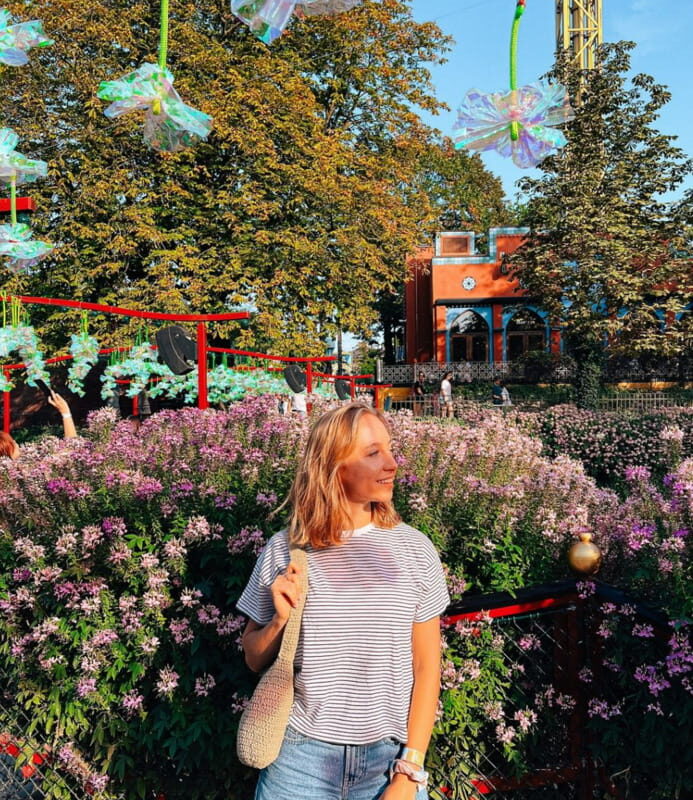
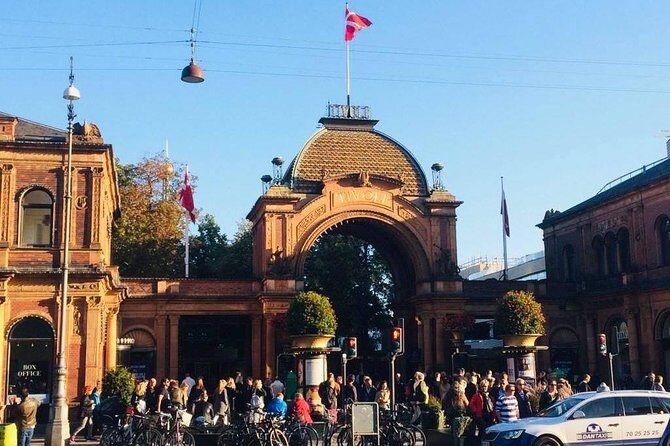
From there, the route funnels you toward Tivoli Park for your included entrance time. Tivoli is Denmark’s famous amusement park, and you’ll see its main entrance as part of the build-up—so when you arrive, it’s not the first time you’re seeing it. You already know what to do next.
Here’s the practical win: you’re not trying to figure out ticket lines in the middle of your sightseeing day. The experience includes general entry, and the tour is set up so you get in faster instead of waiting.
Tivoli Park after the tour: how to spend the included time well
Once you reach Tivoli, the tour basically hands you the steering wheel. You get the general Tivoli entrance fee included (noted as applying for ages 8+), and you can stay as long as you want within opening hours.
How to use that time:
- Start with what you actually came for. Tivoli is big, and it’s easy to burn your first 20 minutes drifting without a plan.
- If you’re traveling with kids or you’re into classic amusement vibes, this is the moment to loosen up. The whole earlier tour is structured; Tivoli is your reward zone.
- Give yourself a buffer for lines and seasonal crowds. The included entry helps, but Tivoli still gets busy.
One reason I like including Tivoli at the end: your feet have already done the hard work. By the time you get there, it’s a change of pace. You’re switching from “history and squares” to “light fun and strolling.”
Price and value: is $79.30 a smart use of time?
At $79.30 per person for about 2 hours, this is priced like a “time saver plus ticket value” tour.
Here’s how I judge it for real life:
- You’re paying for a guided walk through the core Old Town highlights, and that’s hard to replicate quickly on your own if you want meaningful context.
- Tivoli entry is included, and the route is built to deliver access without you having to coordinate separate tickets mid-day.
- The max group size (up to 21) makes it feel manageable, not like a cattle-car tour.
So if Tivoli is on your list and you want a structured introduction to Copenhagen’s old center, the price feels fair.
If Tivoli isn’t important to you, or you’re determined to see only one big place at a deep level (for example, hours inside a museum), then you might question whether the guided walking format matches your style.
What the guide quality looks like in real life
The guide experience seems to be a big part of why people rate this tour highly. In the feedback I saw, people praised guides for being patient with photo stops, answering questions clearly, and keeping a “leisurely walk” vibe instead of rushing people out the door.
Names that came up included Felipe (praised for clear historical explanation and a pleasant manner) and Viviane (praised for being well prepared and answering curiosities). There was also a mention of Vasco for a tour that felt more organized and worth the money.
At the same time, not every departure hit the same notes. A couple of less-positive experiences pointed to uncertainty about a specific interior detail in the cathedral context, and there was one case where the pacing felt hurried. That doesn’t mean every tour is like that, but it is worth knowing: you’ll get the best value when your expectations match a short, highlight-focused walk.
Who this tour suits best (and who should skip it)
This works best if:
- You want the essentials of Copenhagen Old Town in a compact format
- You’re planning to do Tivoli anyway and want entry handled for you
- You like a guide who explains what you’re seeing, not just where to stand for a photo
- You’re traveling with limited time and want the day organized for you
It may not be ideal if:
- You’re strictly focused on one attraction and want hours there
- You need a lot of time inside multiple buildings, regardless of opening hours
- You’re hunting for the famous Little Mermaid statue, because this route excludes The Little Mermaid
Should you book this Copenhagen Old Town + Tivoli walk?
If you want a practical Copenhagen primer plus an end-of-tour payoff, I’d book it. It’s a good fit for first-timers, short stays, and anyone who likes “see it, understand it, then go enjoy yourself.”
Before you go, think about two things:
- Do you care about Tivoli? If yes, the included entry makes the price easier to justify.
- Is your visit on a Sunday or a day with odd opening hours? If yes, keep a flexible mindset for interior cathedral access.
If your goal is to get your bearings fast and still have time for fun, this tour is built for that.
FAQ
How long is the walking tour?
It’s about 2 hours.
What time does the tour start?
The start time is 10:00 am.
Where do I meet, and where does the tour end?
You meet at Højbro Plads and the tour ends at Vesterbrogade 3, 1630 København V, at Tivoli Park.
Is the tour offered in English?
Yes, it’s offered in English.
What’s included with Tivoli Park?
Your ticket includes Tivoli Park general entry for ages 8+.
Does the tour include skip-the-line entry to Tivoli?
Yes, skip-the-line entry to Tivoli Park is included for faster access.
Which major attraction is not part of this route?
The route excludes The Little Mermaid.
Is admission included for the main sight stops?
The listed sightseeing stops on the route are marked as free admission ticket points.
How big is the group?
The tour has a maximum of 21 travelers.
Can I cancel for a full refund?
Yes. You can cancel up to 24 hours in advance for a full refund.
Is coffee or tea included?
No, coffee and/or tea isn’t included.