REVIEW · COPENHAGEN
walking tour – Copenhagen and Christiansborg 3 hours
Book on Viator →Operated by Scandinavian Guides · Bookable on Viator
Copenhagen can feel like a picture postcard. This tour helps you read it fast, with a guided walk plus entry into Christiansborg Palace. I liked getting my bearings as the route stitches together the center’s big-name corners, and I also appreciated the included palace time so you don’t have to plan that part. One thing to keep in mind: the pacing is short, so you may want extra follow-up notes later if you crave more background than what’s covered on the street.
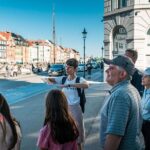
You start at Copenhagen Central Station, then move through classic city squares and landmark stops before ending at Christiansborg (with the finish near the castle shop). It’s a smart length for a first visit, especially if you’re the type who prefers “see it, learn it, then wander” instead of sitting through a long lecture.
In This Review
- Key Highlights You’ll Feel (Not Just See)
- 3 Hours That Actually Works in Copenhagen
- Copenhagen’s Old Squares: Radhuspladsen, Old Market, and the Strøget Edge
- Old Market and Nytorv: built after the 1795 fire
- Consideration
- Inside Church of Our Lady (Copenhagen Cathedral): Thorvaldsen and Big Moments
- Neoclassical design with centuries underneath
- The “wow” factor: Thorvaldsen’s sculpture program
- Major historical events attached to one church
- Possible drawback
- Højbro Plads: The Old Beachfront Feel by Slotsholmens Canal
- Gammel Strand and the canal edge
- Practical note
- Entering Christiansborg Palace: Why the Included Hour Matters
- What you should get out of the palace hour
- Price and Value: When This Tour Makes Sense
- The Guide Factor: Great When You Want Context, Not Endless Detail
- Timing, Meeting Point, and How to Prepare (Quick and Useful)
- Who Should Book This Christiansborg Walking Tour
- Should You Book This Tour?
- FAQ
- FAQ
- What’s the duration of the Copenhagen and Christiansborg walking tour?
- How much does the tour cost?
- Where does the tour start and where does it end?
- What time does the tour begin?
- Is Christiansborg Palace entry included?
- Is the tour in English?
- Are the other stops admission-free?
- How large is the group?
- Is coffee or tea included?
- Can I cancel for a refund?
- Is the ticket mobile?
Key Highlights You’ll Feel (Not Just See)
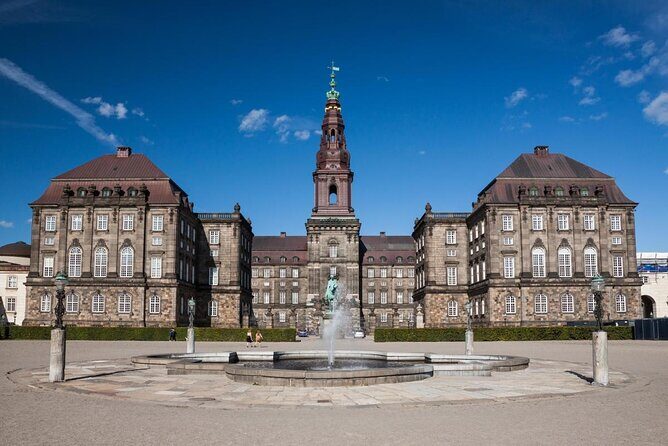
- Christiansborg Palace entry included for about an hour inside, so the tour pays off beyond the walk
- Copenhagen Cathedral stop with time to spot Thorvaldsen’s sculptures and key historic events tied to this site
- Old Market / Radhuspladsen area plus Caritas Well, Neoclassical facades, and the Strøget pedestrian-street link
- Højbro Plads (Gammel Strand) for canal-side views and the medieval-tournament square atmosphere
- A route that builds context for your later independent sightseeing in central Copenhagen
- Small-ish group size (max 20) keeps the walk from turning into a shuffle
3 Hours That Actually Works in Copenhagen
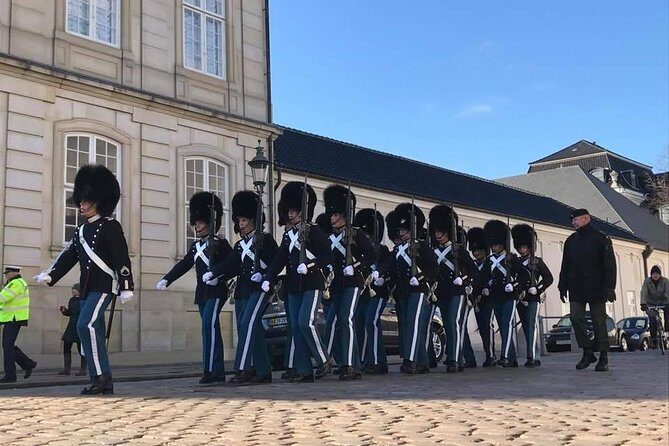
Three hours in Copenhagen is a very usable chunk of time. You won’t get to “see everything,” but you will get the kind of orientation that makes the next day easier. The route is built around the center: big squares, a major church, then the royal compound at Christiansborg.
I like that the tour is paced like a guided walk, not a hop-on-hop-off route with constant stopping to regroup. You’ll be moving enough to keep momentum, but each stop has a specific purpose—history, architecture, and the city’s layout.
The price point—$87.77 per person for about three hours—makes the most sense because Christiansborg entry is included. If you’re already planning to go inside, this format can save you decision time and ticket hassle.
You can also read our reviews of more walking tours in Copenhagen


Copenhagen’s Old Squares: Radhuspladsen, Old Market, and the Strøget Edge
Your walk starts by threading into the heart of central Copenhagen, with a stop that sets the scene near an amusement park over 175 years old. You’ll hear the history of the place and why it matters in the city’s timeline. Even if you’re not planning to spend your time there, it’s a nice way to anchor the day before you jump into the older civic core.
Then you hit the squares around City Hall Square, with a focus on the area’s layers. Radhuspladsen sits in a zone that connects the older city core to the famous pedestrian shopping spine of Strøget. What I like here is the way the guide can help you spot the city’s “why” behind the “what.”
Old Market and Nytorv: built after the 1795 fire
You’ll learn that the square’s roots go back to the city’s foundation in the 12th century, but the visible buildings mostly date to after the Great Fire of 1795. That explains the Neoclassical look you see around the area.
One standout detail to watch for is the Caritas Well, a Renaissance fountain erected in 1610 by King Christian IV. It’s the kind of object you can easily miss if you’re just walking for photos, but on this tour it becomes a landmark you’ll recognize later when you pass through again.
You also get the “twin square” idea: Nytorv and Gammeltorv form a larger civic space along the pedestrian street. The Copenhagen Court House façade dominates the scene, and it even served as the City Hall from 1815 to 1905. That’s useful context because many first-time visitors don’t realize how political and administrative buildings can shift roles over time.
Consideration
This is one of the stops where time is short (about 15 minutes). It’s enough to orient you, but don’t expect a full architectural seminar.
Inside Church of Our Lady (Copenhagen Cathedral): Thorvaldsen and Big Moments
The most meaningful “church time” on the route is the stop at Church of Our Lady—Copenhagen Cathedral. You’ll get about 10 minutes here, which sounds brief, but it’s timed for impact: big art details, major historic events, and a clear sense of the building’s importance.
A few more Copenhagen tours and experiences worth a look




Neoclassical design with centuries underneath
The cathedral you see today was designed by architect C.F. Hansen in a Neo-Classicist style. The foundation stone was laid by King Frederik VI in 1817, and the consecration took place on Whitsunday 1829. That gives the building a firm “modern” clock.
But the site is older. You’re standing on a place that served as a church long before this current structure. The background is linked to Bishop Absalon, credited with founding Copenhagen, who built a small chapel here around the time of the early 1200s.
The “wow” factor: Thorvaldsen’s sculpture program
If you like sculpture you can actually read with your eyes, this stop is worth your time. Inside, you’ll see Thorvaldsen’s sculptures: Christ and twelve apostles arranged so you can visualize the nave from multiple angles.
The description matters because it affects what you notice:
- Christ extends his arms in a welcoming gesture
- The apostles watch from the sides
- Judas has been replaced by Paul
That last detail is the kind of thing that makes you feel like the building has a story you’re learning in real time, not just walking past a landmark.
Major historical events attached to one church
This cathedral has been part of Denmark’s big moments. You’ll hear that it’s where King Valdemar Atterdag arranged the marriage of his nine-year-old daughter Margrethe (later Queen Margrethe I) in 1363. It’s also tied to the 1855 funeral of Søren Kierkegaard.
Even modern history is included: the church hosted the 2004 wedding of Crown Prince Frederik and Australian Mary Donaldson.
And then there’s the darker chapter: during the British bombardment in 1807, an incendiary rocket hit the cathedral. The bombardment led to the church burning down. That kind of fact changes how you look at the building, even in a short visit.
Possible drawback
Because the cathedral visit is brief, you’ll need to pick what you want most: the sculpture details, the architectural story, or the historic events. It’s tough to absorb everything in 10 minutes.
Højbro Plads: The Old Beachfront Feel by Slotsholmens Canal
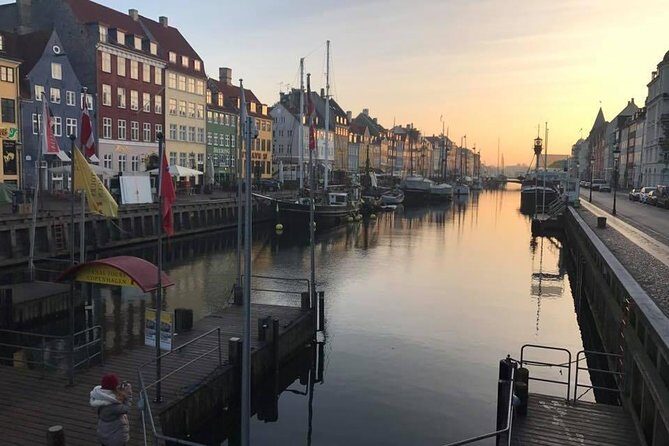
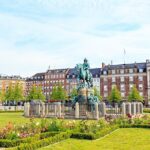
Next you move to Højbro Plads, which the tour frames as a dynamic, central square facing Christiansborg Palace. This is where the walk starts to feel like the city’s layout is clicking into place: a square, a palace view line, and a canal boundary you can mentally map.
The area has a medieval tournament vibe. You’ll hear it described as a space tied to historic competition and ceremony, and you’ll also get the “why is this square here?” background tied to a warrior-bishop credited with founding Copenhagen.
A specific detail you can watch for: the square was inaugurated in 1901 to commemorate the seven-hundredth anniversary of his death. That’s not something you’d guess just by looking, but it adds meaning to what can otherwise feel like a quick photo stop.
Gammel Strand and the canal edge
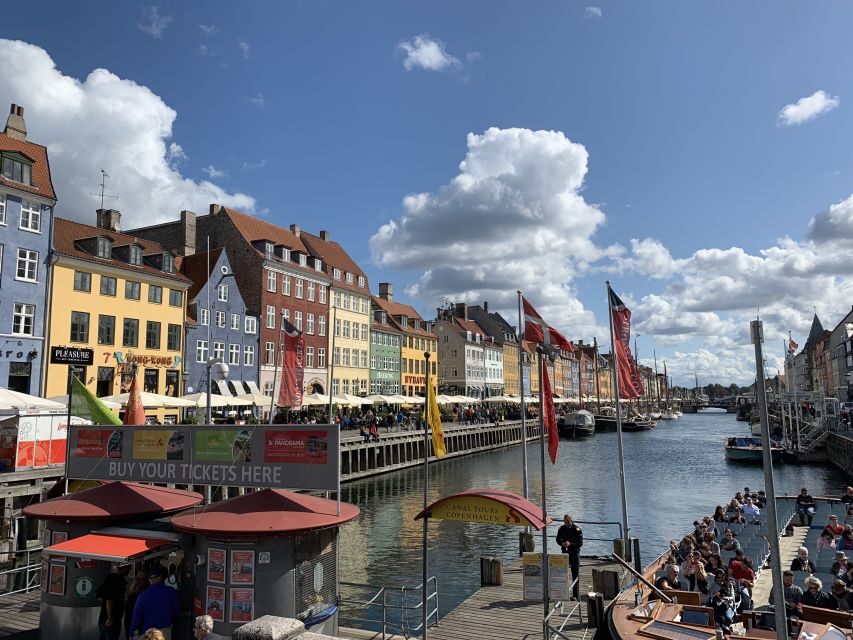
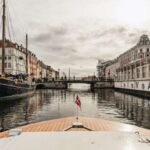
Højbro Plads also goes by Gammel Strand, meaning old beach. On the south side, it borders the Slotsholmens Canal. On the north side, you’ll see a row of brightly colored houses dating to the 18th and 19th centuries.
This stop is a good moment to slow down for a minute, even if you don’t have long time. The canal edge gives you a natural viewpoint for understanding where Christiansborg sits in relation to the rest of the center.
Practical note
Expect it to be a walking-square stop. The value is in context and orientation, not lingering.
Entering Christiansborg Palace: Why the Included Hour Matters
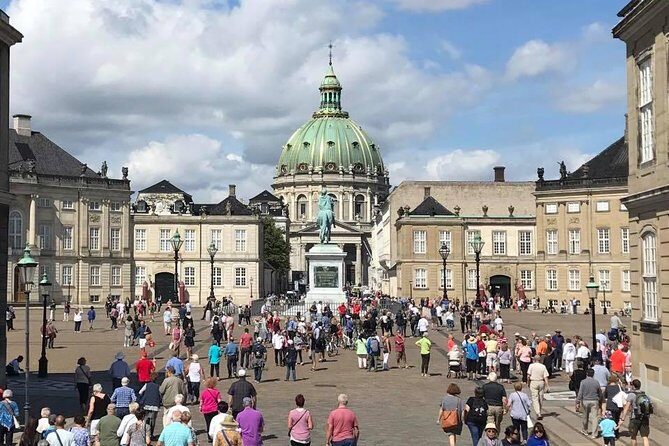
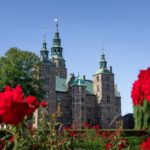
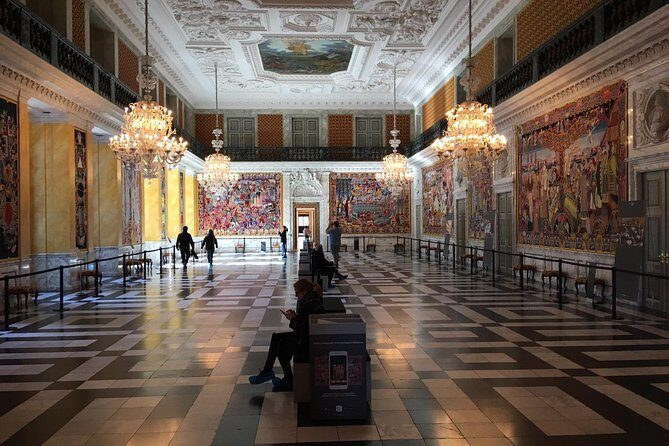
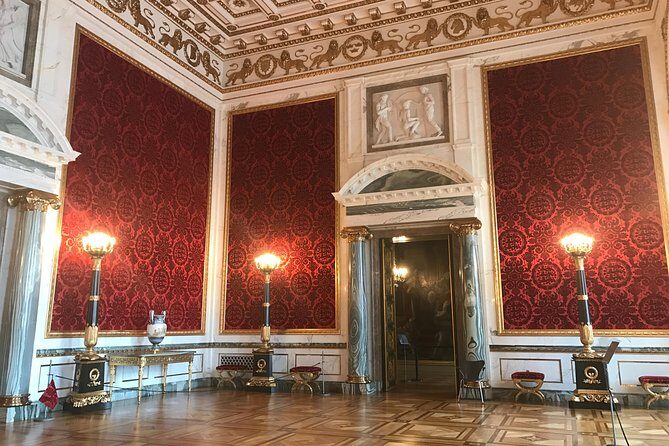
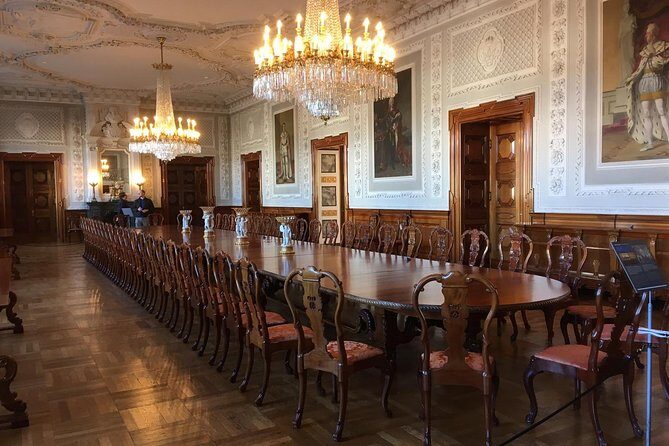
At Christiansborg Slot, the tour delivers the main event. You’ll enter the palace and have about one hour inside, with admission included. This is where the tour’s value really justifies itself.
Christiansborg was once the official residence of the royal family. So when you walk in, it’s not only a pretty building. It’s a place that functioned as a seat of power and ceremony. Even if you’re not a monarchy-history superfan, you’ll still get something from this: you’ll see how the state and daily life used to share the same spaces.
I like the structure here: walk the city first, then “zoom in” to the palace. You’ve got the context of the surrounding squares and waterways, which helps you understand why this location is treated as important.
What you should get out of the palace hour
With only an hour, don’t try to absorb every room like it’s a museum marathon. Instead:
- Focus on the spaces that show the palace’s public face
- Look for how rooms are arranged around the palace layout
- Use the guide’s framing to connect what you’re seeing to what you heard outside
Then you finish near the castle shop area, which is handy if you want a quick souvenir without trekking back into the center.
Price and Value: When This Tour Makes Sense
Let’s talk value in a practical way. You’re paying $87.77 for about 3 hours, including Christiansborg Palace entry and a local guide.
Here’s how I’d judge whether it’s worth it for you:
- If you plan to visit Christiansborg anyway, this is often a more efficient choice than buying entry separately and trying to coordinate your own walk through the city sights.
- If you’re new to Copenhagen and want a route that connects multiple “must-see” places, the guided bearings can save you time the next day.
- If you want deep, long explanations at each stop, be aware the pacing is designed for movement and orientation, not a full history course.
Also, the group size cap of 20 helps keep the experience from feeling like a cattle line. You can still ask small questions, and the guide can keep things coherent.
The Guide Factor: Great When You Want Context, Not Endless Detail
The tour includes a guide, and the format is clearly built around providing context as you walk. That’s the sweet spot: you’re not just collecting photos, you’re collecting explanations that help you recognize what you’re looking at later.
One caution from experience with tours like this: if you’re hoping for a long, highly detailed lecture, you may feel the coverage is lighter than you want. The best move is to treat the tour as the first layer. After the walk, you can choose one stop to revisit on your own for longer reading and slower looking.
If you prefer a guide with a deep local storytelling style, you might want to keep your expectations flexible. In a short walking format, the “voice” matters as much as the facts.
Timing, Meeting Point, and How to Prepare (Quick and Useful)
You start at 9:00 am at Copenhagen Central Station. The tour ends at Christiansborg Palace near Den første Christiansborg address and the exit near the castle shop.
Because most stops have limited minutes, you’ll get the most out of it if you:
- Arrive a few minutes early so you’re not stressed at the start
- Wear comfortable shoes for a city-center walk
- Have a short list of what you want most: cathedral art, palace interior, or square history
If you bring a digital camera/phone, use it early in each stop. The guide’s key points will often tell you what’s worth photographing.
Who Should Book This Christiansborg Walking Tour
This tour fits best if you:
- Want a first-visit orientation to central Copenhagen
- Like guided context but don’t want to spend most of the day on transport
- Plan to visit Christiansborg and want it handled in an organized way
- Prefer seeing landmarks in a logical route that makes the city feel connected
It may not be the best fit if you:
- Want lots of time inside each site
- Want extremely detailed background at every stop
- Are hoping the tour will replace independent sightseeing later
Should You Book This Tour?
I’d book it if your goal is simple: get oriented in Copenhagen’s center and get inside Christiansborg with less hassle. The included palace time is the big win, and the route through key squares and the cathedral helps you understand what you’re seeing instead of treating it like a checklist.
If you like learning in short bursts and then roaming on your own, this tour hits the right rhythm. If you’re the type who wants deep explanations all day long, plan to do a little self-guided follow-up after the walk.
FAQ
FAQ
What’s the duration of the Copenhagen and Christiansborg walking tour?
It runs for about 3 hours.
How much does the tour cost?
The price is $87.77 per person.
Where does the tour start and where does it end?
It starts at Copenhagen Central Station and ends at Christiansborg Palace (with the tour finishing near the castle shop exit).
What time does the tour begin?
The start time is 9:00 am.
Is Christiansborg Palace entry included?
Yes. Entrance to Christiansborg Palace is included, and you’ll visit inside for about 1 hour.
Is the tour in English?
Yes, it’s offered in English.
Are the other stops admission-free?
The stops listed for Radhuspladsen/City Hall Square, Church of Our Lady, and Højbro Pladsen show free admission tickets.
How large is the group?
The maximum group size is 20 travelers.
Is coffee or tea included?
No. Coffee and/or tea isn’t included.
Can I cancel for a refund?
Yes. You can cancel for a full refund up to 24 hours before the experience start time.
Is the ticket mobile?
Yes, the tour uses a mobile ticket.
Would you like me to help you pair this with a practical half-day plan after it ends at Christiansborg (coffee, canal stroll, and one museum or viewpoint)?