REVIEW · COPENHAGEN
Explore Copenhagen’s Art and Culture with a Local
Book on Viator →Operated by LocalBini - The go-to platform for Experiences by Locals in Europe · Bookable on Viator
Copenhagen’s art is hiding in plain sight. This local-guided walk strings together street art, iconic landmarks, and art-minded stories in about 90 minutes, starting at Amagertorv and ending in Nyhavn. I like that you get a real local guide who points things out (not just where to stand for photos), and I especially like the mix of modern street art with older monuments. The one watch-out: it’s a short loop, so you’ll get “told-you” highlights more than long museum-style time, and the pace can include quiet stretches where you’ll want to ask questions.
If you’re new to town, this is a fast way to get your bearings through the places that shape Copenhagen’s look and ideas. If you’ve been before, it still works because the emphasis is on how to see the city: street art context, myth and sculpture, and why philosophers and buildings ended up in the same story. Because the group is capped at 8 people, you can usually ask for clarification without feeling lost in a crowd.
Here’s the best way to judge it: if you want a walking tasting menu of art and culture with smart background, you’ll likely love it. If you’re craving a full museum afternoon, plan that separately and treat this as your orientation and discovery walk.
In This Review
- Key highlights worth your feet (and your camera)
- Starting at Stork Fountain on Amagertorv: the perfect art-shaped intro
- Stine Hvid street art stop: how to see murals like a local
- Castle gardens and the Hans Christian Andersen sculpture: when Copenhagen slows down
- Kastellet’s star fortress and the Gefion legend: myth meets geometry
- The Rococo dome and Kierkegaard on the grounds: art thinking in stone
- Royal Opera House views across the water, then Nyhavn’s colorful harbor finish
- What you’re really paying for: a guide’s interpretation, not just sightseeing
- The flow and timing: 90 minutes can feel quick, in a good way
- Who this Copenhagen art-and-culture walk is best for
- Should you book this LocalBini Copenhagen art tour?
- FAQ
- How long is the tour?
- What’s the starting point and where does the tour end?
- How much does it cost?
- What language is the tour offered in?
- Is food or drinks included?
- How big is the group?
- Is a mobile ticket used?
- Can I cancel, and what’s the refund policy?
Key highlights worth your feet (and your camera)
- Small group size (max 8): more back-and-forth with your guide during the walk
- Stine Hvid street art stop: you’ll learn what to look for beyond the obvious tags
- Castle gardens with Hans Christian Andersen sculpture: a calm reset between bigger sights
- Kastellet star fortress + Gefion fountain legend: history with myth, not just dates
- Rococo dome + Kierkegaard statue grounds: philosophy and architecture in one stop
- Finish in Nyhavn: an easy win for harbor atmosphere and colorful façades
Starting at Stork Fountain on Amagertorv: the perfect art-shaped intro
Your tour starts at the Stork Fountain at Amagertorv 6, a very central old-town square with a mosaic floor and elegant historic buildings around it. This is a clever first stop because it immediately sets the tone: Copenhagen isn’t only about museums. It’s also about how the city decorates itself—on corners, in squares, and on grand facades.
From here, you’ll be able to “read” the rest of the walk better. Your guide frames what you’re seeing and what kind of stories to listen for as you move. For first-timers, it’s the kind of kickoff that helps you stop treating the city like a blur of landmarks and start seeing patterns.
Practical tip: since it’s a walking tour (1 hour 30 minutes), wear comfortable shoes. Copenhagen sidewalks can be gorgeous, but they can also be slick and uneven in places.
You can also read our reviews of more tours and experiences in Copenhagen.



Stine Hvid street art stop: how to see murals like a local
One of the standout moments is the street art stop focused on Stine Hvid. Instead of only pointing at a mural and moving on, you’ll get guidance on what makes the work notable and how you can spot similar art across Copenhagen’s neighborhoods.
Street art in Copenhagen has a different vibe than you might expect if you’ve only seen it in cities where it’s mainly about shock or pure graffiti style. Here, the context matters. Your guide helps you connect the dots—style, placement, and the way the city uses walls as a kind of public gallery.
What I like about this type of stop is that it trains your eyes for the rest of the day. Even after the tour ends, you’ll probably notice more than you would have otherwise. And if you’re the sort of person who likes street art but worries it will feel random, this gives you a lens.
A possible drawback: you should go with a “look and learn” mindset, not an “I need a deep art lecture” mindset. It’s still a walking route, so you’ll cover ground rather than park in front of one wall for ages.
Castle gardens and the Hans Christian Andersen sculpture: when Copenhagen slows down
Next you’ll head for a serene slice of historic scenery: a historical castle and its gardens, featuring a sculpture of Hans Christian Andersen. This is the tour’s calmer chapter. After street art, it’s a good reset—space to breathe, room to look at details, and a change of pace from city surfaces to garden quiet.
The Andersen reference works because it ties Copenhagen’s cultural identity to the way stories are physically placed in the city. You’re not just learning about the author; you’re seeing how his presence is represented in a real public setting.
Even if you’re not a die-hard Andersen fan, the gardens give you something valuable: a moment to slow your mind and let the city’s textures land. And because it’s still part of a short tour, you don’t lose the rhythm that keeps the day moving.
If gardens aren’t your thing, this stop might feel more “pretty and peaceful” than “information heavy.” Still, it’s a nice counterbalance to forts and domes later in the walk.
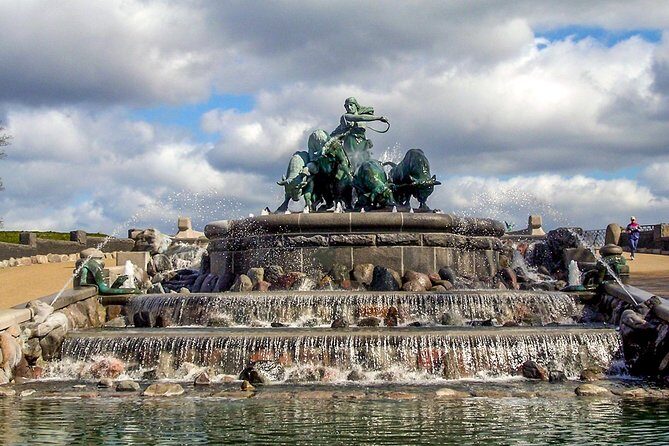
Kastellet’s star fortress and the Gefion legend: myth meets geometry

Then comes the star-shaped fortress Kastellet, built in 1664. A fortress like this is basically a geometry lesson disguised as a military site, and it’s also one of those places where you can feel the city’s older planning logic.
Your guide also tells the legend connected to the Norse goddess Gefion, depicted in the impressive fountain. The combination is smart: you get hard structure (a star fortress, a construction date) alongside story (a myth). That mix tends to stick, because your brain remembers the shapes and the characters together.
This stop is great for people who want more than postcard views. You’ll leave understanding why the place looks the way it looks, not just that it looks cool.
One note to set expectations: this is a glimpse-and-walk experience. You’ll see enough to connect the dots, but it won’t replace doing a full, independent visit if you want to linger.
The Rococo dome and Kierkegaard on the grounds: art thinking in stone
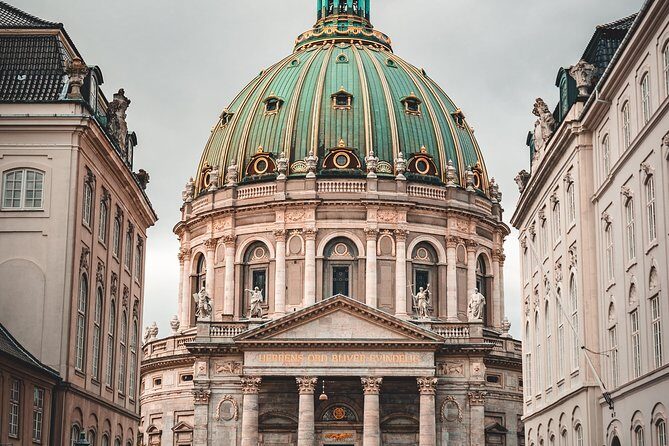
Another highlight is a stop at a Rococo structure with the largest dome in Scandinavia, plus a Kierkegaard statue in the grounds. This is a fun pairing because it makes you think about ideas as part of the city’s physical design, not just something that stays inside books or classrooms.
Even if philosophy sounds intimidating, this stop is approachable because you’re still walking through the visual cues: the dome’s presence, the building’s style, and the statue’s role in the setting. Your guide helps you connect those cues to why the city highlights certain thinkers and artistic expressions.
I like stops like this because they remind you that “culture” isn’t one category. It’s architecture, sculpture, symbols, and the stories a place chooses to commemorate.
Possible consideration: if you’re mostly in “street art mode,” this chapter might feel more formal. But the dome and the statue are the kind of landmarks that make the walk feel like it’s doing real variety.




Royal Opera House views across the water, then Nyhavn’s colorful harbor finish
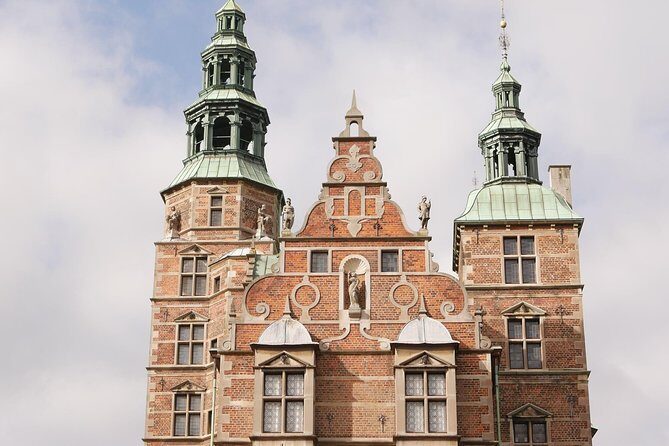
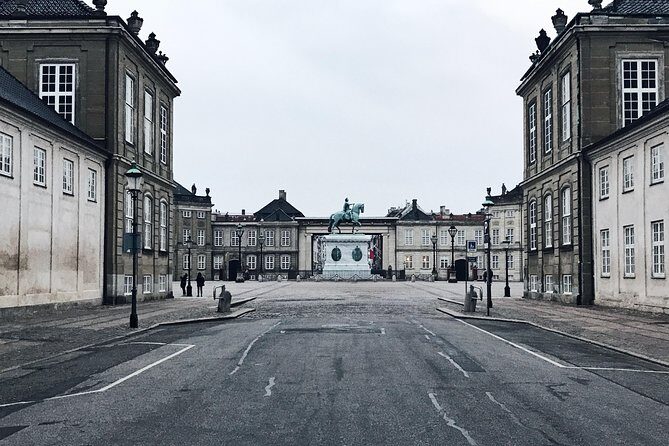
As you explore the imposing square, palace area, and the garden, you’ll get a chance to glance at the Danish Royal Opera house on the other side of the water. This is a good pacing move. It gives you a big-name landmark without turning the tour into a long detour.
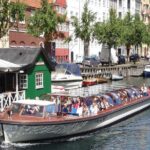
Then you wrap up with a stroll through Nyhavn, a picturesque 17th-century harbor area with iconic colorful waterfront facades. This end point is practical and satisfying: it’s lively, it’s photogenic, and it gives you an easy place to keep exploring after the tour.
Nyhavn also works because it’s a contrast to earlier stops. You start with squares and monuments, you pass through castles and fortresses, and then you land in a harbor scene that feels more human-scale. If you want a place to get dinner after, this is a very logical spot to finish.
Pro tip: if you care about photos, plan to spend a few extra minutes after the guide finishes. Nyhavn looks great from multiple angles, and you’ll probably spot more details once you’re not moving at tour pace.
What you’re really paying for: a guide’s interpretation, not just sightseeing

This experience costs $128.94 per person for about 1 hour 30 minutes, with a small group limited to 8 travelers. That price can feel steep compared with self-guided wandering, but the value is in what you’re buying: interpretation.
Included is basically the key thing that makes a walking tour worth it—a local who wants to show you the city. When a guide gives you the context for street art, myth, sculpture, and architecture, you get more than a checklist. You get connections: why a fountain matters, what a dome signals, why certain ideas appear in public space.
Also, the tour offers a mobile ticket and is in English, with group discounts. It’s not a food tour, so you’re not paying for a meal included in the price—bring your plan for snacks or dinner after.
A balanced expectation check: one piece of feedback I’d take seriously is that the walk can include stretches of silence, and you may want more active storytelling in those moments. If you like back-and-forth or have specific questions (for example, art styles, the Danish way of life, or why Copenhagen chose certain monuments), don’t be shy. Ask early so the guide knows what you care about.
The flow and timing: 90 minutes can feel quick, in a good way
This tour is short enough to fit almost any schedule, and that’s a strength. You’ll cover a spread of themes—street art, castle gardens, a star fortress, a Rococo dome, and a harbor finish—without needing an entire day of planning.
That said, the route is designed to move. You won’t get a full museum session or deep time at indoor cultural sites. If your ideal Copenhagen day is mostly galleries and long exhibitions, you’ll want to book those separately and treat this as your introduction and cultural map.
Because the group is small, you may get more personalization than on bigger tours. For example, you can ask for clarification when the guide points out a detail on a façade or explains a legend tied to a fountain. That interaction is often where the tour feels “worth it,” not just where you end up.
Who this Copenhagen art-and-culture walk is best for
I think this tour suits you if:
- You’re arriving in Copenhagen and want a fast cultural orientation without doing all the research yourself
- You enjoy street art and also want context for what you’re seeing
- You like “art + place” stories, where statues and buildings come with meaning
- You want a short, manageable plan that still feels like it hits the city’s creative side
It may not be the best fit if:
- You want long indoor museum time or deep audio-style lectures
- You’re expecting the tour to focus on specific major cultural venues with lots of inside viewing time
- Silence on a walk bugs you. If it might bug you, go prepared with questions and prompts for your guide
Should you book this LocalBini Copenhagen art tour?
If you’re the type who wants to understand a city by learning why the art is where it is, I’d say yes. This walk gives you a strong mix: street art, Andersen in the gardens, Kastellet with the Gefion story, a Rococo dome with Kierkegaard, and then the classic harbor finish at Nyhavn. That combination is perfect when you want culture without a full-day museum commitment.
Book it especially if you like having someone explain details while you walk. The guide-led format is the whole point here. If you treat it like a highlights primer and then build the rest of your day around your own interests, you’ll likely feel like you used your time well.
FAQ
How long is the tour?
It’s about 1 hour 30 minutes.
What’s the starting point and where does the tour end?
It starts at Stork Fountain, Amagertorv 6, 1160 København, Denmark. It ends in Nyhavn, Indre By, Denmark.
How much does it cost?
The price is $128.94 per person.
What language is the tour offered in?
It’s offered in English.
Is food or drinks included?
No. Food, drinks, or snacks are not included.
How big is the group?
The tour has a maximum of 8 travelers.
Is a mobile ticket used?
Yes, it includes a mobile ticket.
Can I cancel, and what’s the refund policy?
You can cancel for a full refund up to 24 hours in advance of the experience start time. If you cancel less than 24 hours before, the amount paid is not refunded.