REVIEW · COPENHAGEN
The Art of Baking Danish Pastry
Book on Viator →Operated by Terrible - Konditorskole · Bookable on Viator
Fresh bread therapy starts at 9:00. This hands-on Danish pastry baking class in Frederiksberg teaches you the real mechanics behind flaky, layered dough, then gets you baking multiple pastries in a single morning. I love that it’s taught in a small group (max 12), so you get real feedback as you work.
What I liked most is the way Chef Frederik Terrible breaks the process into clear steps and keeps things moving without losing patience. The payoff is huge: you bake several classics and leave with enough pastries to fill two boxes full of treats, plus the recipes get emailed so you can repeat the magic at home.
One consideration: you’ll likely overproduce in the best possible way. Expect more pastries than you can eat immediately, and plan for sharing (or freezing) if you’re only in Copenhagen for a short stay.
In This Review
- Key things to know before you bake
- Why Danish pastry is more than butter and vibes
- Getting to Terrible French Pastry School in Frederiksberg
- A 3.5-hour morning schedule that actually works
- Kneading, rolling, and folding: the real Danish pastry skills
- The pastries you’ll bake: kanelsnegle, spandauer, frøsnapper
- Kanelsnegle (cinnamon rolls)
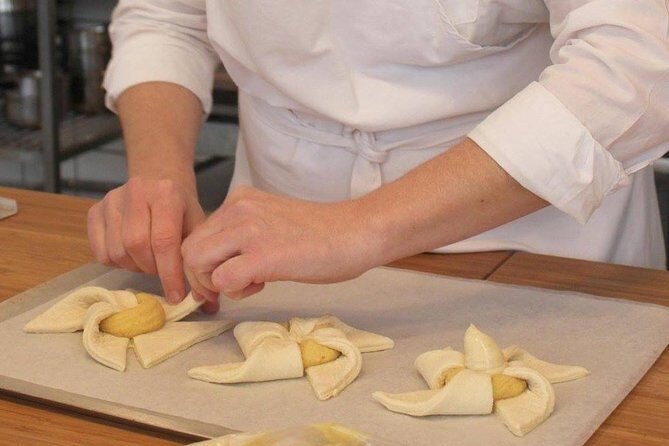
- Spandauer (Danish pastry)
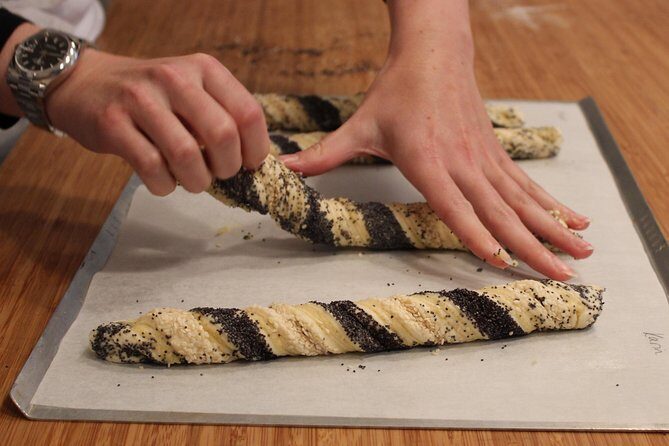
- Frøsnapper (poppy and sesame seed twists)
- Tasting, tea, and the two-box reality
- Price and value in Copenhagen (what you’re actually buying)
- Who this class is best for (and who might skip it)
- Should you book this Danish pastry baking class?
- FAQ
- How long is the Danish pastry baking class?
- What time does the class start?
- Where is the meeting point in Copenhagen?
- Is this class offered in English?
- How big is the group?
- What pastries will I make?
- Will I get to taste what I bake?
- Do I get recipes after the class?
- What is the cancellation policy?
Key things to know before you bake
- Small-group format (max 12): easier coaching when you’re rolling, folding, and shaping dough.
- Chef-led technique first: kneading, rolling, and folding are taught before you start cranking out pastries.
- You make multiple types: cinnamon rolls (kanelsnegle), Danish pastry (spandauer), and seed twists (frøsnapper).
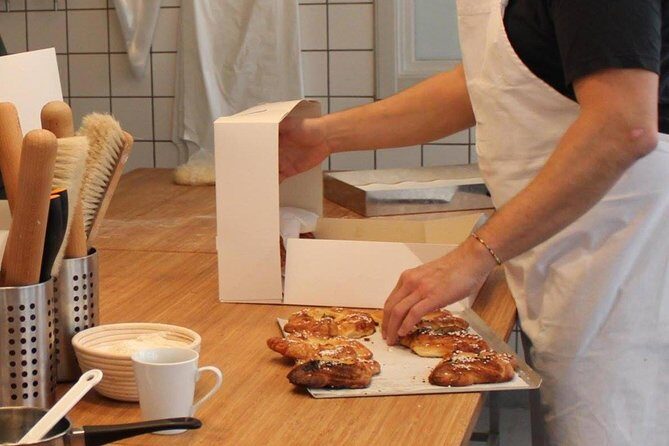
- Take-home quantity is real: many people leave with a dozen or more pastries, often packed into multiple boxes.
- Recipes arrive by email: you get the directions after class, not just tips while you’re in the kitchen.
Why Danish pastry is more than butter and vibes
Danish pastries look simple until you watch how the dough is treated. The magic is in the process: kneading that builds structure, rolling that controls thickness, and folding that creates layers. Once you learn those motions, it stops feeling like a bakery trick and starts feeling like a skill you can repeat.
In this class, you’re not just eating. You’re building the dough the way a professional pastry kitchen thinks: with consistency, timing, and attention to how the dough behaves as you work it.
And because it’s scheduled as a morning class, it’s a smart way to spend Copenhagen time. You still get your afternoon free for canal walks, museums, or just wandering until you find another place serving coffee and cake.
You can also read our reviews of more tours and experiences in Copenhagen.



Getting to Terrible French Pastry School in Frederiksberg
You’ll meet in Frederiksberg (west of the city center) at Grundtvigsvej 10A, 1864 Frederiksberg. The class is English-friendly, and the activity ends back at the meeting point, so you don’t have to worry about lining up another transfer at the end.
The location is near public transportation, and a practical tip from past participants: if you rely on Apple Maps or Google Maps, double-check the entrance. Some people found the entry is around the other side of the street versus what the map view suggests. A quick walk to confirm the right door saves stress.
The vibe in the room matters too. With a max group size of 12 travelers, it tends to feel like a working kitchen class, not a big demo where you only watch from the sidelines.
A 3.5-hour morning schedule that actually works
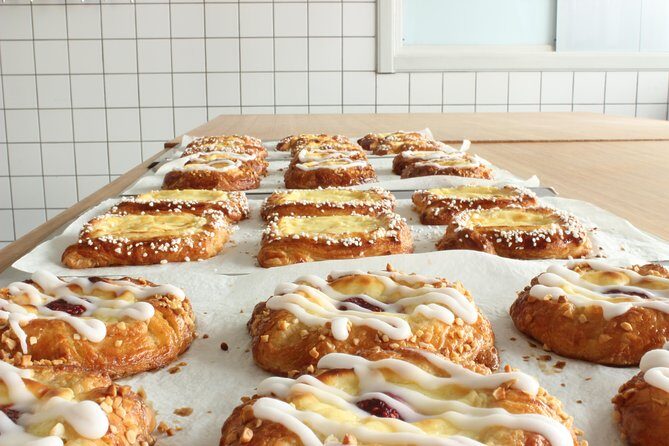
The start time is 9:00 am, and the class runs about 3 hours 30 minutes. That timing is ideal if you like structured mornings: you get the instruction, the hands-on practice, baking time, and a chance to taste your results before lunch starts dominating your plans.
Here’s the flow you can expect:
1) You join the group and follow the chef’s demonstration.
2) You learn core techniques step by step: kneading, rolling, and folding.
3) You move into hands-on pastry making, with guidance as you shape and assemble.
4) Your pastries bake, then you finish with tea and coffee.
The hands-on part is the point. Even if you’re a first-timer, the class is paced so you can keep up, and the chef’s coaching is built around getting you to a workable dough, not trying to impress with speed alone.
Kneading, rolling, and folding: the real Danish pastry skills
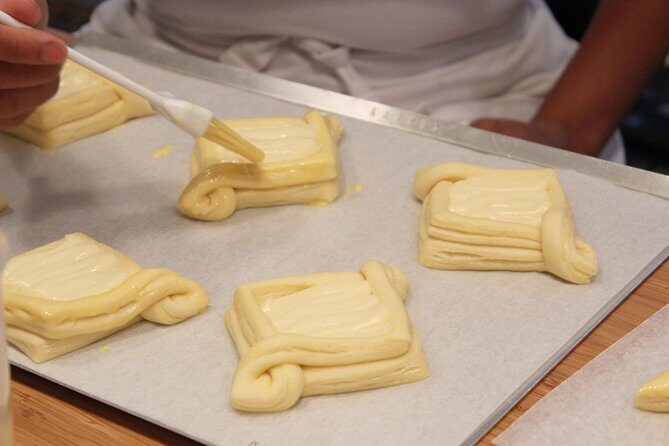
This isn’t a vague “watch and hope” workshop. You’ll practice the foundation moves that make Danish pastry Danish. In plain terms, that means you’ll learn what to look for when the dough is ready, how to handle it without tearing, and how to keep layers intact.
The technique breakdown includes:
- Kneading: getting the dough to the right texture so it behaves during rolling.
- Rolling: controlling thickness so your pastries bake evenly.
- Folding: creating the layered structure that gives Danish pastry its signature bite.
What stands out is how Chef Frederik Terrible keeps directions organized and clear. Many people highlight that he’s patient and meticulous, and that he checks in as you work. In a class like this, that matters because small handling mistakes show up later as pastries that don’t rise or don’t separate nicely.
Also, expect a bit of a fast pace. One review theme was that time flies, but directions stay followable. If you tend to get flustered in busy kitchens, take a breath and focus on the step in front of you.
The pastries you’ll bake: kanelsnegle, spandauer, frøsnapper

The class builds around three Danish favorites. You’ll make each one with guidance, then get to taste what you produced.




Kanelsnegle (cinnamon rolls)
These are the classic Danish-style cinnamon rolls. You’ll work dough that’s been trained for layering, then turn it into a swirled, cinnamon-forward bake. The joy here is that you see how a pastry can be both soft and structured at the same time.
Spandauer (Danish pastry)
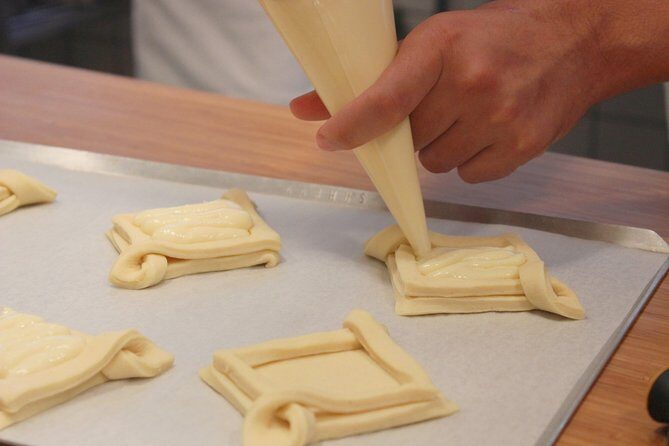
Spandauer is a different feel from cinnamon rolls. You’re shaping a pastry that depends on crisp layers and a specific bake. It’s a great one to learn because it teaches you how folding and shaping work together, not separately.
Frøsnapper (poppy and sesame seed twists)
These seed twists are a hands-on confidence builder. They’re fun because the process is visibly different from the rolls. You’re shaping, topping, and assembling in a way that makes the final look feel very Danish, even if you’re new to baking.
A useful mindset: don’t aim for bakery perfection on your first try. Aim for good dough handling and consistent shaping. That’s where the chef’s coaching really helps.
Tasting, tea, and the two-box reality
Once your pastries are baked, tea and coffee are served. This is your chance to compare your finished pastries to what you’ve been trying to learn through the process.
Now the part that surprises most people: you leave with a lot. Multiple comments mention leaving with enough to fill two full boxes, and others report around a dozen pastries per person. That’s part of the value math here, because you’re paying for instruction plus a real quantity of bakeable product, not just a small tasting portion.
Practical advice:
- Bring a way to safely transport boxes (a tote with room helps).
- Plan a sharing strategy. If you’re traveling onward soon, decide now whether you’ll give some away, eat some later, or freeze what you can’t finish.
- If you’re trying to keep space in your suitcase, this class will take up real estate.
Price and value in Copenhagen (what you’re actually buying)
At $117.23 per person, the price is not “cheap,” but it’s not just for a quick food stop either. You’re getting:
- a structured 3.5-hour coaching session,
- hands-on practice (kneading/rolling/folding),
- multiple pastry types made with professional guidance,
- tea and coffee during tasting,
- and recipes emailed after the class.
Where the value lands depends on you. If you love food culture and you want to bring something home beyond a photo, this makes sense. You’re paying for skill-building plus edible souvenirs.
One more value point: the recipe email. Even if you don’t bake immediately when you get home, having the directions helps you repeat the process without trying to remember everything from memory.
Who this class is best for (and who might skip it)
This works especially well if you:
- love baking or want to learn real Danish pastry technique,
- want a morning activity that doesn’t steal your entire day,
- enjoy small-group instruction with direct feedback,
- or want a tangible take-home result.
It’s also a great pick for couples and small groups. Several people enjoyed the class as a shared experience and noted that it feels friendly and social while still being organized.
If you hate mess, move slowly in kitchens, or can’t handle carrying food home, consider whether the take-home quantity will stress you out. The class is hands-on, and you will be making enough that logistics matter.
Should you book this Danish pastry baking class?
Yes, if you want a Copenhagen morning that’s practical, tasty, and skill-focused. The main reason to book is the combination of structured chef coaching plus real bake results you can take home, not just watch.
Book it earlier in your trip if you can. The pastries keep, but the best plan is to have time to share and enjoy them gradually. If you’re the type who loves learning the how behind a local food, you’ll likely find this class worth the spend.
FAQ
How long is the Danish pastry baking class?
It runs for about 3 hours 30 minutes.
What time does the class start?
The start time is 9:00 am.
Where is the meeting point in Copenhagen?
You’ll meet at Grundtvigsvej 10A, 1864 Frederiksberg, Denmark.
Is this class offered in English?
Yes, the class is offered in English.
How big is the group?
The class has a maximum of 12 travelers.
What pastries will I make?
You’ll learn to make cinnamon rolls (kanelsnegle), Danish pastry (Spandauer), and poppy seed and sesame seed twists (frøsnapper).
Will I get to taste what I bake?
Yes. After the pastries finish baking, tea and coffee are served so you can taste the final products.
Do I get recipes after the class?
Yes. The recipes used in the class are emailed to you after the session.
What is the cancellation policy?
This experience is non-refundable and cannot be changed for any reason. If it’s canceled because a minimum number of travelers isn’t met, you’ll be offered a different date/experience or a full refund. Confirmation is subject to availability and is received within 48 hours of booking.